

WHAT’S IT ABOUT
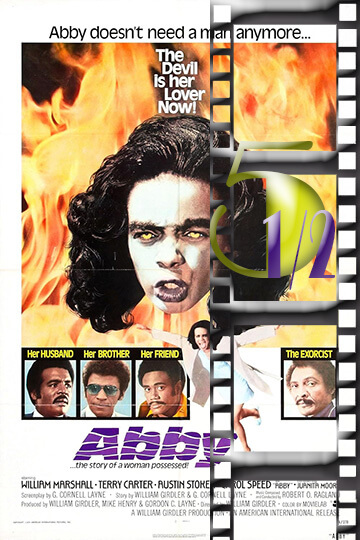
An archaeologist (William Marshall) tries to rid a minister’s (Terry Carter) wife (Carol Speed) of a spewing demon dug up in Nigeria.
MOVIESinMO REVIEW
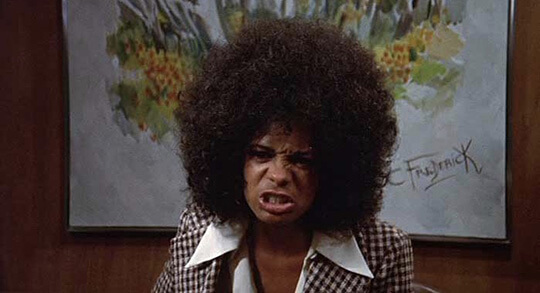
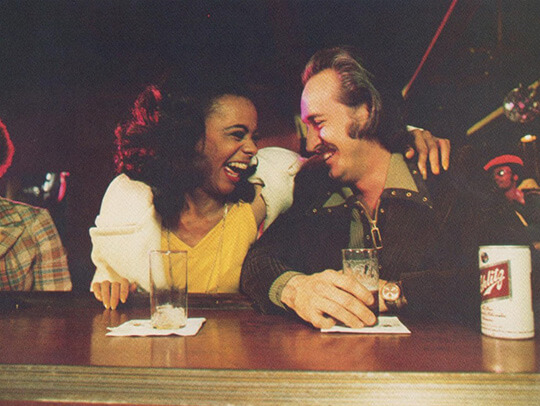
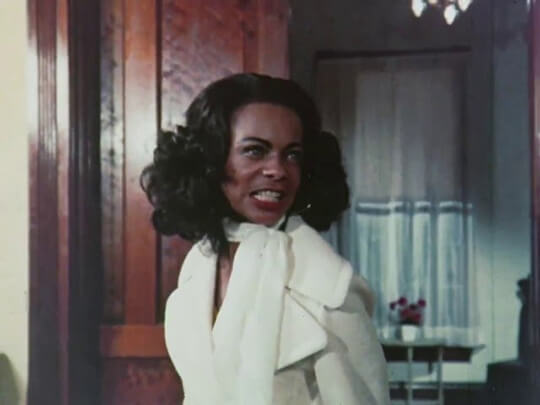
William Girdler’s “Abby” stands as one of cinema’s most notorious examples of exploitation filmmaking disguised as serious horror. Released in 1974 at the height of the blaxploitation era, this demonic possession tale starring Carol Speed attempted to capitalize on the massive success of “The Exorcist” while serving Black audiences hungry for representation in the horror genre. A half-century later, the film offers an interesting case study in divergences in cultural context, artistic intention, and audience reception. When “Abby” arrived in theaters in December of 1974, the film faced controversy right from the start. Warner Bros. was able to successfully sue American International Pictures for copyright, claiming that the film closely imitated “The Exorcist” and deservedly so. The lawsuit effectively killed the movie’s theatrical run after just a few weeks, despite its impressive box office performance, it had earned over $4 million in its brief release window. Contemporary reviews were largely dismissive. While White critics labeled it a cheap imitation, many Black critics were split. Some enjoyed the representation of Black people as foregrounded actors in the horror genre. Others felt that the film reinforced damaging stereotypes. The religious Black community’s criticism was very harsh, finding the blending of Christianity and African spirituality as simply exploitive and offensive. What critics in 1974 couldn’t fully appreciate was the film’s attempt to center Black religious and cultural experiences within a horror framework. The movie’s exploration of Yoruba mythology, its treatment of Black church culture, and its positioning of an African deity (Eshu) as the antagonist were unprecedented in mainstream American cinema. However, these elements were often overshadowed by the film’s sensational marketing and exploitation trappings. “Abby” follows the Williams family: Dr. Garnet Williams (William Marshall), his wife Emmeline (Juanita Moore), and their daughter-in-law Abby (Carol Speed). The archaeologist Dr. Williams, who studies artifacts from Africa, accidentally unleashes the demon Eshu. Eshu possesses Abby who has metamorphosed from a dutiful minister’s wife to, for most of the film, a sexually aggressive, violent woman who terrorizes both her family and the local community. Overall, while the film has a complex and contradictory relationship with African spirituality, it tends to support and valorize Yoruba religious traditions and mythology, while simultaneously imposing a decidedly Western, Christian-alienating framework on top of African deities and mythologies, by representing them as demons. This colonial frame is a function of the era the film presents, even while it is trying to valorise elements of African cultural heritage. Carol Speed delivers a committed performance as Abby, particularly in the possession sequences where she channels raw, primal energy. Her portrayal avoids the overtly racist caricatures that might have emerged from a less thoughtful actress, instead presenting a woman genuinely tormented by forces beyond her control. William Marshall brings dignity and gravitas to his role, lending the proceedings more weight than the material perhaps deserves. Girdler’s direction is competent but uninspired. The film suffers from a low budget that shows in its production values, particularly in the special effects and makeup work. The possession sequences, while energetic, lack the sophisticated craftsmanship of “The Exorcist.” The cinematography is functional but rarely rises to the level of artistry. The film has an inconsistent rhythm, starting slowly as it builds to a rare explosion of chaos when Abby becomes fully possessed. The tonal shifts from family drama to religious meditation to exploitation horror fit together imperfectly. The film’s willingness to take itself seriously in the supernatural realm, not falling into camp, gives it a strange dignity. Reading “Abby” in 2025 requires a lot of cultural context. The treatment of women represents issues that have serious problems by today’s standards—the possessed Abby becomes hypersexualized and violent, denying the positive aspects and reinforcing grotesque stereotypes about Black women’s sexuality and agency. Its suggestion that African spirituality is dangerous or demonic would be quickly articulated as culturally insensitive. Still, there are also elements of the film that today’s viewers may appreciate that were perhaps lost in the understanding of 1974. The film’s centering of Black religious experience, its exploration of intergenerational trauma, and its attempt to engage with African diaspora spirituality were remarkably ahead of their time. The movie predates the academic recognition of how colonialism and slavery severed African Americans from their spiritual traditions. Today’s audiences who watch “Abby” will likely have mixed feelings about the film. Horror aficionados may recognize it for its historical importance and raw energy, but struggle with its many development issues, including lack of technical mastery and pacing. The blaxploitation elements will be viewed with some skepticism by audiences, and the sexualized violence and racial stereotyping would undoubtedly raise eyebrows. However, those interested in Black cinema history or the changing representation of horror may find “Abby” enchanting. The film exists at multiple intersections of noteworthy cultural moments: the blaxploitation movement, the 1970s horror boom, and early attempts at Afrocentric filmmaking. So, its flaws are not only part of its character but are also enmeshed in the historical moment in which it exists. “Abby” remains a curious artifact that’s more interesting for what it attempted than what it achieved. While it does not live up to modern standards of entertainment, it is a cultural document that captures the complicated politics of representation, exploitation, and artistic intention in Black cinema from the late 1970s. The legacy of the film has become complicated as a result. It was situated beyond the pale of serious critical assessment at the time, being too exploitative, but it was also far too earnest in its engagement with culture to be neglected to the status of mere trash. For Black audiences in 1974, it offered the rare opportunity to see themselves as protagonists in a horror film, even if the execution was flawed. As of today, “Abby” exists best as a minor historical curiosity, clarifying what has changed in our reach for representation and cultural sensitivity, and emphasizing the stumbles we continue to make in attempting to provide authentic, respectful depictions of African American spiritual traditions in cinema. This is not a film that needs to be celebrated, but friends, it does need to be remembered, studied, and contextualized. And if you’re looking for something that works as a cinematic experience, “Abby” is probably not it. For those interested in the history (and still in its infancy, not fully explored potential) of the Black horror cinema, and the constant negotiation of exploitation and representation, “Abby” is a potential insight into a significant time in American cinema history.
OUR RATING – A RESURRECTED 5.5