

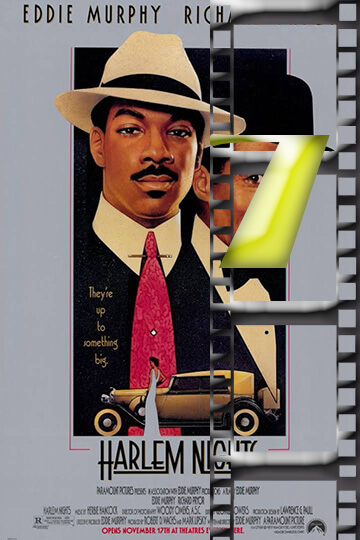
WHAT’S IT ABOUT
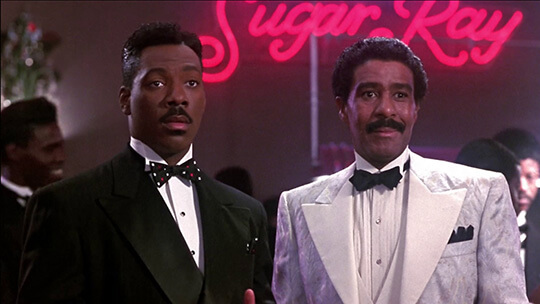
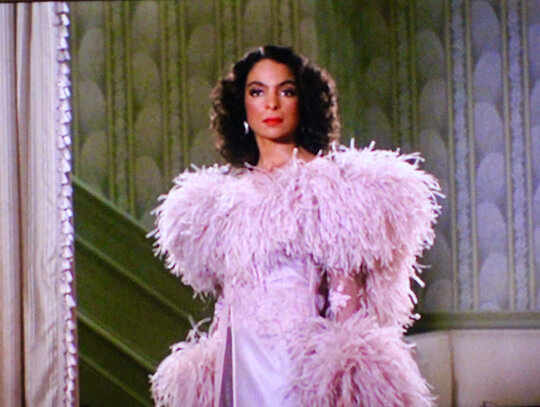
In the waning days of Prohibition, Sugar Ray (Richard Pryor) and his adopted son, Quick (Eddie Murphy), run a speakeasy called Club Sugar Ray. When gangster Bugsy Calhoune (Michael Lerner) learns that Sugar Ray’s place is pulling in more money than his own establishment, the Pitty Pat Club, he pays corrupt cop Phil Cantone (Danny Aiello) to close Club Sugar Ray down. Quick doesn’t exactly help the situation when he falls for Calhoune’s gun moll, Miss Dominique La Rue (Jasmine Guy).
MOVIESinMO REVIEW
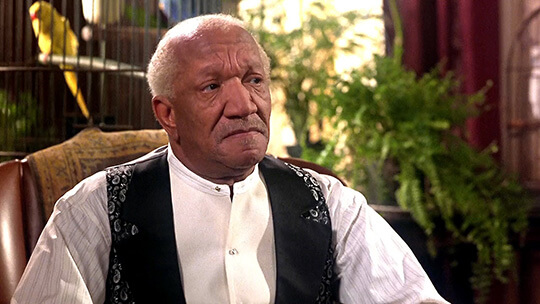
Eddie Murphy’s directorial debut, “Harlem Nights,” premiered in 1989 with great expectations. It had a great cast of comedy legends like Richard Pryor, Redd Foxx, and Murphy himself, and it held out the promise of a celebration of Black storytelling and talent. But when it came out, critics were split, with many denouncing it as a vanity project that wasted its potential. Now, more than thirty years later, it’s worth taking a look at this film again from both a contemporary and historical perspective. Upon the release of “Harlem Nights,” critics were chiefly troubled by its scattered tone, irregular pace, and Murphy’s lack of experience as a director. The Washington Post called it “a slow, slapdash, self-indulgent tribute,” and the Chicago Tribune called it “a waste of talent.” The gratuitous violence, profanity, and its handling of women were especially criticized. Even Black critics were split—some liked seeing Black stars in period roles that weren’t the usual civil rights stories, while others believed the movie perpetuated negative stereotypes. A majority of the 1989 reviews did not appreciate how big a deal it was that Murphy came out with a high-budget movie completely focused on Black characters at a time when movies like that were practically unheard of. The $30 million budget (which was enormous back then) enabled richly textured set designs that actually showed what 1930s Harlem actually looked like, from the ornate nightclub interiors to painstakingly created costumes. Today’s audience is able to enjoy “Harlem Nights” more because of what it tried to do than because of how well it succeeded in doing it. The movie shows a world where Black businesspeople make their own way in a racist system that doesn’t offer them much. Murphy’s Quick and Pryor’s Sugar Ray operate the Club Sugar Ray in a tough world where white gangsters and corrupt police officers rule the city. This study of Black economic self-management seems even more vital today than in 1989. The film’s look is worth thinking about again. Cinematographer Woody Omens showed a stylish, nostalgic view of Harlem that mixed beauty with toughness. The nightclub scenes with their warm amber lights, smoky feel, and fancy costumes, painted an attractive picture of Black nightlife that affected later films. Costume designer Joe I. Tompkins deserved his Oscar nomination for his work. Nevertheless, there are some aspects of “Harlem Nights” that remain problematic today. The film’s portrayal of women is perhaps its greatest weakness. Most of the women are either prostitutes, con women, or bitter lovers. Jasmine Guy’s Dominique is largely a sex object, and Della Reese’s Vera is infamous for her contentious relationship with Quick. The famous scene where Murphy’s character hits Reese’s character in the face was surprising back then and is still hard to watch today. The pervasive use of disrespect for women throughout the film has not aged well. Some may say that it is a revelation of the language of the day, but the screenplay uses these words more than the story necessitates. Further, the gratuitous violence—sometimes presented as humor—seems out of place and unwelcome by today’s standards. It is truly a delight to watch iconic comedians collaborate. The moments between Murphy and Pryor demonstrate genuine camaraderie, with a sense of passing the baton of humor from one generation to the next. Redd Foxx steals his moments as the obnoxious Bennie, and Della Reese provides high energy to her role despite some limitations. These performances are a reminder of a unique moment in Black entertainment when these legends were at various points in their careers. Audiences today might enjoy the twists in the film more. In one memorable scene, Quick outwits a racist white gangster not through violence but by being clever and playing tricks on his mind. The movie portrays its Black characters as smarter and more competent than the white characters—a subtle but significant decision for a Hollywood movie from the period. Would contemporary audiences enjoy “Harlem Nights”? The answer is complicated. Viewers who want a glossy and cohesive film will be let down. The pacing is plodding, the tone shifts between comedic and serious are jarring, and Murphy’s direction does not have the command he later demonstrated. However, people who have an interest in the history of Black film might be curious about it as an ambitious, imperfect experiment. The film is flawed in its depiction of women and gratuitous violence, yet there are real pleasures in visual style, performance, and glimpses of what the film could have been. In the world in which we find ourselves today, with more people talking about Black business ownership, economic empowerment, and systemic racism, there are some of the themes of “Harlem Nights” that feel surprisingly relevant. It is also important for Black audiences to see this community of celebrity Black actors existing in an entirely Black world. These individuals exist according to their own rules instead of within white regimes. In doing this, “Harlem Nights” came before films like “Eve’s Bayou” or even “Black Panther,” which created complete Black worlds with their own laws and issues. The most honest criticism is that “Harlem Nights” is a more interesting piece of culture than it is a great movie. It was an ambitious failure that showed Murphy’s desire to try something more than the comedies that made him a star. It is an important piece of Black cinematic history, connecting the blaxploitation films of the past to the Black film resurgence of the 1990s. Those willing to take on its challenges—seeing both its successes and its failures—can find unexpected dividends in considering this imperfect yet important chapter in Black film history. The film does not have to be dismissed or revered blindly, but instead needs to be examined carefully as part of the ongoing development of Black storytelling within American film.
OUR RATING – A MEMORABLE 7