

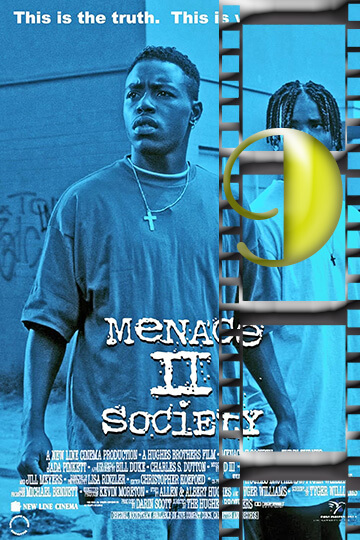
WHAT’S IT ABOUT
After growing up in the gang lifestyle of the Los Angeles projects, 18-year-old Caine Lawson (Tyrin Turner) wants a way out. Everyone around him, including his unpredictable friend O-Dog (Larenz Tate), is trapped in their lives of crime and violence. With the help of his caring teacher (Charles Dutton) and supportive girlfriend (Jada Pinkett), Caine plans to leave the city for good. But in a series of tragic events, Caine realizes that escape will not be easy.
MOVIESinMO REVIEW
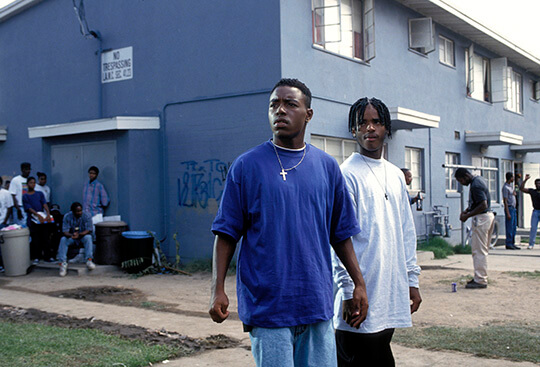
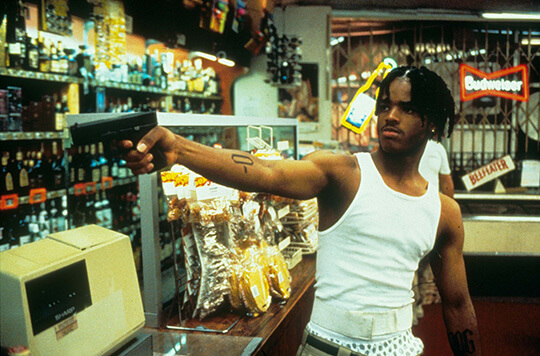
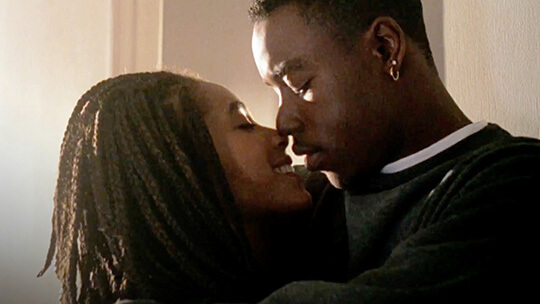
The Hughes brothers released their debut film “Menace II Society” in 1993, and it landed with a punch, depicting raw urban life in a manner that left an indelible mark on the annals of Black cinema. Nearly three decades later, I’m revisiting this uncompromising examination of life in Watts, LA, and I find myself wondering how its unflinching honesty continues to resonate with people today. When “Menace” first came out in theaters, critics really praised how it showed inner-city life without holding back. The movie is about Caine Lawson (Tyrin Turner), a fresh high school grad who’s trying to figure things out in a world where violence isn’t just normal—it’s basically expected. Unlike its buddy “Boyz n the Hood,” which had some hopeful moments with characters like Tre Styles, “Menace” didn’t give many ways out of that whole violence cycle. People just loved to hate views that rejected traditional values and beliefs, yet it was also its greatest strength. The movie begins with a liquor store holdup that concludes with senseless killing—a sequence that sets the tone at once. What shocked audiences in 1993 was the way this violence was delivered so matter-of-factly. No dramatic music, no cinematic glamour—just the stark fact of life taken over a perceived disrespect. Watching it today, that same unflinching quality remains its greatest strength. The Hughes brothers crafted a visual language that communicates authenticity. The handheld camera work, tight framing, and natural lighting create an almost documentary-like atmosphere. The film doesn’t judge its characters but allows them to exist in their complex humanity. The performances stay with you powerfully. Turner’s Caine is a tightrope walk of vulnerability, and the hardened shell one must adopt to make it through. Larenz Tate’s O-Dog remains one of cinema’s most frightening creations, a teen who is so casual about violence as to illustrate just how normalized violence had become. Jada Pinkett’s Ronnie is one of the film’s moral centers, a single mother who tries to leave behind the world that is trying to consume them all. In 1993, “Menace” was dismissed by some reviewers as “poverty porn” or criticized for lacking the redemptive quality of other films within the genre. Some even accused it of reinforcing negative stereotypes. What these reviewers did not understand was the film’s intention, not to offer solutions but to present reality as many knew it, raw and unapologetic. Going back to the movie in 2025, I’m struck by how much of its social commentary still holds up. The systemic problems it identifies, police brutality, few economic prospects, and generational trauma, are still a concern for a lot of communities. When Caine utters the words, “Being a black man in America isn’t easy. The hunt is on, and you’re the prey,” those words still have value. Where the film dates itself is in some of the cultural representations. The hypermasculinity that permeates the film—where vulnerability is weakness and violence is strength—would likely be challenged more directly in modern discourse. The limited female roles, such as girlfriends and mothers, would certainly come under more criticism from today’s audiences. The film’s handling of women is worthy of special consideration. Women in “Menace” exist mainly in relation to the male characters—as mothers, lovers, or sexual trophies. Though this is true to the patriarchal nature of the setting depicted, an updated version would more likely give these characters greater agency and depth. The way that people speak in the movie—particularly the offhand homophobia and misogyny—completely reflects what was acceptable then, but it would certainly raise some eyebrows today. However, if you sanitized that language, you’d be distorting the cultural sensibilities. What causes the movie to pack such a punch is how it accurately portrays how people spoke and behaved at that time and place. Technical aspects of “Menace” have aged amazingly well. The Hughes brothers’ documentary-like and neo-realist-inspired visuals appear strikingly contemporary. The soundtrack, made up of West Coast hip-hop that ruled the era, is not merely background but also commentary on the culture, intensifying but not dating the action. Would audiences today relate to “Menace II Society”? Definitely, but perhaps differently. Young people might view it more as a period piece—a look back at the era following the Rodney King episode in LA. They’d immediately understand how it influenced everything from Kendrick Lamar’s music to films like “Fruitvale Station” and television programs like “The Wire.” The movie’s kinda dark take on the world might feel more real than surprising to folks who grew up seeing police violence and social inequality all over social media. What used to be seen as way too real now feels like a heads-up about the consequences of ignoring the people who need help the most. Its 1993 critics debated whether “Menace” resolved anything or simply presented problems. Now, we know that representation itself can be revolutionary. In declining to fill out its portrait with softening details or offer easy moral lessons, the movie respected audiences enough to let them decide for themselves. “Menace II Society” is worth viewing—not ’cause it’s easy to view, but for exactly that reason. It so completely captures a moment in American city life that it becomes timeless. Okay, some of the cultural specifics and attitudes are a bit dated, but the underlying issues of racial inequality, ongoing violence, and the tough choices young Black men have to make in America still hit hard. The final narration of the film—”.I was a product of my environment”—serves both as Caine’s epitaph and as the film’s thesis. “Menace” never implies that individuals’ actions don’t matter, but it insists we consider narrow options for many. In that regard, it was ahead of its time in addressing the question of systems, not individual morality. If you’re up for a raw, unvarnished look at urban life, “Menace II Society” definitely delivers and still feels really timely, though it’s somewhat harrowing. It’s not just a classic of Black cinema; it’s a major piece of American cinema—a testament to truths we’re still trying to grapple with almost three decades later.
OUR RATING – A CULTURAL LANDMARK 9