

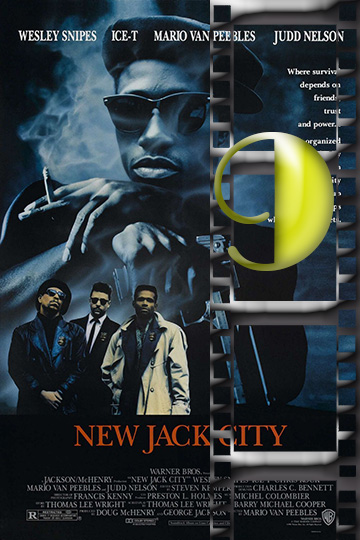
WHAT’S IT ABOUT
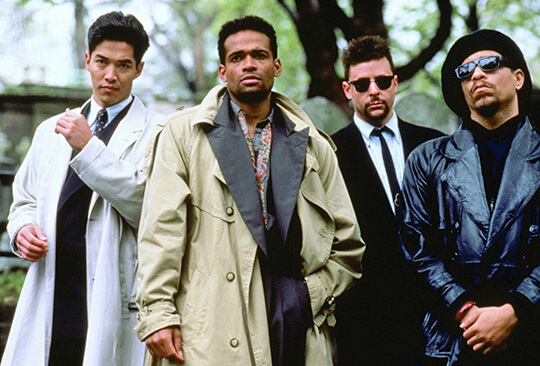
Drug tycoon Nino Brown (Wesley Snipes) and his minions, known collectively as the Cash Money Brothers, have rapidly risen to the top of the New York City narcotics trade. Under Nino’s heartless leadership, the drug operation has grown into a multimillion-dollar empire. Scotty (Ice-T) and Nick (Judd Nelson), two police officers who know their way around the streets of Harlem, aim to bring Nino and his cohorts down. To do so, though, they’ll have to play by Nino’s rules and go undercover.
MOVIESinMO REVIEW
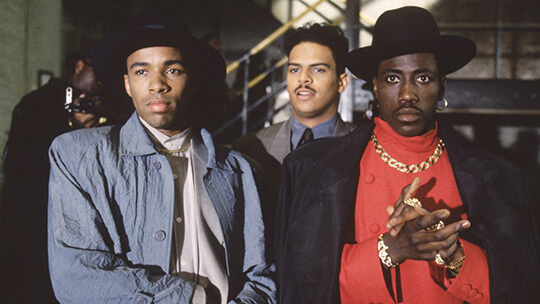
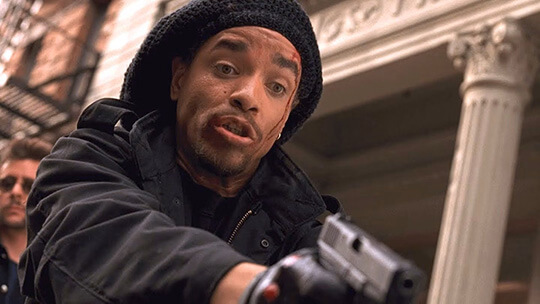
When Mario Van Peebles’ “New Jack City” exploded onto screens in 1991, it landed with the impact of a cultural grenade. As a hood drama chronicling the rise and fall of drug kingpin Nino Brown (Wesley Snipes) during the crack epidemic that devastated Black communities, the film became both celebrated and controversial. Viewing it through the dual lenses of its initial reception and today’s cultural landscape reveals much about how our perspectives on Black cinema have evolved. Upon release, “New Jack City” was lauded for its raw energy and unflinching portrayal of urban life. Critics praised its visual style and electrifying performances, particularly Snipes’ charismatic yet chilling Nino Brown. The film was celebrated for addressing the crack epidemic that was still ravaging Black neighborhoods, giving voice to a crisis many mainstream films ignored. Its $47.6 million box office haul against an $8 million budget proved audiences were hungry for stories that reflected harsh urban realities. Yet even in 1991, some critics questioned whether the film glorified the very lifestyle it ostensibly condemned. Violence at some theaters during opening weekend fueled this narrative, leading to debates about responsibility in Black filmmaking. The film walked a tightrope between cautionary tale and inadvertent glamorization – a tension that remains relevant today. Revisiting “New Jack City” in 2025, its strengths remain apparent. The film’s kinetic energy still crackles, and its style – from the vibrant cinematography to the iconic hip-hop soundtrack featuring Color Me Badd’s “I Wanna Sex You Up” and Ice-T’s “New Jack Hustler” – feels refreshingly unpolished compared to today’s more sanitized productions. Snipes’ performance as Nino Brown remains a masterclass in villainous charisma, showcasing a complexity rarely afforded to Black antagonists even now. The supporting cast similarly impresses. Ice-T delivers surprising depth as detective Scotty Appleton, Chris Rock gives a haunting turn as addict Pookie, and Judd Nelson brings nuance to his role as Appleton’s partner. Allen Payne as Nino’s lieutenant Gee Money provides a tragic counterpoint to Nino’s sociopathic climb. But viewing “New Jack City” through contemporary eyes also reveals its problematic aspects. The film’s treatment of women is particularly troubling by today’s standards. Female characters largely exist as accessories or victims, with even the more substantial roles like Nino’s girlfriend Selina (Michael Michele) lacking agency. The infamous scene where Nino discards a woman by literally throwing her out remains jarring and uncomfortably played for dark humor. The film’s portrayal of addiction sometimes veers into exploitative territory. While Chris Rock’s performance humanizes the struggle, certain scenes feel designed for shock value rather than empathy. Today’s more nuanced understanding of addiction as a public health issue rather than a moral failing makes some moments feel dated and insensitive. Van Peebles’ direction sometimes lacks subtlety, with heavy-handed moralizing undercutting the film’s more sophisticated critiques of systemic issues. The “Just Say No” messaging feels simplistic by modern standards, where we better understand the complex socioeconomic factors driving the drug trade. Yet “New Jack City” also contains elements that feel remarkably progressive for its time. The film explicitly connects the crack epidemic to governmental neglect of Black communities and economic desperation. Nino’s transformation of an apartment complex into “The Carter” works as metaphor for how Black entrepreneurial energy, denied legitimate outlets, found expression in criminal enterprise. When Nino declares, “You gotta rob to get rich in the Reagan era,” the film directly indicts policies that devastated urban communities. Would today’s audiences embrace “New Jack City”? Despite its flaws, I believe they would. The film’s energy and authenticity feel refreshing in an era where many Black films are either sanitized for white comfort or confined to specific historical narratives. Its willingness to present complex, morally ambiguous Black characters without apology remains powerful. The performances alone justify revisiting this film. Snipes crafted in Nino Brown one of cinema’s most memorable villains – a character whose charisma makes his monstrosity all the more disturbing. His “Am I my brother’s keeper?” speech remains chilling in its sociopathic logic, while moments of vulnerability hint at the wounded humanity beneath his cruelty. Modern viewers might also appreciate the film’s visual style. Van Peebles borrows from music video aesthetics, creating a heightened reality that feels intentionally theatrical rather than attempting documentary-like realism. This stylization allows the film to function simultaneously as entertainment and commentary – a balance many contemporary filmmakers still struggle to achieve. “New Jack City” remains relevant because the issues it addresses – institutional racism, economic inequality, addiction, and the prison system’s failure to rehabilitate – continue to plague our communities. The film’s ending, where Nino receives a surprisingly light sentence before meeting street justice, eerily foreshadows contemporary frustrations with a justice system that fails to provide true accountability. While “New Jack City” contains elements that would likely be handled differently if made today, its willingness to grapple with complex issues without offering simple solutions feels refreshingly honest. Its flaws reflect its era, but its strengths – dynamic performances, visual flair, and willingness to engage with uncomfortable truths – transcend time. For contemporary viewers, “New Jack City” offers a window into a pivotal moment in Black cinema and American urban history. Its rough edges and moral contradictions aren’t bugs but features – reflections of the messy, complicated reality it portrays. In an era where many films feel focus-grouped into blandness, its raw, uncompromising vision still has the power to provoke thought and emotion. As Nino Brown might say, the film is “still a winner, still a winner.”
OUR RATING – A NINO 9