

What’s It About
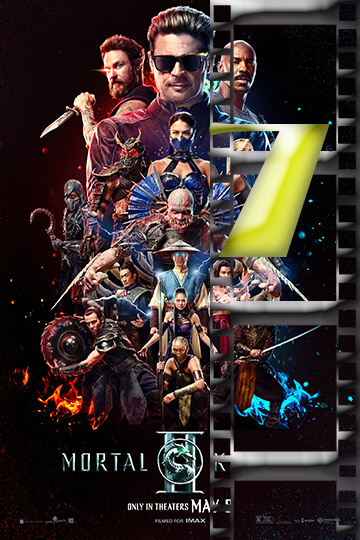
The fan favorite champions — now joined by Johnny Cage himself — are pitted against one another in the ultimate battle to defeat the dark rule of Shao Kahn that threatens the very existence of the Earthrealm and its defenders.
MOVIESinMO REVIEW
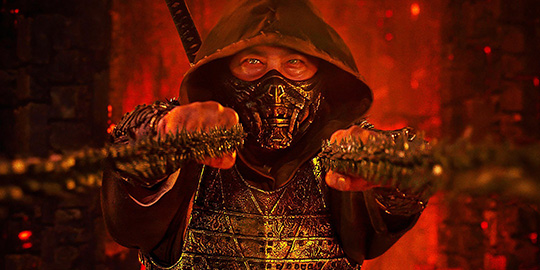
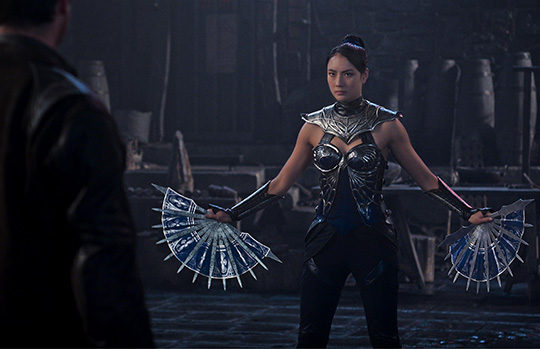
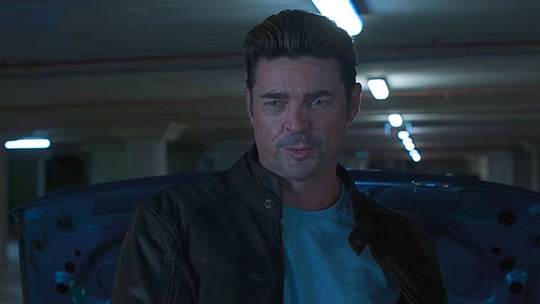
For more than 30 years, gamers have supported the Mortal Kombat franchise and the community surrounding the game, which will include significant numbers from each different demographic group. This community comprises many different players: nurses, teachers, teenagers, and fathers who put quarters into arcade machines and learned all the Fatalities, as well as people who argued about who would win in a battle between Scorpion and Sub-Zero. It is common for large budget films, particularly action movies, that are based on video games, not to recognize their primary target market: Black people. While Mortal Kombat II does not address these issues completely, it makes some positive strides forward. The importance of these strides will only increase by 2026. The film opens with a brutal scene: the young princess Kitana watches as the warlord Shao Kahn murders her father, King Jerrod of Edenia, and takes her world by force. From that moment, director Simon McQuoid makes one thing clear — this sequel is not content to simply repeat the first film. It reaches for something deeper. Martyn Ford plays the terrifyingly physical Shao Kahn as a conqueror and villain, but he is also a conqueror and can make the threats feel very real as opposed to comedy. The format in which he is best suited will be straightforward; Shao Kahn has an amulet that gives him immortality. Lord Raiden, played with quiet authority by Tadanobu Asano, must assemble Earth’s champions for the tenth Mortal Kombat tournament. If Earth loses, it falls under Kahn’s rule. The good news is that screenwriter Jeremy Slater does not waste time explaining lore that the first film already established. The bad news is that around the middle of the film, the plot shifts away from the tournament to chase that amulet, and the momentum takes a hit. The shift feels like a car changing gears awkwardly — you feel the jolt. This is the section of the review that talks specifically about Black readers and especially about readers who identify with black Nerd culture, whether it’s through cousins who developed whole identities based on playing video games, kids who grew up playing with Mortal Kombat cartridges before getting new shoes to wear, or the communities in which gaming was a way of life not simply something to do in your spare time; it was more than just an activity; it was a form of communication and a way to express yourself. If you are one of those individuals, seeing yourself represented in a film such as this is not insignificant; it is a statement that your creativity, your imagination, and your commitment to these virtual beliefs is legitimate and worthwhile to have existed and will always have been true. With his performance as Jax, Mehcad Brooks demonstrates confidence developed through experience, giving the character a sense of possession that allows him to approach Jax with a soldier’s mentality and a strategist’s mindset. Jax represents more than just comic relief or the catalyst for others’ actions; he is an individual who possesses both physical and mental strength. In addition, throughout each scene in which Brooks appears, he consistently portrays Jax as a grounded character possessing tremendous intensity. Viewing Brooks’ performance will help those who are unfamiliar with how important representation is in the genre film industry for people of African descent. When a Black man appears onscreen as a fully developed person who is not depicted as false, when a Black man appears fully formed without being portrayed negatively, the impact on a young Black boy seated in a theater will be substantial. When he sees himself represented in a film that matches who he is, he sees himself represented throughout the entire film instead of having to create an imaginary version that he would replace with another version of himself. Tati Gabrielle, playing Jade — Shao Kahn’s appointed warrior and Kitana’s trainer — brings an entirely different energy to the screen, and the film is stronger for it. Gabrielle moves through her scenes with a physical grace and quiet danger that makes Jade feel genuinely threatening. There is a scene where she trains Kitana that communicates complex loyalty and inner conflict without a single dramatic speech. That is skilled, disciplined acting. For a film that sometimes leans heavily on spectacle, Gabrielle’s performance is a reminder that the best action characters live in the spaces between the punches. Brooks and Gabrielle symbolize something even greater than their independent functions. They represent a cultural movement among Black nerds that has been advocated for many years, that Black people have had a long history of appreciation for fantasy/sci-fi/video game genres, and these media creations are much more vibrant, interesting, and meaningful when Black creators and characters are fully represented (i.e., with dignity) by inclusion in those artistic forms (worlds, etc). Mortal Kombat II (to its credit) has not simply relegated any of those characters as being merely “token” characters, i.e., they are treated as true warriors, and they are integral to the larger storytelling elements of the overall narrative. That distinction needs to be called out and should be recognized. Now — the elephant in the room, or more precisely, the Hollywood star at the convention booth signing autographs for five people. Karl Urban as Johnny Cage is the single best thing in this movie, and it is not close. Urban plays Cage as a washed-up 1990s action star, the kind of man who was famous once and never quite figured out what to do with the quiet that followed. His opening scene — a clip from a cheesy old action film followed by a sad convention appearance — tells you everything you need to know in under three minutes. Urban does not play this for pure laughs. He plays it for truth. And because the truth is funny, the laughs come naturally. His Johnny Cage reacts to the insanity of inter-dimensional combat the way a real person would — with wide eyes, sharp comments, and the occasional moment of genuine terror. Urban’s timing is exceptional. He carries the kind of loose, self-aware charisma that makes an audience trust a character even when that character is deeply unserious. By the time Cage stops running from the fight and starts running toward it, you believe him completely. McQuoid stages the combat sequences with a confident hand. The fights in Mortal Kombat II do not feel like quick edits designed to disguise the action — they feel like events. Each battle carries its own personality. A standout confrontation involving a warrior named Baraka, a terrifying creature with too many teeth and too much confidence, blends horror and humor in a way that only this franchise can pull off. The fight between fire-wielding and razor-hat-throwing fighters builds to a conclusion that fully earns the film’s R rating. That is a sentence that means something specific, and if you know, you know. The production design has grown considerably since the first film. Outworld feels lived-in and dangerous. The costumes — especially Kitana’s — translate the video game designs into something that reads as real. The cinematography by Stephen F. Windon keeps color alive even in the darkest realms, which is a meaningful choice. Too many big-budget action films drain the color out of their worlds. Mortal Kombat II keeps the vibrancy. That visual decision makes the violence feel more like the game — heightened, theatrical, almost mythological — rather than grim and joyless. The film’s weaknesses are real. Adeline Rudolph brings genuine presence to Kitana, and her revenge arc against Shao Kahn is the emotional engine the story needs — but the screenplay does not always know what to do with her once the amulet hunt takes over. She deserves more space. Shao Kahn, for all of Ford’s imposing physicality, also needs room to breathe beyond conquest and intimidation. The middle section of the film drifts. It stalls when it should escalate. Slater’s script is solid but occasionally feels like it is building a bridge to the third film rather than fully committing to this one. Josh Lawson’s return as Kano will divide audiences. The crude humor that character carries is a tonal gamble, and it does not always pay off. Some of his scenes work. Others feel like they belong in a different movie. Mortal Kombat II is not a perfect film. It is a good one — flawed, energetic, occasionally extraordinary, and clearly aware that it is building toward something bigger. For Black audiences who grew up loving this franchise, loving gaming, loving the specific joy of seeing a world where fighters from every corner of existence settle things with their fists and their powers, this film offers genuine satisfaction. Mehcad Brooks as Jax and Tati Gabrielle as Jade are not decorations. They are warriors. That matters. It has always mattered. For the Black nerd who argued about this game at lunch tables, who saved up to buy it, who built friendships around it — Mortal Kombat II says: your culture built this. You are still here. And the best version of this story still has more to give. A third film cannot come soon enough.
OUR RATING – A LIU KANG 7
MEDIA
- Genre – Fantasy
Street date
- Digital – June 9, 2026
- 4K/Blu-Ray/DVD – July 28, 2026
- Video – 1080p
- Screen size 2.39:1
- Sound – English: Dolby Atmos, English: Dolby TrueHD 7.1, English: Dolby Digital 5.1, French: Dolby Digital 5.1, Spanish: Dolby Digital 5.1, Audio descriptive
- Subtitles – English SDH, French, Spanish
Extras
- Mortal Kombat II: Evolving the Saga (HD 6:34)
- Building the Realms of Mortal Kombat (HD 5:51)
- Mortal Kombat II: Choose Your Fighter (HD 5:53)
- Klose Quarters Kombat (HD 6:35)
- A Boon to Gamers Everywhere (HD 3:11)