

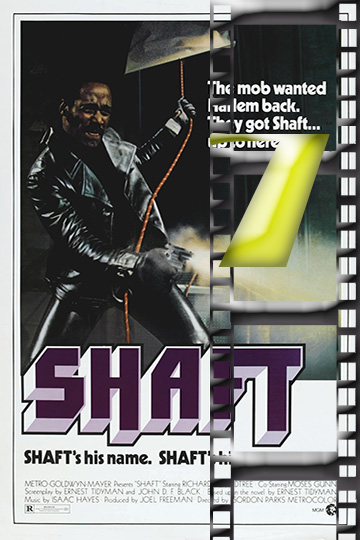
WHAT’S IT ABOUT
John Shaft (Richard Roundtree) is the ultimate in suave black detectives. He first finds himself up against Bumpy (Moses Gunn), the leader of the black crime mob, then against black nationals, and finally working with both against the white mafia who are trying to blackmail Bumpy by kidnapping his daughter.
MOVIESinMO REVIEW
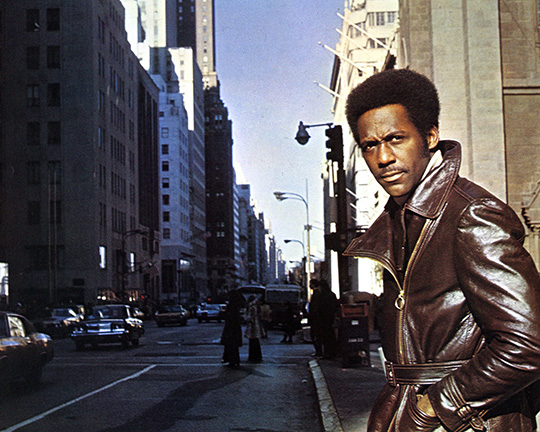
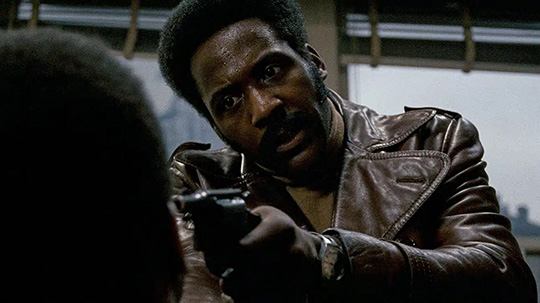
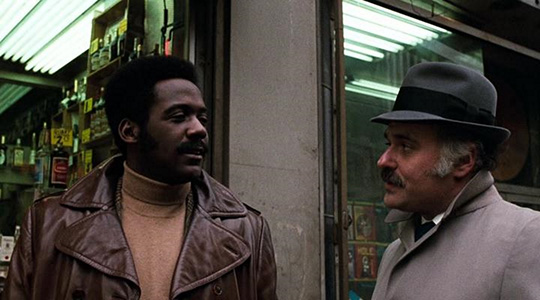
When Shaft strutted its way into theaters in the summer of 1971, it wasn’t just introducing audiences to a new kind of hero – it was announcing the arrival of a cultural phenomenon that would forever alter the landscape of American cinema. As a Black film critic looking back at this watershed moment in both Black film history and mainstream Hollywood, the significance of Gordon Parks’ groundbreaking action thriller cannot be overstated, even as our understanding of its legacy has evolved over the five decades since its release. Richard Roundtree’s portrayal of John Shaft – the “black private dick that’s a sex machine to all the chicks,” as Isaac Hayes’ iconic, Oscar-winning theme song puts it – hit American screens at a pivotal moment when the civil rights movement was evolving and Black identity in America was being redefined. To fully appreciate Shaft’s impact, we must understand both how it was received in its time and how our perspective on it has shifted as cultural attitudes have evolved. When Shaft premiered, most Black film critics hailed it as nothing short of revolutionary. Here was a film with a Black lead character who wasn’t a sidekick, comic relief, or a tragic figure but rather the undisputed hero – confident, capable, and unapologetically commanding. In a Hollywood landscape where Black characters were typically marginalized, Shaft represented a seismic shift. The film offered what few mainstream movies had before: a Black protagonist who moved through the world with agency and authority. John Shaft navigated both Harlem’s streets and downtown’s white power structures with equal ease, refusing to be intimidated by either. He was sexual without being fetishized, strong without being demonized, and complex without being burdened by the weight of representing his entire race. Critics at the time recognized that Parks, the first Black director to helm a major studio film, had created something that transcended its modest budget and pulp-fiction origins. The film’s authentic portrayal of Harlem – shot on location with Parks’ photographer’s eye for composition – gave audiences an immersive view of Black urban life rarely seen on screen before. Black publications celebrated the film’s success, with Jet magazine declaring that Shaft represented “the New Black Image in films.” Even mainstream critics who may have dismissed the film’s plot as conventional praised its style, energy, and Roundtree’s charismatic performance. When Shaft became a massive box office success (grossing nearly $13 million on a $500,000 budget), it proved what Black audiences had known all along: Black heroes could carry mainstream films. Looking at Shaft through a contemporary lens reveals a film of fascinating contradictions. While it remains a landmark of Black representation in cinema, today’s critics recognize both its revolutionary aspects and its limitations. Modern analysis acknowledges that Shaft, for all its groundbreaking elements, was still a product of MGM Studios looking to capitalize on a Black audience. The film launched what would become known as the Blaxploitation era – a genre with varied representation that sometimes reinforced problematic stereotypes even as it created space for Black stories. From today’s vantage point, we can see how Shaft’s character embodies both progressive and problematic traits. His hypermasculinity and treatment of women – particularly the film’s female characters who are largely underdeveloped – reflect the era’s limited gender politics. The film’s celebration of a certain type of masculine power, while revolutionary in breaking stereotypes about Black male weakness, now appears constrained by the very gender norms it was working within. The film’s politics also appear more complex now. While Shaft does ultimately help the Harlem community by rescuing the mob boss’s daughter (thus preventing a race war), he operates as an individual agent rather than as part of any larger movement for social change. His politics are personal rather than systemic – a trait that made him palatable to white audiences but limited the film’s radical potential. Yet despite these critiques, Shaft remains powerful precisely because it created space for these conversations. It brought Black heroism to the mainstream and influenced generations of filmmakers who would push boundaries further.The cultural ripple effects of Shaft continue to resonate. Without John Shaft, there might not have been a Foxy Brown, a Blade, or a Black Panther. The film proved the commercial viability of Black heroes, opening doors that had previously been closed. Isaac Hayes’ groundbreaking score – the first by a Black composer to win an Academy Award – revolutionized film music and demonstrated how sound could enhance cultural authenticity. The Shaft theme remains one of cinema’s most instantly recognizable musical signatures, bridging generations of viewers. Perhaps most significantly, Shaft created opportunities for Black talent both in front of and behind the camera. Gordon Parks’ success as director paved the way for other Black filmmakers, while Richard Roundtree’s iconic performance expanded possibilities for Black actors beyond the narrow roles previously available.Fifty years after its release, Shaft occupies a unique position in film history – both revolutionary and of its time. Its limitations are real, but they don’t diminish its importance. Rather, they illustrate how cultural representation evolves through an ongoing dialogue between artists and audiences across generations. When I watch Shaft today, I see a film that changed cinema forever while also reflecting the constraints of its era. I appreciate how it created space for more nuanced Black characters who would follow, even as I recognize the ways in which our expectations for representation have rightfully expanded. The true measure of Shaft’s enduring power isn’t just that it broke barriers in 1971, but that it continues to inspire conversation about those barriers today. It’s a cultural document that reminds us how far we’ve come and how far we still need to go. John Shaft may be a “complicated man” – as the theme song tells us – but his complexity opened the door for the even more nuanced Black characters we deserve and demand today.
OUR RATING – A BADASS 7