

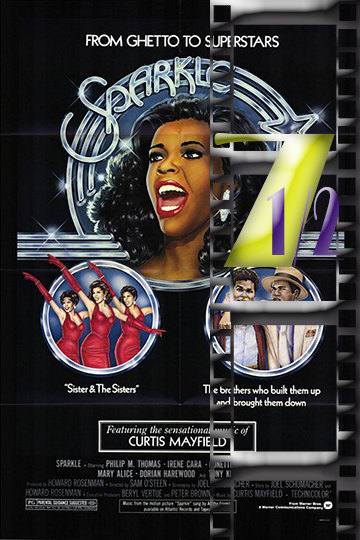
WHAT’S IT ABOUT
In 1950s Harlem, Sparkle (Irene Cara), Sister (Lonette McKee) and Dolores (Dwan Smith) are three musically gifted sisters whose mother, Effie (Mary Alice), supports them by working as a maid. Encouraged by Sparkle’s boyfriend, Stix (Philip Michael Thomas), the three form a singing group and become a sensation at a local nightclub. However, tensions rise when Sister is appointed the group’s lead singer and begins dating Satin (Tony King), an abusive, drug-addicted pimp.
MOVIESinMO REVIEW
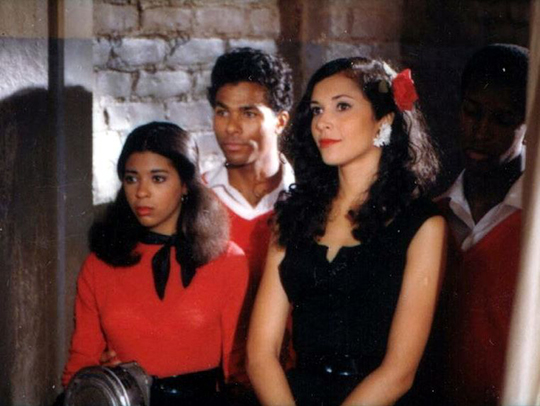
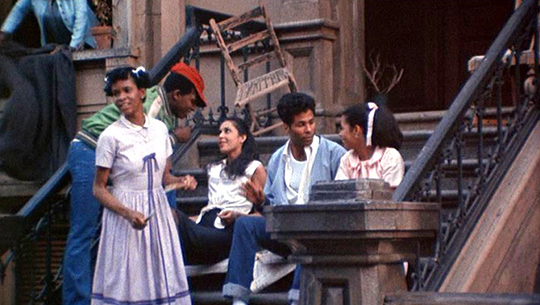
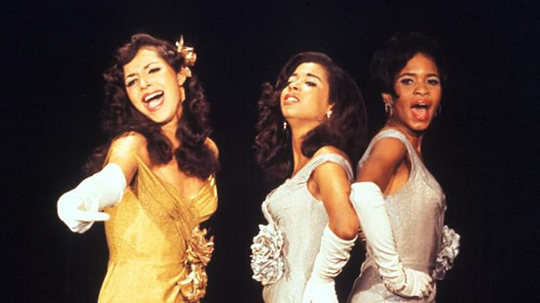
When “Sparkle” was released in 1976, it was at a pretty interesting time for Black cinema. The whole Blaxploitation thing was on its way out, and Hollywood was just starting to come around to more Black narratives, even if it didn’t exactly want to initially. Directed by Sam O’Steen and written by Joel Schumacher, “Sparkle” is the tale of three sisters from Harlem who put together a singing group in the late ’50s with the dream of hitting it big. The movie features Irene Cara in the title role of Sparkle, along with Lonette McKee and Dwan Smith, and supporting roles by Philip Michael Thomas and Dorian Harewood. “Sparkle” got mixed reviews from mainstream critics at the time of its release, dismissed for the most part as a formulaic rags-to-riches story with melodramatic leanings. However, in Black communities, the movie was received differently and became a bit of a cult classic that was actually about Black dreams, Black talent, and the struggles that Black entertainers face working in a white-dominated entertainment industry. Watching “Sparkle” in 2025 is like stepping into a time machine but being just as relevant. The best aspect of the film is, without a doubt, Curtis Mayfield’s amazing soundtrack, sung mostly by Aretha Franklin. Songs like “Something He Can Feel” (rendered by En Vogue way back in the ’90s) really highlight Franklin’s phenomenal vocals and contribute to setting the emotional mood for the film. The soundtrack transforms what could have otherwise been your typical melodrama into something deeper—a musical experience that gets the optimism and disillusionment of its main characters just right. Visually, “Sparkle” captures the aesthetic values of mid-1970s filmmaking while depicting the late 1950s, setting up a curious double nostalgia. Of particular note is the costume design by Bernard Johnson, which is so evocative in bringing the period fashion to life, particularly in those performance scenes that feature glamorous stage wear that would go on to inspire generations of performers to follow. What is most striking watching “Sparkle” again is the way it deals with problems that are infuriatingly still with us today. The film talks about the exploitation of Black talent, drug addiction, domestic violence, and the particular problems that Black women encounter trying to deal with fame in America. Lonette McKee absolutely kills it as Sister, the eldest sibling whose appearance and talent are exploited and completely ruined by an abusive relationship with a drug dealer. She gives this genuine depth and feeling to a character arc that easily could’ve just been a cliché. And some of the elements of “Sparkle” that people weren’t so crazy about when it was released now look really ahead of its time. The movie’s uncompromising look at domestic violence was uncommon for the period, and its rendering of Sister’s downfall avoids easy moralizing. Instead, it presents her tragedy as the result of systemic issues and personal frailties more than individual moral failings—a commendably nuanced reading for its era. That said, viewing “Sparkle” in 2025 does reveal limitations and problematic elements. So, the film, at times, falls back on these stereotypical notions of Black urban life that sound rather one-dimensional. Some of the characters, particularly the men like the creepy Satin (Tony King), sort of read like stereotypes. And the conclusion, when Sparkle eventually achieves stardom after her sister’s death, gives us this nearly too simplistic conception of success that sort of glosses over the harsh challenges Black women continued to encounter in the music industry. Yet what sustains “Sparkle” as a film is its emotional realism. Irene Cara’s performance as the shy but talented Sparkle rings true to the universal need for self-expression and acceptance. Her journey from backup to lead singer is genuine as a rite of passage, even when certain elements of the plot are shortened or simplified. The sisterhood portrayed in the film is particularly poignant. The relationship among the three Williams sisters truly exemplifies what Black women’s solidarity is, which you didn’t see too much of in films at the time. Their scenes together—practicing in their home, supporting one another during the hard times, fantasizing about a better life—have this authentic feel that compensates for some of the film’s aged material. Do you believe that “Sparkle” would resonate with audiences now? I think it would, although maybe not in the way the creators intended. People today would maybe watch it somewhat nostalgically and with a little constructive criticism. The musical sequences are still honestly exhilarating, and the lead performances still hit you right in the feels. If you’ve watched films like “Dreamgirls” (which completely borrows a lot from “Sparkle”), you’d recognize some of the same story feels, but you’d also totally vibe with how raw and real “Sparkle” is because it was created closer to the era it’s depicting. So, the 2012 remake with Whitney Houston (her last film) and Jordin Sparks tried updating the story somewhat, but a lot of fans of the original still believe that the original 1976 one has this intangible something that cannot be recreated. It just embodies the gritty spirit of the time period it came out in. And as for whether or not “Sparkle” is still worth watching, I’d definitely say so! While there are certainly some retro elements, the overall story of chasing your dreams, family, and being who you are definitely transcends when it was made. And “Sparkle” is a landmark in Black cinematic history—it’s like this bridge between the Blaxploitation era and the more crossover Black stories that came later. You can still feel its influence everywhere, from music videos to fashion to more contemporary musical dramas. Its conception of Black musical performance as joyful expression and potential path to economic uplift has shaped numerous subsequent works. “Sparkle” remains an imperfect but genuinely affecting musical drama whose strengths, most significantly its soundtrack, costume design, and principal performances, dwarf its narrative shortcuts and dated elements from time to time. To contemporary audiences interested in the history of Black cinema or the rich cultural heritage of Black musical performance, it is both historically valuable and genuinely entertaining. Forty-five years on from its original release, “Sparkle” continues to sparkle, both as a cultural artifact and as a testament to Black artistic resilience and creative vitality.
OUR RATING – A GLITTERING 7.5