

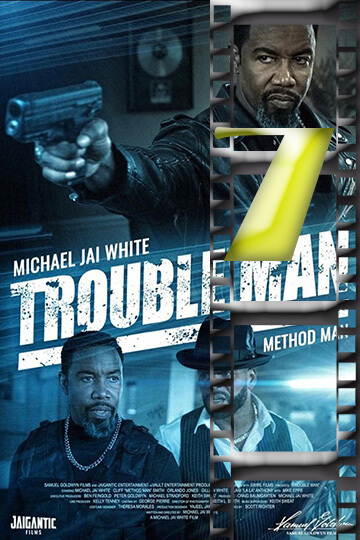

WHAT’S IT ABOUT
A former cop turned private investigator gets hired to find a missing R&B star. His investigation uncovers a connection to a larger conspiracy, forcing him to question those around him and his own past.
MOVIESinMO REVIEW
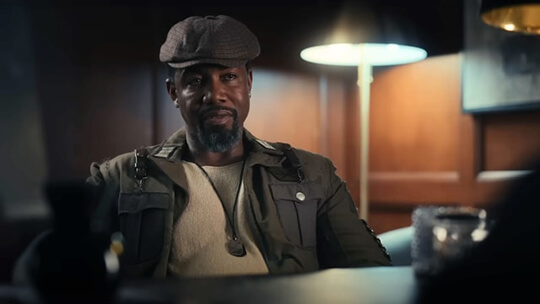
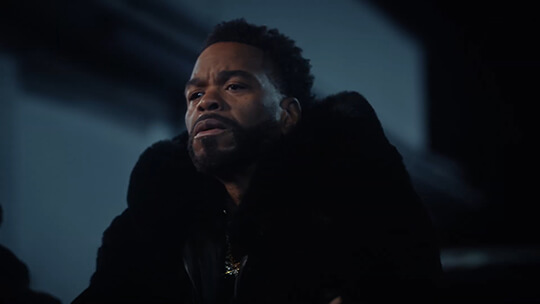
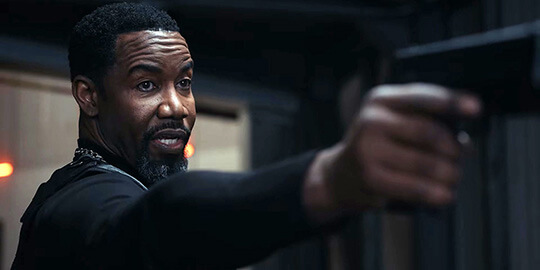
Michael Jai White knows exactly what he does best, and he’s not afraid to show it off. In his latest movie “Trouble Man,” White directs himself as Jaxen, a former Atlanta police officer who now works security at a nightclub and takes side jobs as a private investigator. The movie doesn’t pretend to be anything fancy, but it delivers exactly what fans want from a Michael Jai White film. The story kicks off when Jaxen gets hired by Barnes Holland, a sleazy record company boss played by Orlando Jones. One of Barnes’s biggest singers, Jahari, has vanished right before a major album release. Since Jaxen used to be her bodyguard, he agrees to track her down. What starts as a simple missing person case quickly turns into something much bigger and more dangerous. White brings back the classic style of 1970s action movies, specifically the blaxploitation genre that gave us iconic characters like Shaft and Dolemite. While this isn’t a comedy like his famous “Black Dynamite” from 2009, it still has plenty of laughs mixed in with the punches and gunfights. The humor feels natural instead of forced, which makes the whole experience more enjoyable. The supporting cast really helps carry the movie. Method Man plays Money, Jahari’s boyfriend, who teams up with Jaxen to find her. Method Man brings genuine comedy to his role and steals several scenes with his timing and delivery. Mike Epps shows up as Ree Ree, the nightclub owner who employs Jaxen. La La Anthony plays the missing singer Jahari, though she doesn’t get much screen time since she’s supposed to be missing for most of the movie. One of the movie’s strongest elements is how it handles the romantic subplot. Jaxen reconnects with his ex-girlfriend, Gina, played by Gillian White (who happens to be Michael Jai White’s real-life wife). You could feel the chemistry between White and Hall, and their relationship adds emotional weight to the action. The film depicts their reunion with a playful martial arts sparring match, which involves flirting and character development. The action scenes demonstrate White’s martial arts abilities; even now, in his late fifties, he’s still moving at impressive speeds and delivering speed and power during the fight scenes.The choreography isn’t Hollywood blockbuster quality, but it gets the job done and feels believable. White clearly understands how to film action so that every punch and kick has impact. The story follows Jaxen as he digs deeper into Jahari’s disappearance and connects it to an Asian crime syndicate led by Yuen Song (Levy Tran). He investigates the Underground scene in Atlanta, from lavish recording to meetings in back alleys, where not everyone is alive at the end of the meeting. Along the way, he faces multiple assassination attempts and has to use both his fighting skills and detective instincts to stay alive. Where the movie stumbles is in its production values and pacing. The low budget shows in some scenes, particularly during car chases and larger action sequences. The cinematography looks more like a television movie than a theatrical release. Certain plot aspects seem compressed, and character motivations are not given enough depth to feel completely believable. Screenwriter Michael Stradford offers some clever dialogue along with portions of dialogue that fall flat. Certain jokes work well and are humorous, while others feel awkward, forced, or clichéd. The film works best when it embraces the ridiculousness of the plot, such as Jaxen bouncing off the side of a van in order to kick a motorcycle rider, and the appearance of a samurai sword out of nowhere, during the final rooftop fight. These moments show that the entire cast and crew understand they are making entertainment, not fine art. The movie lovingly embraces the tradition of classic blaxploitation films with some references and Easter eggs for fans of the genre to enjoy.However, unlike “Black Dynamite,” which parodied these old movies, “Trouble Man” plays things relatively straight. It respects its influences while updating them for modern audiences. Method Man deserves special recognition for his performance as Money. Every scene features energy and unpredictability, thanks to Karra Elejalde’s work as Felix Baez. Elejalde is a gifted and passionate performer who prevents his character from being relegated to mere comic relief. Where the chemistry with White shines its brightest is in some of the film’s best moments and in the buddy-cop dynamic both actors created in their investigation. The location (mostly) in Atlanta gives the somewhat thin script a thick, rich, and specific vibe that separates “Trouble Man” from single-action films. The locations here feel authentic; not one location feels like a generic sound stage hot off the press. The nightclub scenes in the film add great depth to the locations because they truly do reflect a nightclub vibe. White clearly knows how to make the best of his locations, even on a small budget, and he recognizes that that’s the genuine “backbone” of his film. “Trouble Man” does not attempt any kind of meta maneuvering to break new ground, nor does it redefine cinema as we know it, but it does accomplish exactly what it sets out to do: be a fun throw-back to the action movies of old, with a fresh point-of-view/mindset. The 90-minute runtime establishes a redirection towards fun and fast-paced entertainment before wandering into melodrama territory. The film does not take its story too seriously, so the audience is allowed to just enjoy the ride without fixating on the gaps in the narrative logic. White has spent the better part of 10 years building his writing and directing career, and “Trouble Man” allows each viewer to witness his growth in the director’s chair. He understands how to balance action, comedy, and character development, even when working with obvious budget constraints. His experience as an actor helps him get solid performances from his cast, particularly in the action sequences where timing and physicality matter most. Trouble Man sounds like R&B and hip-hop music appropriate to the urban feel of the movie. Its best feature is that even the end credits feature music that sounds appropriate – they even had Keith Sweat do a cover of James Brown’s classic. The music choices work just fine (and do not even distract) and work with, not against, the movie. Trouble Man is comforting food for people who enjoy action movies with a signature Michael Jai White feel. It is about a movie that could function simply to be entertaining on a weekend afternoon when you have stuff to do but need something entertaining, but not demanding. The mixture of martial arts, light-funny comedy, and retro-stylistically nostalgic time frame creates a piece you can find familiar and distinct enough to entice attention. Trouble Man, as a movie, met expectations, provided decent entertainment, and knew its limits and worked within them. It was not going to win any gifts for originality or technical prowess, but it would give every single fan of Michael Jai White what they were expecting: an engaging performance, action-stylistic fights, and a good amount of laughs to keep it fluffy! It’s disposable entertainment in the best possible way, offering 90 minutes of fun without any pretense of being more important than it actually is.
OUR RATING – A CLASSIC STYLE 7