

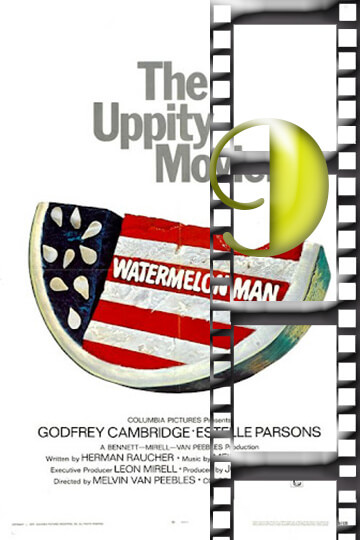
WHAT’S IT ABOUT
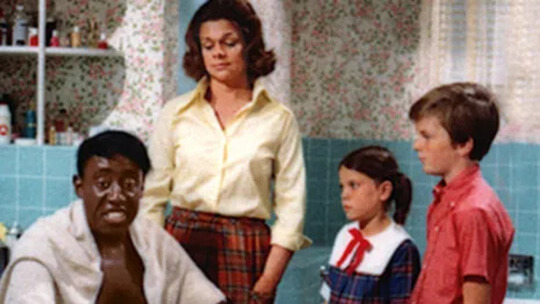
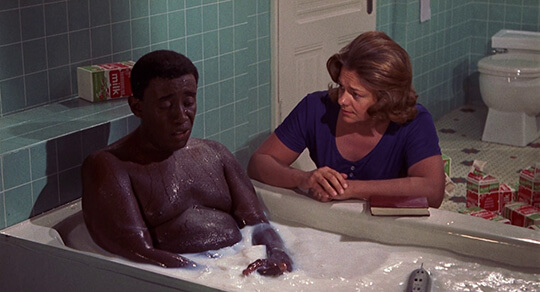
A white insurance salesman, Jeff Gerber (Godfrey Cambridge), gets the surprise of his life when he wakes up and discovers that his skin now resembles a black man’s. In day-to-day life, he soon finds himself the victim of discriminatory practices — the same kinds of behaviors that, ironically, he had once used on black people himself. As his wife (Estelle Parsons) leaves him and all attempts toward explain and reverse the phenomenon fail, Jeff comes to accept and even profit from his new status.
MOVIESinMO REVIEW
A Dark Comedy that Has Matured with Time
In Melvin Van Peebles’ satirical comedy “Watermelon Man” (1970), a white insurance salesman named Jeff Gerber (Godfrey Cambridge) awakens one morning to find that he has become a Black man.n. What follows is a biting examination of race in America that—while groundbreaking for its time—carries different resonances when viewed through a contemporary lens. As a Black film critic reflecting on the film today, I’m struck by both its boldness and its limitations. The film is an interesting time capsule of racial discourse at a particular time in American history, during the post-civil rights movement and as the Black Power movement began to surface.
The Film in Its Time
It was either too heavy-handed or courageous, and many didn’t delve deeper than that. Many Black publications acknowledged something significant in Van Peebles creating a film that was directed by a Black filmmaker that didn’t consider the comfort of white audiences. It didn’t position racism as a problem of individual prejudice but as a systemic reality embedded in American life. The film’s unrestrained depiction of how rapidly Jeff’s job prospects and relationships dissolve after his transformation was a potent endorsement of lived Black life. The reviews of Cambridge’s performance were almost universally good. He had remarkable range, capable of convincingly playing the self-absorbed racist white Jeff and the increasingly aware Black Jeff. His physical comedy and facial expressions carry much of the film’s narrative weight, communicating volumes about the psychological impact of racial identity. Van Peebles fought Columbia Pictures to maintain his original ending—refusing their demand that Jeff return to being white—a bold stance for a Black director working within the studio system. This decision was revolutionary in 1970, rejecting the comfortable resolution white audiences might have expected and instead embracing a more radical vision of Black self-determination.
Through Today’s Lens
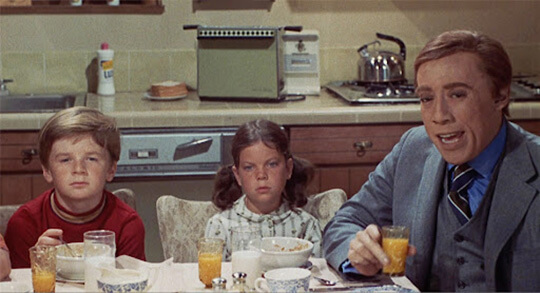
Viewing “Watermelon Man” in 2025, several aspects stand out differently than they would have fifty-five years ago. The film’s premise—using a physical transformation to explore racial identity—now exists within a rich tradition of films examining race through high-concept scenarios. Jordan Peele’s “Get Out,” Boots Riley’s “Sorry to Bother You,” and numerous other works have built upon the foundation that Van Peebles helped establish. The film’s satirical approach feels remarkably prescient. Its unflinching examination of white privilege, microaggressions, and systemic racism reads as almost prophetic given contemporary discourse. Jeff’s initial casual racism—his jokes, his affected “jive” speech, his stereotyping—are precisely the kind of behaviors that would now be identified as examples of unconscious bias. What feels most dated isn’t the film’s message but certain stylistic elements and some of its gender politics. The portrayal of Jeff’s wife, Althea (Estelle Parsons), lacks nuance, and the film sometimes conflates sexual liberation with racial awakening in ways that feel simplistic by current standards. Yet what remains powerful is how the film refuses to offer easy answers. Jeff doesn’t become a better person simply by becoming Black—instead, his transformation forces him to confront realities he previously denied. The film’s ending, with Jeff training for an undefined revolutionary struggle, might have seemed radical in 1970 but now reads as an acknowledgment of the ongoing nature of racial justice work.
A Pioneering Vision
What’s remarkable about “Watermelon Man” is that it was made at all. Prior to this film, Van Peebles had directed only one feature, and Columbia Pictures took a significant risk on a Black director telling such a provocative story. The film’s commercial success (it grossed $1.1 million on a $400,000 budget) helped pave the way for Van Peebles’ “Sweet Sweetback’s Baadasssss Song” the following year, which would become a cornerstone of the Blaxploitation movement. As a Black critic watching this film today, I see it as an essential bridge between the integrationist cinema of the 1960s and the more radical Black films that would follow. Van Peebles wasn’t interested in making a film that asked politely for equality—he created a confrontational work that demanded viewers acknowledge the absurdities and hypocrisies of American racism. The film’s use of humor as a vehicle for social commentary remains effective. Cambridge’s physical comedy—particularly in the early scenes of preening self-absorption and later desperate attempts to “cure” his Blackness—still lands with uncomfortable precision. The laughter Van Peebles evokes isn’t comfortable; it’s the kind that catches in your throat when you recognize the truth being exposed.
Legacy and Relevance
“Watermelon Man” is a distinct entry in the canon of Black cinema history. It is a predecessor to the commercial Blaxploitation craze while casting aside many of the trappings used in repeated instances of the genre. It approached race with a candid directness that studio films of the time lacked. While it may lack the technical polish of later works addressing similar themes, its raw energy and unflinching perspective remain powerful. In an era where racial discussions have become increasingly sophisticated yet simultaneously polarized, “Watermelon Man” reminds us how long these conversations have been taking place. The issues it raises—about identity, privilege, community, and resistance—remain strikingly relevant. Van Peebles created a film that refused to cater to the white gaze at a time when doing so was professionally dangerous. For this alone, “Watermelon Man” deserves recognition as an important cultural document. But beyond its historical significance, it remains a bitingly funny, thought-provoking work that continues to challenge viewers fifty-five years after its release. The last image of Jeff honing his self-defense skills in his basement, ready for an unnamed fight, feels more like a lucid appraisal of a struggle that endlessly changes but never quite finishes. In that respect, “Watermelon Man” wasn’t simply ahead of its time; it recognized the ongoing, unending, and necessary conversation about race in America.
OUR RATING – A RELEVANT 9