

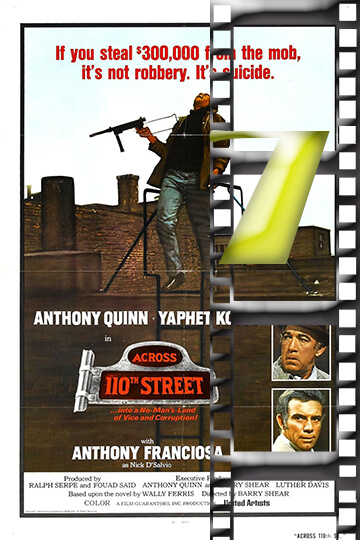
WHAT’S IT ABOUT
After a robbery in Harlem turns into a scene of mass murder, promising young black police officer William Pope (Yaphet Kotto) is assigned to the case, along with surly, prejudiced Italian-American cop Frank Mattelli (Anthony Quinn). The pair clash during their tense investigation as they try to track down the three suspects and apprehend them. Also searching for the fugitives is ruthless mobster Nick D’Salvio (Tony Franciosa), who will stop at nothing to retrieve the stolen money.
MOVIESinMO REVIEW
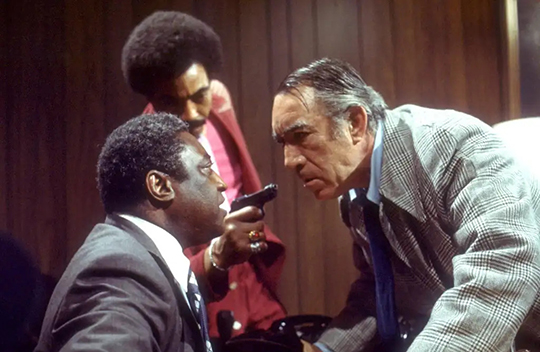
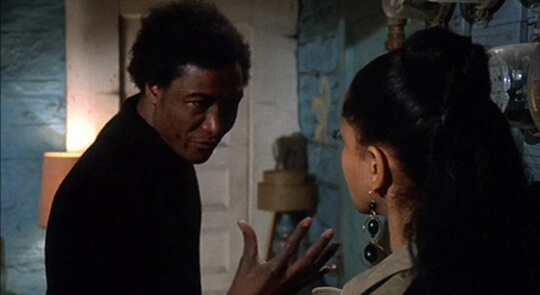
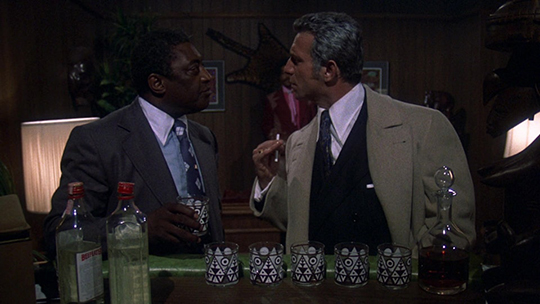
Barry Shear’s “Across 110th Street” was released in 1972 at the height of the blaxploitation craze and is like opening up a time capsule that is both powerful and uncomfortable. As a Black film critic viewing this gritty crime thriller, some nearly sixty years after it first opened, it is like being divided by mixed feelings about a work that was experimental at the time but problematic by our contemporary standards. It features three Black men sticking up a Mafia-run numbers racket operating out of Harlem and taking $300,000 and killing some Italian mobs and crooked Black cops along the way. What follows is a blood-soaked game of cat and mouse fought on the tough streets of Harlem with the Italian mobs and Black crime lords pursuing the robbery suspects. There is a poignant performance from Anthony Quinn of an elderly Italian cop and a searing performance of a younger Black cop struggling with the racial politics at play within the NYPD by Yaphet Kotto. When “Across 110th Street” first opened, many white mainstream reviewers trashed it as nothing more than some urban crime flick attempting to ride the moneywagon. White tastemakers and reviewers far too often focused on violence and grittiness and failed to understand the underlying social commentary. But Black viewers and some vocal reviewers recognized something else. Here was a work where, imperfections and all, the Black protagonists were multidimensional humanoid figures and not stereotypes. This was a picture that did not shy away and presented the poverty and desperation that led individuals toward crime, and did not sidestep the institutionalized racism that jammed the Black communities up against the wall. Unlike anything attempted by Hollywood of the time, the presentation of the city of Harlem was raw and real and often unsparing. Shot on location within actual Harlem neighborhoods, the degradation and decay of the early 1970s are shown with unflinching candor. That first robbery sequence filmed within a gritty tenement complex is absolutely raw and frenetic. You can smell the desperation and fear oozing from the screen. Yaphet Kotto’s performance as Detective Pope is the film’s strongest point. He brings density and depth where it could have simply been a generic “good cop” role. Pope is ambitious and intelligent, but trapped within a racist police force where he is undercut at every corner and shown absolute disregard. Kotto nails these tensions perfectly and reveals a man trying to do what is right within a very bad system. His confrontations with Anthony Quinn are tense with racial tension that never feels stigmatic but real. Three of the robbers are played by Paul Benjamin, Ed Bernard, and Antonio Fargas, and are shown adequate depth and complexity that they are not cartoon villains. Benjamin is quite effective with the role of mastermind, and Jim Harris is driven by the desperation of escaping poverty and being driven increasingly violently. It doesn’t excuse their actions, but you come to understand where it came from. It is sad, then, that “Across 110th Street” can only come with some caveats. Watching it now involves confronting real problems with it. Women are absolutely atrocious within it, and it is bad enough by the 1970s. Black women are represented nearly exclusively as hookers and junkies or being raped or being raped. There is a very graphic and gratuitous rape sequence, and it seems to have little more than shock value. These things were unacceptable then and certainly unacceptable now. The film falls prey to some unfortunate tropes about Black-on-Black violence that would go on to become all too familiar in subsequent urban crime films. While the film does show how institutionalized racism and poverty cause crime, it at times seems rather insistent on pointing toward violence simply being inherent in Black communities. This kind of fatalism did a lot toward perpetuating bad stereotypes about Black urban life. Violence is graphic and unflinching, which was part of what made the film immediate and real to those viewing it in 1972. But bygone viewers may find it gratuitous or exploitive. The film neither glorifies violence sufficiently nor criticizes it sufficiently either. Characters are murdered in grim or violent deaths far too often for fairly small payoffs, and the thing is simply shruggingly presented. Against contemporary values of inclusivity and diversity, “Across 110th Street” would likely come under scrutiny and criticism for its masculine perspective and its limited viewpoint of Black life. Viewers these days expect more nuanced depictions of Black communities that show the full range of Black life and experiences, not just crime and poverty. We’d rather see Black triumphs and joys and successful families and children and so on. That being said, the film nonetheless has value both as entertainment and a document of a then-contemporary era. Performance is first-rate, led particularly by Kotto and the supporting cast. The action is superbly staged and genuinely suspenseful. And importantly, perhaps the thing gets at a certain moment of Black urban history with a raw honesty that far more sanitized films lack. Would contemporary individuals enjoy “Across 110th Street”? It depends on what they are seeking. Fans of crime movies and 1970s-movie nostalgia would find its rough-hewn realism and strong performances appealing. But general viewers presuming a contemporary attitude toward race and gender would find it off-puttingly antiquated. This is a film best appreciated when it is viewed as a work of the period rather than timeless art. In 1972, being allowed simply to regard Black figures as complex protagonists of a big-budget major-studio feature was revolutionary. These days, we can thank our forebears for that innovation and recognize just how far we still have yet to travel. “Across 110th Street” deserves credit for treating Black urban life seriously and not resorting to facile explication about crime and poverty. And yet it is equally expressive of limitations of the era, and of itself, in ways that are uncomfortable viewing now. It is an image that is historically rather than artistically significant at this date, a stepping-stone toward fuller representation rather than a destination in itself. For Black spectators now, what makes this image work is both what it gets right and what it gets wrong. We can praise seeing players like Yaphet Kotto being given big-budget leads and multifaceted characters where it makes a difference. But we can, at the very same time, note the ways it pre-empted fuller development of a richer understanding of violence and crime by concentrating on it so very intensely. At bottom, “Across 110th Street” is worth seeing if you are at all curious about the evolution of Black films or 1970s crime films. But do not expect it to hold up perfectly to contemporary standards. It is a seriously faulty yet profoundly illuminating glimpse of a moment when Black stories were at long last being represented on the big and small screens, although they were still not being represented right yet.
OUR RATING – A CRITICAL 7