

WHAT’S IT ABOUT
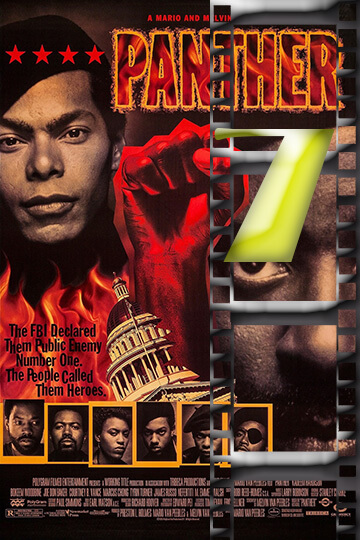
In this semi-fictionalized account of the origins of the Black Panthers, Vietnam vet Judge (Kadeem Hardison) returns to his hometown of Oakland to find it beset by violence and police discrimination against African-Americans. Judge’s friend Cy tells him about a vigilante group that’s organizing against the police and introduces him to its leaders, Bobby (Courtney B. Vance) and Huey (Marcus Chong). Judge joins the movement but is soon beset by police pressure to inform against Huey.
MOVIESinMO REVIEW
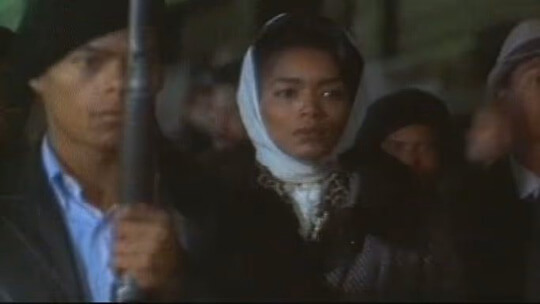
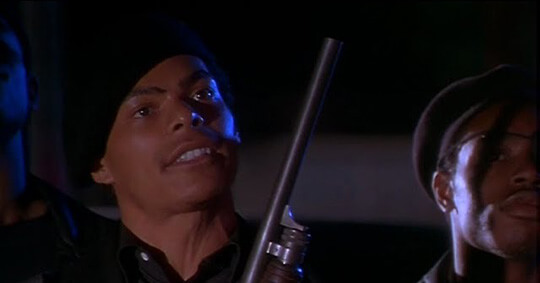
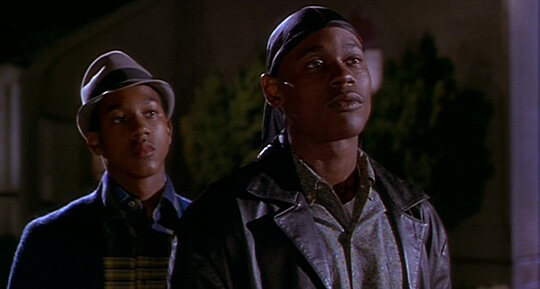
When Mario Van Peebles directed “Panther” back in 1995, he was trying to do something that Hollywood rarely allowed Black filmmakers to do – tell our own story about one of the most important and controversial movements in Black American history. The Black Panther Party remains a subject that makes people uncomfortable, and Van Peebles knew he was walking into a minefield. Looking back almost thirty years later, his film feels both groundbreaking and frustrating, ambitious and flawed. The movie follows the rise of the Black Panther Party in Oakland, California, from its founding by Huey Newton and Bobby Seale to its eventual decline. Van Peebles does not dismiss the complexities of the Panthers – they were not simply angry young men with guns, but that’s how the mainstream media portrayed them. They provided food for children, healthcare, and survival programs that the government should have been running. But they were also embroiled in violence and internal division brought on by government infiltration that ripped them apart from within. The thing I remember most about watching “Panther” back in 1995 was how radical it was to see Black men represented as intellectuals and revolutionaries instead of criminals or punch lines. Kadeem Hardison, coming off “A Different World,” stepped into the character of Eldridge Cleaver; he played it with both anger and vulnerability. Marcus Chong plays Huey Newton with a kind of internal, silent intensity that subjects both his genius and his demons to scrutiny. These were not the standard representations of Black men that we were used to watching in Hollywood. The film doesn’t romanticize the Panthers, which is both its strength and what probably hurt it at the box office. Van Peebles shows how FBI infiltration and COINTELPRO operations systematically destroyed the organization, but he also doesn’t ignore the internal problems. The film presents drug selling and betrayal, and also shows how some Panthers were drawn into the violence they claimed to be against. For a community that had previously absorbed sanitized versions of civil rights history formatted around non-violent resistance, watching the Panthers’ story told with this kind of complexity felt both invigorating and challenging. When “Panther” was released, mainstream critics were mixed at best. Many white reviewers seemed uncomfortable with the film’s unapologetic stance on Black militancy and its direct accusations against the FBI and CIA. The movie explicitly shows government agents flooding Black communities with drugs and using dirty tricks to turn Panthers against each other. Some critics called it conspiracy theory filmmaking, but documents released years later through Freedom of Information Act requests proved much of what Van Peebles depicted was actually true. Black critics and audiences had a more complicated response. Some praised Van Peebles for finally putting the Panthers’ story on screen with dignity and complexity. Others felt the film was too long, too preachy, or that it didn’t go far enough in examining the party’s problems with sexism and authoritarianism. The movie runs over two hours, and Van Peebles sometimes gets bogged down in historical detail at the expense of character development. Watching “Panther” today, thirty years after its release, feels like looking at a time capsule. The film’s overall production value has a very mid-1990s feel, in every aspect, from the cinematography to the soundtrack (with artists such as MC Lyte and Paris). Yet the themes feel surprisingly relevant. Police violence and brutality, government surveillance of Black activists, the school-to-prison pipeline, food deserts in Black communities … all of the issues they were fighting against still exist. What is so jarring, perhaps more than anything else, is how the FBI’s threat to and tactics against Black organizations seem almost quaint, given what we know about the state of modern surveillance programs. While we watch shots of agents monitoring phone calls or infiltrating meetings, it all feels terribly quaint; one can’t help but be struck by how surveillance has changed to meet our digital capabilities. The Panthers’ paranoia about being watched turns out to have been completely justified. The film’s treatment of women in the movement is one area where it hasn’t aged well. While “Panther” includes female Panthers like Kathleen Cleaver, played by Angela Bassett, their roles feel limited compared to the historical reality. We now know much more about how women like Elaine Brown, who actually led the party for a time, shaped the organization. A film made today would hopefully give these women more substantial roles. Would “Panther” be acceptable viewing today? Sure, although it faces different challenges. The directness in their depiction of government repression of Black radicals does not seem as shocking anymore since there is significant overlap in the historical storytelling in recent movies like Judas and the Black Messiah. I think its length and somewhat clunky approach to historical exposition might lose some of the younger audience who are accustomed to faster-paced, competitive storytelling. Whether audiences today would be interested in “Panther” is a more complicated endeavor. For those who care about Black history, especially young people who are learning about the Panthers for the first time, the film provides relevant historical context about a movement that textbooks sometimes ignore or misrepresent. The performances are strong, particularly from the ensemble cast that includes Courtney B. Vance, Bokeem Woodbine, and a young Tyrin Turner. However, the pacing of the film, combined with Van Peebles’ inclination to preach, may feel dated to viewers who are accustomed to the subtle ways in which stories are told in modern films about Black history. In fact, the film at times feels more like it is educating the viewer rather than entertaining — which is not a bad thing, but creates a viewing experience that might feel more like homework rather than fun. “Panther” remains an important film not because it’s perfect, but because it was necessary. Van Peebles took on a subject that Hollywood was afraid to touch and told a story that needed telling. The issues the film has – its duration, its tendency to be preachy, and its lack of female points of view – shouldn’t take away from its historical importance. It provided black filmmakers the opportunity for further exploration of radical black history with complexity. As a film, Panther was ambitious, if uneven. As a historical document and cultural artifact, it has important value. Van Peebles showed that black stories of resistance and revolution can, in fact, work on the big screen, even if the results vary in quality. Panther deserves credit for taking its subject seriously and presenting it with the complexity it deserves, which was hard to find in 1995 and remains hard to find today.
OUR RATING – A BLACK FIST 7