

What’s It About
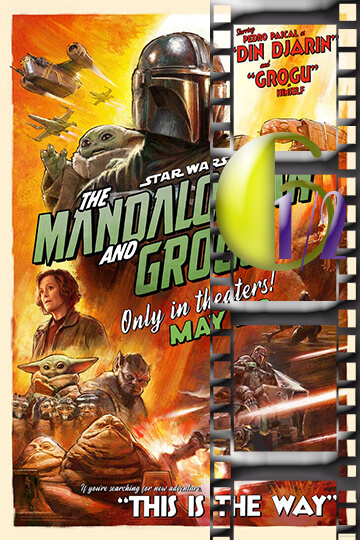
The evil Empire has fallen, but Imperial warlords remain scattered throughout the galaxy. As the fledgling New Republic works to protect everything the Rebellion fought for, they enlist the help of legendary Mandalorian bounty hunter Din Djarin and his young apprentice Grogu.
MOVIESinMO REVIEW
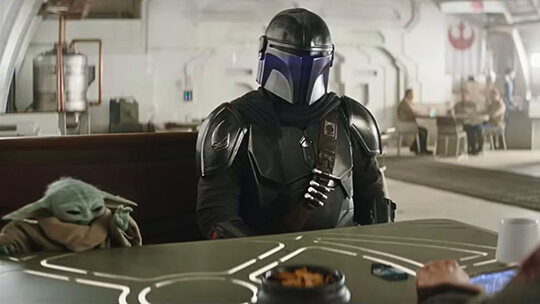
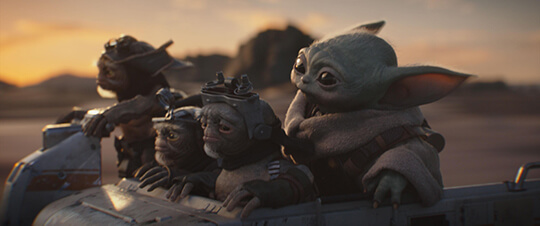
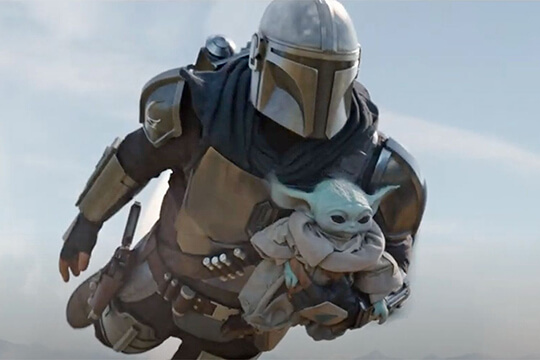
I felt a little something in my soul when the lights went dark, and that crowded galaxy was finally on the big screen after seven years of waiting. A mix of childhood excitement and adult excitement. For around twenty minutes of The Mandalorian and Grogu, those emotions were solidly in place. Then the program began doing what television does, and things got complicated. Jon Favreau, the director behind this film and the Disney+ series that made it possible, clearly loves Star Wars the same way a lot of us do. He has said he wanted to give a new generation the electric feeling of watching this universe explode across a theater screen. That is a beautiful goal. The problem is that good intentions and a big screen do not automatically make a movie feel like a movie. What Favreau has delivered is something closer to a very expensive, very entertaining television experience, and depending on what you came for, that might be just fine. The story picks up where the Disney+ series left off. Din Djarin, the Mandalorian himself, played by Pedro Pascal, is no longer a lone bounty hunter drifting through the galaxy’s shadows. He now works for the New Republic, tracking down what is left of the fallen Galactic Empire. His partner in all of this is Grogu, a 53-year-old toddler of the same species as Jedi Master Yoda, and the most undeniably adorable creature in the history of science fiction. Together they answer to Colonel Ward, played by Sigourney Weaver in a role that is somehow both exciting and deeply underused. Every time Weaver appears on screen, the film remembers it has access to one of the greatest performers in the entire history of space cinema, and then immediately forgets again. That is a crime. The central mission involves rescuing Rotta the Hutt, voiced with surprising effectiveness by Jeremy Allen White. Rotta is the son of the late Jabba the Hutt, and his twin aunts and uncles, the Hutt Twins, who now run Jabba’s old crime network, want him back. In exchange, they will give Din the location of Imperial warlord Janu Coin, the big target the New Republic has been hunting. It is a solid setup, even if the name “Janu Coin” suggests the writing staff may have been in a hurry that day. What works in this film works exceptionally well. The opening battle sequence is nothing short of spectacular. Din moves through a frozen battlefield, dismantling stormtroopers, taking down massive Imperial walkers, and riding a two-legged AT-ST like a man who has done this his whole life. Favreau stages this entire sequence as a sincere tribute to The Empire Strikes Back, and it earns every frame. This is the kind of scene that reminds you why Star Wars was built for theaters, for speakers so powerful you can feel the explosions in your chest, for screens so wide the scale of the galaxy actually registers in your body. The gladiator arena sequence in the film’s second act is another high point. Din and Rotta are forced to fight together against a series of ferocious creatures, and the filmmakers made the remarkable choice to execute portions of that fight using hand-crafted stop-motion animation, a technique that calls back to the legendary work of Ray Harryhausen and the practical creature work of the original trilogy. Phil Tippett, who contributed to those original films decades ago, returns here to handle the sequence. When those creatures move with that particular stop-motion texture, something genuinely magical occurs on screen. And then there is Grogu. Listen. The filmmakers spent five million dollars building an animatronic puppet for this character, and every single dollar shows. Grogu is real in a way that CGI creatures rarely achieve. He breathes. He blinks. He reacts. He eats everything he can get his small green hands on, presses every button he should not press, and radiates a kind of pure, uncomplicated love for Din Djarin that makes their relationship the emotional center of everything. Without that relationship, this film has much less to stand on. With it, the film has genuine heart. The final act of the film hits the brakes on its overall pacing and has a lot of problems due to the screenplay becoming disjointed from the first two acts; it does not keep up with its initial forward motion towards an end goal. The difference in pacing between the previous two acts and the last act is huge as well. The original series had much more emotional weight at the end of its second season than this film’s theatrical release will ever be able to accomplish, which will be a difficult pill for a big-screen movie to swallow. At times, the special effects could be better as well, especially when considering how different they will look on a large screen versus a smaller screen. The small Anzellan mechanical creatures introduced late in this movie cross the line from being cute to being fake, as they do not look like small creatures living in the galaxy, but rather look like they are part of a company’s attempt at making puppets for children that accidentally ended up on the wrong set. These situations wouldn’t really bother viewers as much if they had only seen the film on a smaller screen. There will be interruptions when these scenes are viewed on a large screen. Favreau has earned the right to be recognized for what he has done. This is the first Star Wars movie that does not have any connection to the Skywalker line, so it has a unique character, which the last trilogy of films did not have. It is a western in space that is built upon a father/son relationship and is about personal loyalty rather than the fate of entire civilizations, so its smaller scope is its biggest advantage and disadvantage. As Obi-Wan would say, “This is not the Star Wars experience you’re looking for”. The original Star Wars changed the lives of everyone who sat in a dark theater in 1977 and felt the universe expand around them. But whatever, The Mandalorian and Grogu is not trying to be, and it probably cannot be. What it is is a genuinely entertaining adventure with two characters worth caring about, action sequences worth seeing large, music worth hearing loud, and enough craftsmanship to honor the universe it inhabits. If you go in expecting a television episode with a larger budget and a better sound system, you will have a wonderful time. If you go expecting the Force to move through you the way it did when you were young, manage those expectations, and still go. Because there is enough here to remind you why this galaxy captured your imagination in the first place. The Force is present in this film. It just does not run all the way through it.
OUR RATING – A REBELLIOUS 6.5
MEDIA
- Genre – Science Fiction
Street date
- Digital – July 21, 2026
- 4K/Blu-Ray/DVD – August 25, 2026
- Video – 1080p
- Screen size 2.39:1
- Sound: English: DTS-HD Master Audio 7.1, Spanish: Dolby Digital 5.1, French: Dolby Digital 5.1, Audio descriptive
- Subtitles: English SDH, French, Spanish
Extras
· Audio Commentary by Jon Favreau: Watch the full film with commentary and insights from director Jon Favreau.
· Crafting “The Mandalorian and Grogu”: Go behind the scenes with artists creating the puppetry, miniatures, sound design, and visual effects.
· Biomes—From Snow to Swamp: Explore how filmmakers built brand-new snowy landscapes and a living swamp from the ground up.
· Welcome to Shakari: Discover the fabrication process behind building an entire Star Wars city and metropolis.
· Dejarik for Real: See how the classic holochess creatures from 1977 were brought to life in giant-sized detail for the big screen.