

What’s It About
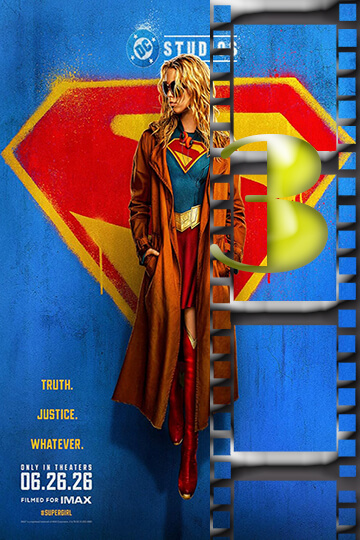
Follows a tougher, exiled Kara Zor-El (Milly Alcock) on a cosmic quest for vengeance alongside an unlikely alien girl, Ruthye, after her world’s destruction, confronting her Kryptonian origins while battling ruthless foes like Krem and Lobo (Jason Momoa)
MOVIESinMO REVIEW
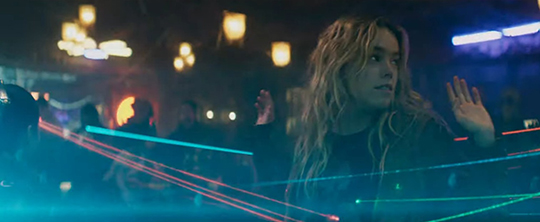
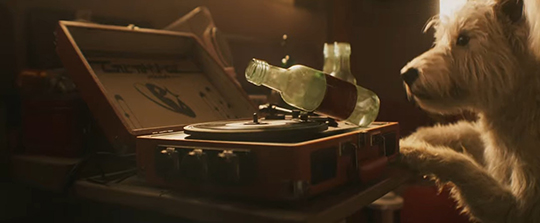
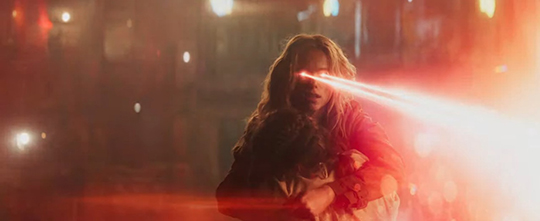
Many would find it incredibly frustrating and disappointing for a film, with all the right pieces (a popular character, a good director, and a massive budget) to just not work at all… That’s exactly how I felt about Supergirl in 2026, a superhero film assembled rather than created, with lots of parts that never connect to form anything of consequence. With an unfocused edit with no connection between scenes, a poorly developed plot, this movie raises some questions as to what went wrong, and the answer is: almost everything. The Movie features Kara Zor-EL, the cousin of Superman (Milly Alcock), who lives an emotional life, drinking heavily and carrying all of her grief as she travels through space with her dog (Krypto). But when Krem, a cold-blooded intergalactic trafficker with a gun to Krypto’s head, poisons Krypto with a dart before stealing Kara’s ship, the story takes a dramatic turn. Kara has three days or less to locate Krem and obtain the antidote attached to his neck to save Krypto from Krem’s revenge. Ruthye (Eve Ridley), a young girl who lost her family to Krem, becomes a companion to Kara as she struggles against the odds. Lobo (Jason Momoa), a bounty hunter who enters the story later on with a motorcycle, adds a lot of physicality to the story and that’s about it. The setup has real potential. The problem is that the screenplay, written by Ana Nogueira in her feature debut, never builds on that foundation with any depth or care. Characters arrive and disappear before the audience has a chance to connect with them. Backstories get dropped into the film abruptly rather than woven in with purpose. The emotional beats that are supposed to land, but Kara’s grief over losing her home planet, Krypton, and her reluctant bond with Ruthye, feel rushed and unearned. The film is roughly 100 minutes long, which is actually short by superhero standards, but it somehow manages to feel both rushed and slow at the same time. That is a difficult thing to accomplish, and not in a good way. Director Craig Gillespie is a talented filmmaker. His work on I, Tonya and Cruella showed that he could shape big personalities into sharp, entertaining films. None of that skill shows up here. His signature energy and character-driven style are nowhere to be found in Supergirl. Instead, the movie feels like it was steered by a committee rather than guided by a clear creative vision. What creative voice does come through actually belongs to producer James Gunn. His fingerprints are all over the film: a ragtag group of misfits thrown together by circumstances, a damaged lead character who uses attitude to hide pain, heavy musical needle drops used to manufacture emotion, and familiar villain tactics like targeting children and animals. These elements have worked before in Gunn’s hands. Here, stripped of the sharp writing and genuine heart that made them effective in films like Guardians of the Galaxy, they feel like copy-and-paste choices. Consider “The Middle” (by Jimmy Eat World) being played over the fight scene; it is definitely out of place and pulls the viewer from the moment, rather than adding to it with a purposeful artistic choice, but rather feels like a last-minute fix because the music they originally wanted to use did not work out. Krypto (the dog) has been used frequently to elicit an emotional response from the audience due to his large eyes, cuteness and CGI fluffiness as if being cute was enough to compensate for the weaknesses found in everything else. As for the performances, Alcock works hard. She carries the majority of the film on her shoulders and never stops trying. But the material gives her so little to work with that her effort rarely translates into anything memorable. Momoa brings his usual larger-than-life energy to Lobo, though the character exists mainly to fill screen time rather than serve the story in any real way. Schoenaerts brings quiet menace to Krem, and his is probably the steadiest performance in the film, even though Krem himself is one of the weakest villain designs in recent superhero memory. There is also a conversation to be had about something the film refuses to have with itself: who gets to be seen in these fictional worlds. Supergirl takes place across entire galaxies. The filmmakers built a world full of alien species and creatures. They cast actors from Australia, Belgium, Ireland, and the United Kingdom. But when you look at the top of the call sheet, the people steering the story and driving the marketing, there is not a single Black actor in a meaningful lead role. That is not a small oversight. That is a choice. When it comes to creating new worlds, science fiction and fantasy have unlimited imagination to draw from. The creativity exhibited by writers who have conjured fully developed alien species/civilizations does develop incredible worlds, but it also demonstrates the ultimate limits of imagination when there is no place for an African as the race upon which everything else will sign to create their own space, or how each race will interact with others. These acts demonstrate the creation of Race, and the Race problem is not limited to Star Wars, Star Trek, or other science fiction franchises, but rather has also existed throughout all of contemporary American society. Black audiences have been integral supporters of these franchises for many decades and deserve to be included in the fabric of our universe in the same manner as all other people from all racial backgrounds. Not including African Americans from any universe so vast and filled with possibilities is not a neutral act; rather, it is a definitive statement. What makes all of this harder to sit with is that Supergirl is supposed to represent the beginning of something new. Gunn has spoken about building a DC Universe with a strong creative identity. The first film in this era, Superman, showed at least some promise of that. Supergirl, just the second entry, already feels like a franchise running on fumes. Superhero fatigue is real, and audiences who have grown tired of these movies are not going to return for more of the same. They need a reason to care. Supergirl gives them none. Supergirl represents more than just an underutilized concept. It sends a strong warning. The film fails to make any real impression on an audience; therefore, the film does not hold any weight with the viewer, nor does the film create any reason for someone to see it again. For a genre that relies heavily on having an audience returning multiple times, the lack of any excitement created by the film could be the biggest misstep a superhero film could make.
OUR RATING – A DRUNKEN 3
MEDIA
- Genre – ComicBook
Street date
- Digital – July 28, 2026
- 4K/Blu-Ray/DVD – September 8, 2026
- Video – 1080p
- Screen size 2.39:1
- Sound: English: Dolby Atmos, English: Dolby TrueHD 7.1, French: Dolby Digital 5.1, Spanish: Dolby Digital 5.1, Audio descriptive
- Subtitles: English SDH, French, Spanish
Extras
- The Making of Supergirl: A behind-the-scenes look at Milly Alcocks journey taking on her first major feature film role.
- Flying Off the Page: An exploration of how Tom King and Bilquis Evelys comic book series Supergirl: Woman of Tomorrow was adapted for the screen.
- Space is a Bad Neighborhood, Babe: A tour of the alien worlds and production design with designer Neil Lamont.
- A Practical Legacy: An inside look at the creature effects and alien makeup designed by Legacy Effects and Peter Swords King.
- Showdown at Everly Square: A breakdown of the month-long action sequence, stunt work, and practical effects.
- The DC Dream: Lobo: A featurette focusing on Jason Momoas transformation into Lobo.
- Mixtape for a Hero: A look at the creation of the film’s musical score.
- You Are Here: A Supergirl Map of the Galaxy: An interactive or visual guide to the cosmic locations in the film.
- Girl’s Best Friend: A featurette centered on Krypto.
- Krypto Saves the Day: Coastal Catastrophe: An animated short film.
- Deleted Scenes: Additional footage cut from the theatrical release.