


What’s It About
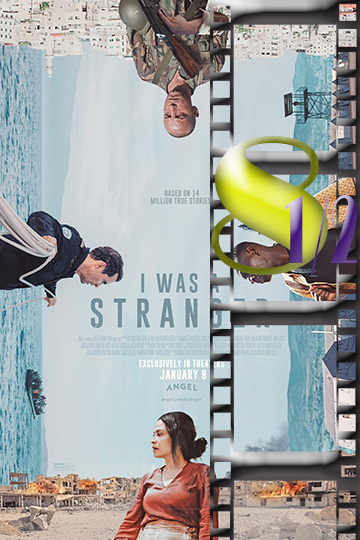
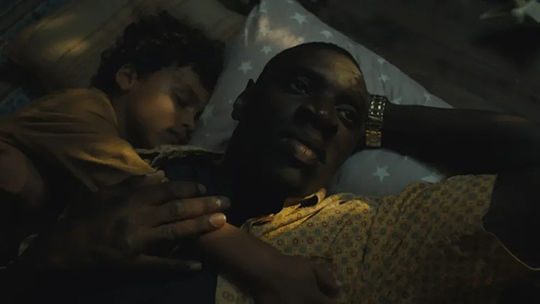
When a Syrian doctor is forced to flee Aleppo with her young daughter, one desperate choice sets off a chain of events that ripples across borders and pulls four strangers into the same storm. A smuggler trying to save his son. A soldier wrestling with his conscience. A poet searching for home. A Greek coast guard captain caught between duty and mercy. Their paths collide on a night in the Mediterranean, where survival is uncertain, and humanity is revealed in its rawest form.


MOVIESinMO REVIEW
The brand new drama I Was a Stranger made its debut in movie theaters this year with a message that is inescapably urgent and necessary. The director Maria Santos, through the movie, has skillfully demonstrated what happens when compassion is matched with fear in a small town America. In the story, different characters whose lives intersect when the community is under threat of immigration enforcement, will be separated, are the focus. What sets this picture apart is that it doesn’t resort to offering simple solutions or straightforward villains. Instead, Santos portrays ordinary people who face their dilemmas with brave choices. The narration focuses heavily on Elena Morales, who has been cast by Sofia Ramirez excellently. Elena is a single mother, struggling to meet the needs of her teenage son, Marcus, and at the same time, terrifyingly, living under the threat that the immigration officers are after them. Ramirez’s portrayal is of a character that is strong yet understated; it is such a natural performance that one can hardly tell it’s acting. In one scene, you get the sense of her extreme weariness just by looking into her eyes after a hectic day in the hospital where she is working as a cleaner, however, on the other hand, you notice the unyielding mother who is ready to fight her child’s enemy without any weapon at all. It is a constant restraint in the performance, which makes it so genuine. Ramirez has got a deep comprehension that Elena derives her strength from holding back her feelings, by which she is capable of concealing her true self from the world around her. Marcus, played by fresh face Jordan Williams, is also wrestling with the same identity crisis that is depicted throughout the movie. Although he is a native, the mothers undocumented status has always been the shadow of his entire being. Williams portrays the emotion of a teenager torn between the two worlds very well. In school, Marcus is a bright student and is hopeful of going to college, but at home, he is scared of the unknown. The film reflects on immigration status and its ramifications not only at the level of the single individual but brown entire families and neighborhoods. Marcus is a representative of the countless young people who have no other option but to live with this very uncertainty, as they are not sure if today will be the day that their world would be turned upside down. The supporting actors contribute to the film with the different shades they bring to the story. James Patterson is portraying the role of the bigoted Sheriff Tom Harrison, who is a character who, if not for the excellent acting, could have become another boring stereotype, but he is excellent as a man caught in the turmoil of his conscience. Harrison endears the audience as a character whose belief in law and order is unquestionable, but at the same time, he is aware that, indeed, some laws perpetuate injustice. The tension in the film largely derives from the internal conflict of the character. Father Miguel, played by Carlos Mendez, is another crucial character who gives a totally different viewpoint of the situation. His parish is a refuge for those families who are fighting against the constant deportation, and the man of God has to find out to what extent his belief in God will move him to defend the persecuted ethnic group. Mendez portrays the priest with the warmth and the wisdom of the old man without making Father Miguel the perfect person or the all-knowing one. There are doubts and fears of the priest similar to the other people. However, he, in the end, decides to do what must be done. The dialogues that Father Miguel has with Sheriff Harrison are among the most potent scenes of the movie because both men are about to give in to their morals, but they are confronted by the dictates of their jobs. Santos’s direction features very subtle but highly effective details that make the scenes look like a reality that one has lived and seen before. The camera movements steer clear of the flashy gimmicks and instead work on characters’ facial expressions and the tiny details that reveal them. When Elena is informed of the phone call that might deliver some bad news, the camera stays close on Ramirez’s face as we see a battle of emotions, hope, and dread. During the heated confrontation between the demonstrators and immigration officers, Santos doesn’t depict anyone as a faceless mob but individuals of both sides of the argument. This tactic makes the audience recognize the humanity in every individual, even those with whom we might disagree. The tempo of the film is slow to some extent, but in the end, it is a well-balanced story workout. Real life is not a film with cuts and fast-paced action. Change is a gradual phenomenon, it is through the small decisions made every day and through interactions. Santos has confidence in her spectators that they will be able to endure the uncomfortable situations instead of hurrying toward an easy solution. The screenplay by Thomas Chen is masterfully balanced during different subplots without drifting away from the central themes. Chen wrote the dialogues that portray the characters as actual people engaging in authentic conversations, not as if they were making political points. The characters, at times, are at cross purposes with themselves or have difficulty in articulating their thoughts. These are the traits of real people. There are also some elements of humor and happiness in the writing, which is a good break from the heavy atmosphere of the story. In one instance, we see people celebrating a birthday together; friends are sharing food, and the community is singing. These moments and interactions remind us that, indeed, life has to be celebrated no matter what the situation is. Cinematographer Rachel Kim presents a picture of the town that is both aesthetically pleasing and true to the story of the area. The initially wide shots give the viewer a sense of the surrounding rural area where most of the events will take place. In contrast, the very close and long uncut shots lead the viewer directly to the characters’ innermost feelings. Whenever possible, natural lighting sources are generally preferred in the lighting design, so the film gains the look of a documentary, which then further strengthens the feeling of its reality. Kim has a special affection for the places people meet: the church, the hospital break room, and the high school cafeteria. They are the characters who decide how people relate to each other and what they dare to say. Composer Lisa Tran’s musical score is very supportive of the storyline while at the same time remaining unobtrusive. Tran’s musical compositions are somewhat melancholic, but at the same time, they do not become manipulative if analyzed only from the perspective of the predominant use of strings and piano among the instrumental parts of the songs. The moments when it is important to express the emotion of a certain scene are the moments when the music swells, and, in between, silence is what music must allow and say. During the turning point of the film, when different storylines come together in a surprising manner, the music score of Tran assists in filling the suspense while still allowing the performers to feature their work.I Was a Stranger does not offer a solution to the problems it highlights. The conclusion gives some solace, but at the same time, it admits that the mons and larger issues remain unresolved. This sincere way of doing things might be annoying to those looking for a clear win or simple endings; at the same time, it speaks to the fact that systemic problems cannot be solved by a single person and their actions only. The narrative is that transformation starts when individuals make a decision to look at each other without judgment, but as human beings who deserve respect and kindness. This picture performs a highly significant role since it shows faces and tells stories instead of numbers and headlines. A great number of times, immigration talks downplay the person, hardly ever focusing on the person who becomes that number. Santos and her crew make a film that is immune to the dehumanization by showing individuals in their intactness. The upshot is strong evidence that behind every policy argument are real people whose fate depends on everything. I Was a Stranger obtains its emotional charge from a truthful method of narration and devoted actors. It questions the spectators to rethink their own beliefs and to think of other people’s actions under similar scenarios. This film is quite a heated drama, yet still a nudge towards kindness. At the moment, when it seems more comfortable to be divided than to come to an understanding, this film proposes a different route.
OUR RATING – A POWERFUL 8.5