

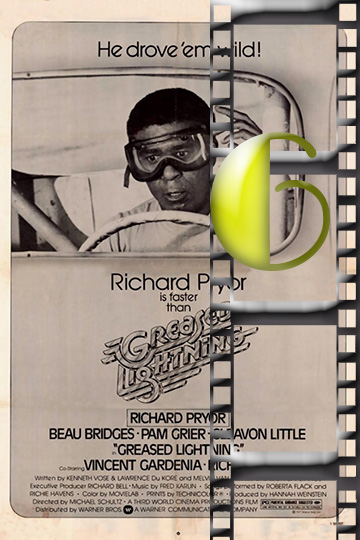
WHAT’S IT ABOUT
A dramatisation of the life of NASCAR racing champion Wendell Scott. Scott’s struggle to overcome racism and follow his dream of becoming a champion is seen, beginning at the end of World War II through 1971.
MOVIESinMO REVIEW
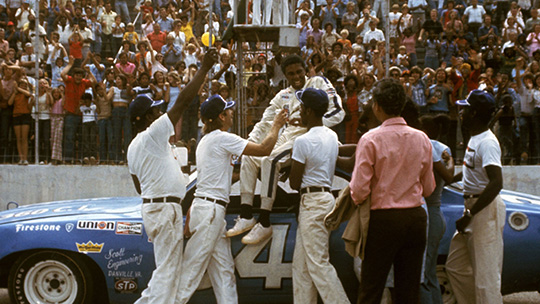
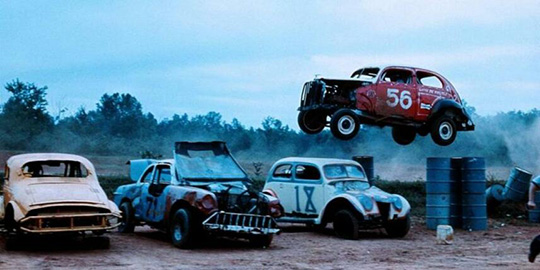
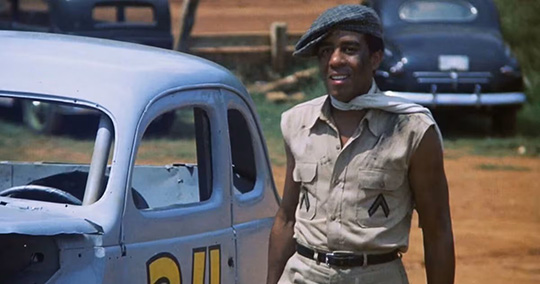
When I initially decided to watch “Greased Lightning,” I didn’t have a clear idea of what the movie would be like. Starring Richard Pryor in a rare dramatic role, the 1977 film is based on the real life of Wendell Scott, the first ever Black driver to win a race in what would later be called NASCAR. Scott’s transformation from a moonshine runner in Virginia to the first Black driver in the stock car racing world of the 1950s and ’60s is beautifully narrated by the film. It is a story that has not only been silenced but also needed to be heard, and it still does. However, this film, which I had the chance to see almost half a century after its release, reveals the duality of the film’s message: it is both a landmark and flawed at the same time. The critics were not unanimously in favor of “Greased Lightning” when it premiered. Some of them admired Richard Pryor’s controlled performance and warmly welcomed the fact that Hollywood was at last telling a Black hero story that was not about the common sports like boxing or basketball. The film received some good words for the car races, and people were all in on about how Scott’s story was really motivating. Nevertheless, even at that time, it was recognized that the film was too neat and omitted the harsher aspects that Scott had to endure. Although Scott’s confrontation with racism is depicted, it is done in a manner that seems almost courteous, as if the filmmakers were concerned about not mixing the white audience too much. There were a few critics who addressed it as a “safe” move and felt that the film lacked the full force of Pryor’s talents or the heaviness of Scott’s struggles, thereby not taking full advantage of the former and not adequately representing the latter. To evaluate Greased Lightning as if it were today is a perplexing situation. On one hand, the stakes that the film sought to address ought to be acknowledged. The release of a major studio film featuring Richard Pryor in an unprecedented dramatic role alongside real, life Black pioneer was landmark news in 1977. The movie doesn’t glorify Scott nor reduce him to a caricature. As someone who has good qualities and makes mistakes, Scott is depicted in the film as a person who loves his wife and kids, has a good sense of humor, and, even though he is met with adversity, he doesn’t lose hope or abandon his dreams. Pryor exudes warmth, liveliness, and humanity in the role, and obviously, he is putting in the work to uphold Scott’s memory rather than just playing for laughs. However, the film raises an issue with its inability to hold up against contemporary standards of storytelling. It seems like it is deliberately obscuring things that ought to be brought to light. Nowadays, audiences can see such pieces as “12 Years a Slave,” “Selma,” “Just Mercy,” and “Judas and the Black Messiah” that depict the merciless racism that African Americans faced in the history of the US in a very straightforward manner. Their viewers, especially from the Black community, are more than ever demanding that the historical facts be presented impartially and unfiltered. “Greased Lightning” doesn’t dodge racism entirely. For example, there are instances where Scott doesn’t get the chance to race, the other racers make attempts to push him off the track, and he gets cheated even though he is the one who wins. But everything is too perfect and too simple. The white characters who are against him are depicted as stereotypes of racists, thus forgiving the current viewers for their attitudes, and the ones who support him are almost like angels. Obviously, the truth is not as neat as this. Watching this film again, it really stands out how much it tries to be a feel-good movie, even though the subject matter was not a feel-good one at all. The real story of Wendell Scott was about the systematic discrimination he faced for decades, being put in harm’s way, taken advantage of financially, and denied the recognition he deserved. The movie barely scratches the surface of these things and never really goes into them. It’s like hearing someone talk about a fire instead of actually feeling the heat. There is a well-known instance from Scott’s life where he won a race in Jacksonville, Florida, in 1963, but wasn’t announced the winner until after the ceremony because officials didn’t want a Black man to kiss the white beauty queen on stage. The film does have this moment, but it doesn’t convey the total humiliation and injustice that Scott experienced. On the other hand, the racing sequences are pretty good when you consider the limitations of the times versus what we have today. The vehicles look real, and the atmosphere gets you in the mood for the thrill and the risk of the sport. The interpersonal relationships between Scott, his wife Mary, and their kids are believable and made me think that these scenes are actually the film’s most powerful points. Pryor and Beau Bridges, who plays a white mechanic and later Scott’s friend and supporter, have real rapport. However, that relationship seems somewhat too perfect for the period that is being shown. So would I recommend “Greased Lightning” to people today? It depends on what you’re looking for. If you want to learn about Wendell Scott’s story and you understand that you’re watching a 1970s Hollywood version of events, then yes, it’s worth seeing. Scott’s achievements were incredible, and the film deserves credit for bringing his story to audiences when few other films were telling Black stories outside of the blaxploitation genre. Richard Pryor’s performance is genuinely good and shows a different side of his talent than people usually get to see. But if you’re hoping for something that really captures the full truth and power of what Scott endured and accomplished, you’ll probably come away feeling like the movie left too much on the table. It’s frustrating because you can see the better, more honest film hiding inside this one. You wonder what it would have been like if Black filmmakers had more control over the story, or if the studio had been willing to take more risks. Would people today like it? I think younger audiences, especially, might struggle with its dated approach to storytelling and its tendency to soften hard truths. But there’s still value here, particularly as a historical document showing how stories about Black achievement were told in the seventies compared to how we tell them now. It’s acceptable viewing in the sense that it’s not offensive or exploitative, but it definitely feels like a product of its time, when Hollywood was just beginning to figure out how to tell Black stories beyond stereotypes but hadn’t quite figured out how to do it with complete honesty. Wendell Scott deserved better than what he got in his lifetime, and in some ways, he deserved a better movie, too. But “Greased Lightning” at least made sure his name wasn’t forgotten, and that counts for something.
OUR RATING – A PIONEERING 6