

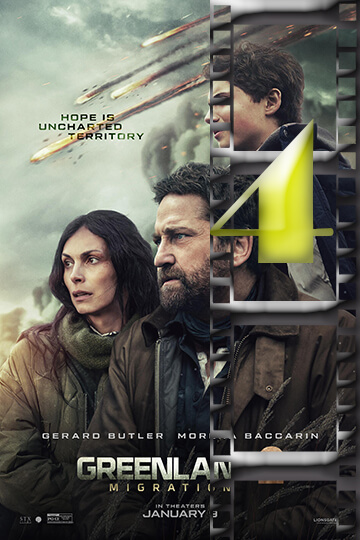

WHAT’S IT ABOUT
John Garrity, his estranged wife, and their young son embark on a perilous journey to find sanctuary as a planet-killing comet hurtles toward Earth. Amid terrifying accounts of cities getting levelled, the Garrity’s experience the best and worst in humanity. As the countdown to the global apocalypse approaches zero, their incredible trek culminates in a desperate and last-minute flight to a possible safe haven.
MOVIESinMO REVIEW
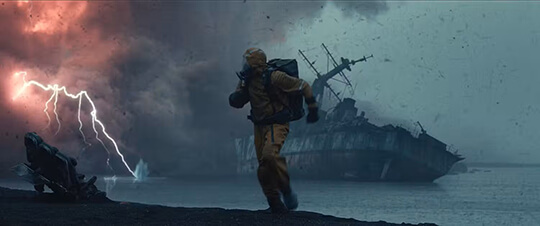
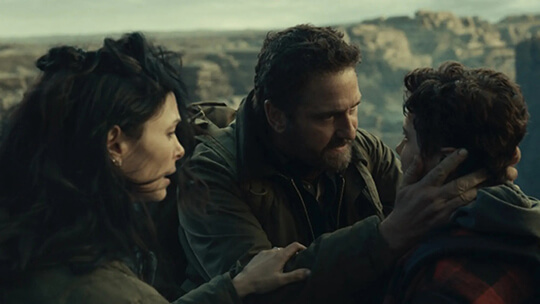
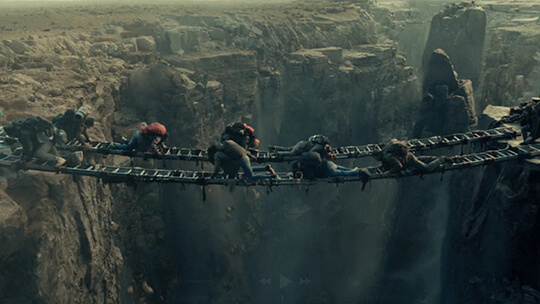
Look, I barely managed to get through “Greenland 2: Migration”. I wished I could like it. Yeah, the first one didn’t have much and was kind of flawed, but basically it was a story with heart that kept you glued to the screen as you witnessed this family going through a tough time and managing to stick together while the whole planet is getting literally destroyed around them. Ric Roman Waugh, the director, certainly knew what he was doing then. It seems like everyone has forgotten what exactly made the first movie so great, and to the detriment of that, they have gone ahead and thrown the whole Garrity family into every cliché disaster movie scenario that they could think of in this sequel. The number one thing that annoyed me throughout the movie was that it continuously kept on announcing how deadly the air outside is. I mean, they kill you without a mask, type of deadly. Radiation and ash all over the place. Gerard Butler’s character, John Garrity, basically doing his tough guy stunt, has to wear this full astronaut suit with a gas mask just to go outside for a couple of minutes. The film depicts a scene where he is almost dying in a radioactive storm. His kid, Nathan, sneaks out, and John completely loses it, screaming at him about it. For the whole first act, the movie makes sure that you are well aware of this situation. And then all of a sudden, the rest of the film, people just walk out without masks as if they were taking a stroll through the park. Not dying. Not even coughing. The makers of the film apparently expected the audience to forget everything that, for half an hour, they were telling us. This is not storytelling. This is lazy writing, not respecting the audience’s intelligence. The plot unfolds five years after the Clarke comet that obliterated most of the Earth. The Garrity family, consisting of John, his wife Allison, and their now fifteen-year-old son Nathan, has been dwelling underground in a bunker in Greenland along with other survivors. The bunker is well-equipped with such amenities as yoga classes, basketball courts, and eighties music, which to me sounds better than it actually looks on the screen. But the supplies are getting scarce, and the people are worried about their prolonged imprisonment underground. John hears the whispers of the paradise called the Clarke crater, located in southern France, the spot where the comet hit. Apparently, the air there is fresh, and the people are trying to get back to a normal life. He really wants to find the place, but to get there means they have to go through destroyed parts of Iceland, Canada, and Europe, which are full of chaos and violence. And then an earthquake wipes out their bunker, so basically, they don’t have much of a choice anymore. They must take their chances and hope that this utopia really does exist. So basically, what follows is a checklist of every disaster movie cliché the director’s ever seen or read that he could think of. The family is met with lightning storms, tsunamis, armed gangs, bridges that have fallen down, and gets rescued by so many narrow escapes that nobody in the suburb can really survive normally. And that is one more big problem. These people are just a regular family, a Dad who is a structural engineer, a Mom who, after quitting her job in the community, was organizing, and their teenage son. They’re not Army Commando and Survival experts. But they are able to overcome every single critical situation as if they have been training for this whole time. The whole area around them was turned into a scary, throwaway wilderness, but it didn’t really matter to the scriptwriters, as the characters who were not part of the main family hardly had any character at all. Dr. Casey Amina, the scientist played by Amber Rose Revah, is there just to give scientific explanations and then disappears without leaving any impact on the story. It should have been quite touching emotionally when the family received the bad news on their journey, but instead, we are only presented with another situation that the screenplay needs to take care of. And what really left me totally disappointed is the fact that this film almost totally depends on the characters being unbelievably lucky and random people being good to keep the plot moving forward. Their boat docks in flooded Liverpool, and magically, they come across an old acquaintance running a hospital who just hands them the keys to an Audi SUV. Sure, why not? Just take my car, because the apocalypse can happen at any time, and there will be a shortage of everything. That is absolutely logical. Later, a stranger who just shot at them immediately trusts them and invites them to dinner. These moments of convenience happen one after another, and very soon, you just stop caring about the danger, because you are already sure that something extraordinary will save them. The film hastily goes through its ninety-eight-minute length without giving any of the action sequences a chance to even be meaningful. None of the events have any emotional impact. That said, when the movie slows down a bit, Butler and Baccarin deliver a real chemistry and love vibe. You can buy the notion that John and Allison love each other and would do anything to keep their family safe together. Those are the little moments that remind you that these are really good actors who, unfortunately, do not have very good material. Following that, in the third act, there is this bizarre scene where the family goes from running for their lives to playing “would you rather” games. Would you prefer to have the ability to read minds or be invisible? During a desperate survival journey across a ruined landscape, the party games are suddenly the favorite pastime. It was a total mind-boggle for me to watch that. Nevertheless, credit is due, and the production team deserves recognition for the realistic decorating and the locations in which the scenes were shot. Both were in deserted, rundown condition. The Iceland and the United Kingdom footage shows the dreadful wasteland surroundings, which are also very much in keeping with the theme of the movie. The special effects are convincing enough, specifically during the beach escape that highlights the use of practical effects. The make-up department also appears to have done a great job of illustrating Butler’s deteriorating health, his character suffers from through the progressive stages of the film, while at the same time Baccarin is looking more and more attractive as the film progresses. The latter is quite puzzling given the circumstances, but whatever. Director Waugh is very much inclined to believing and demonstrating how human nature at its core is good even in the darkest times. That was very well done and beautiful in the first movie when strangers were helping each other survive. In this accompanying movie, however, the kindnesses seem to be put on hold and, as a result, the film started to take a dark turn. The man who barely knows the main character of John trusts him totally after meeting him only once and gives him the responsibility for his daughter. The film wants us to believe that this is how people would behave, but it does not show us the relationships that make these behaviors authentic. The first “Greenland” was essentially a success simply because its storyline focused on the desperate human family’s attempt to reunite while the world was ending. The characters in that movie were emotionally highly vulnerable. Every decision counted. Every separation hurts. This follow-up movie not only tries to widen its scope with bigger disasters and longer journeys but also gives up the intimate humanity that made the first one special. It just becomes a different forgettable yet dumb action movie about people escaping from explosions and surviving unbelievable odds. “Greenland 2: Migration” is not an utterly bad movie. It is utterly watchable if you switch your brain off completely and do not concentrate too much on contradictions and conveniences. But there you have it. It could have been a film that tells something important about hope and the power of a human spirit facing utter destruction. Unfortunately, it is just the same tired formula, predictable and, to be honest, a bit boring despite all the chaos on the screen. The worst sin that a movie of this genre can commit is to be dull, and this one is over and over. The only reason for this movie to exist is that the first one was a commercial success and thus justified a sequel in the eyes of the producer. No one actually had a convincing story that they wanted to tell. The absence of the creative vision is evident in every single shot. Save yourself the trouble, and perhaps instead of paying for the ticket to this one, you can watch the first film to see the idea properly done.
OUR RATING – A FORGETTABLE 4