

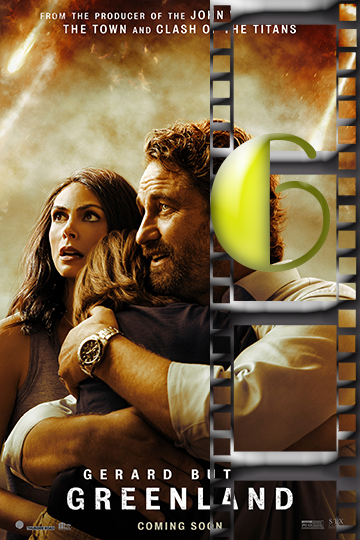

WHAT’S IT ABOUT
John Garrity, his estranged wife, and their young son embark on a perilous journey to find sanctuary as a planet-killing comet hurtles toward Earth. Amid terrifying accounts of cities getting levelled, the Garrity’s experience the best and worst in humanity. As the countdown to the global apocalypse approaches zero, their incredible trek culminates in a desperate and last-minute flight to a possible safe haven.
MOVIESinMO REVIEW
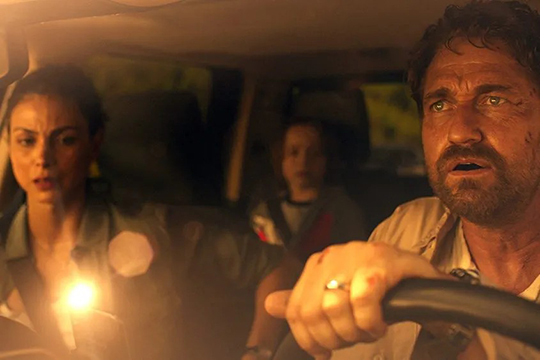
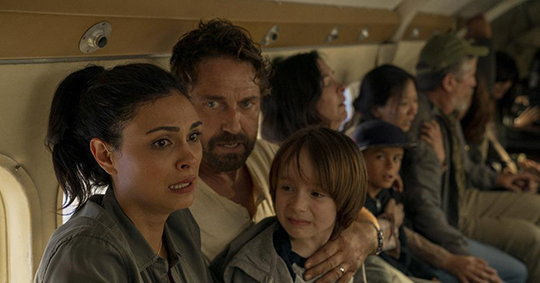
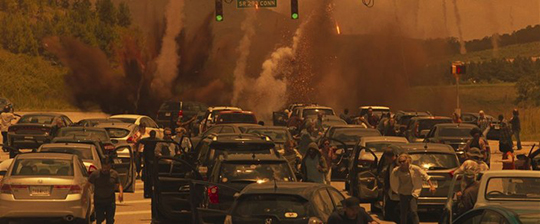
When a disaster movie comes on your TV, the first reaction for most people is to brace themselves for the usual stuff. You know it. There will be explosions lighting up the sky, a heroic white male running in slow motion through the chaos, and a plot so thin that you can see right through it like glass. Most disaster films depict the world’s end as a theme park ride, just a spectacle, no soul. But Greenland was right in the middle of a real pandemic, which already felt like an apocalypse, I got in with the same tired formula expectations. What surprised me was that this film actually changes this pattern, not perfectly, but enough to be worth your time. The story revolves around John Garrity, played by Gerard Butler, a structural engineer living in Atlanta who is attempting to rebuild his relationship with his separated wife, Allison, played by Morena Baccarin. They have a son, Nathan, who has diabetes, and this detail matters far more than you would think. When it is announced that a giant comet named “Clarke” is coming to hit Earth, the Garrity family is chosen in a government lottery as the people to be evacuated to safety in underground bunkers. The problem is that nothing goes according to plan. John is separated from Allison and Nathan early, and from this moment, the film becomes a raw, sometimes brutal, story about a family who are desperately trying to find each other before the world ends. What makes Greenland different from other disaster movies is that it actually cares about the characters. Director Ric Roman Waugh made a wise decision early on to keep the camera close to the Garrity family instead of pulling back to show us wide shots of cities breaking down and governments falling apart. We go through this apocalypse as a real family would, through confusion, fear, and the slow, painful acknowledgment that those in charge are not going to save everyone. That last point is where the film becomes really interesting, and also where it becomes a little more relevant for viewers like me who have grown up watching disaster movies that seem to assume the government will always step in and fix things. It hits different when your skin changes what you see on screen. Most leading roles could never pass for someone I know, meanwhile, familiar faces often disappear too soon. This film slips through old patterns without making a scene. Equal treatment doesn’t enter the picture. Early on, one scene makes it obvious: the Garrity family is kept from shelter because of paperwork trouble linked to Nathan’s medical needs. Families hear the words, their child does not meet requirements, and a cold pause settles into silence. One can see it beneath the surface: how some are quietly set aside, even when help should be given without question. The film doesn’t beat you over the head with this message, but it plants the seed, and a considerate spectator will sense it throughout the rest of the movie. Gerard Butler delivers a good performance here, even though the part isn’t much of a stretch for him. He’s done the role of a father who is fiercely protective and intense before, so this one is right up his alley. But to give credit where credit is due, Butler displays a vulnerability in this character that keeps him down, to earth, and relatable. He’s definitely not Superman. He errs. He panics. He cries. Morena Baccarin is just as good as Allison, and the chemistry between the two leads feels really lovely and a little broken, the way real couples who’ve hurt each other actually look and go about things. Their son, played by young Roger Dale Floyd, is also winning, mainly because the script gives Nathan a genuine character rather than simply turning him into an object the audience should worry about. The movie falters here and there, and I want to own up to that. Some of the choices that characters make seem to come from the plot as its requirements rather than being the outcome of logic. There’s a subplot with the couple on the road, Ralph and Judy, played by David Denman and Hope Davis, which gets dark in no time and seems somewhat too obvious in its showing of how quickly people can turn beastly under pressure. It works as a tense moment, but it feels like the movie is trying too hard to convince the audience of a point it has already established. Pacing slows down, too, in the middle part, when the story loses its tension and starts to repeat itself. The family is separated, they find each other, something bad happens, repeat. Most of the film’s goodwill is where the ending is. Without revealing too much, Greenland’s last part is truly gripping and emotionally fulfilling. The family arrives in Greenland, and the comet hits; the film doesn’t shy away from the enormity of the tragedy humanity has just experienced. The closing shots are so quiet and hopeful in such an authentic way that the warmth given simply flows from real human emotions. It’s a rare disaster movie that doesn’t end with a celebratory victory but instead with a sigh of relief, and this show of restraint has to be commended to the filmmakers. From the standpoint of technical aspects, Greenland is not showy. The special effects are adequate, but it is clear they have been limited by a modest budget of approximately thirty-five million dollars. There are no scenes that will leave you gaping in awe that will cause you to forget where you are sitting. The accompanying music by David Buckley is engaging and atmospheric without becoming overbearing at any point. The movie looks neat and competent, and the Atlanta location gives it a realistic, down, to, earth vibe. So what does Greenland mean to me? It is not a perfect film. It has misses, and it doesn’t say anything about race or survival that a sharper film couldn’t have said better. But it is an excellent (above average) disaster movie that actually remembers the most important ingredient, the people at the centre of the story. They treat their audience with respect, keep the focus tight, and gain emotional traction through honest and human performances. In a genre that is drowning in spectacle, Greenland is a quiet, sincere effort that deserved to be noticed much more than it has been.
OUR RATING – AN APOCALYPTIC 6
MEDIA
- Genre – Science Fiction
Street date
- Digital – December 20, 2020
- 4K/BluRay/DVD – February 9, 2021
- Video – 1080p
- Screen size 2.39:1
- Sound – English: Dolby Atmos,
- English: Dolby Digital Plus 5.1, English DTS-HD Master Audio 7.1
- Subtitles – English SDH, French, Spanish
Extras
- Featurettes:
- Audio Commentary with Director Ric Roman Waugh and Producer Basil Iwanyk
- 3 Deleted Scenes
- “Humanity” Featurette
- Preview