

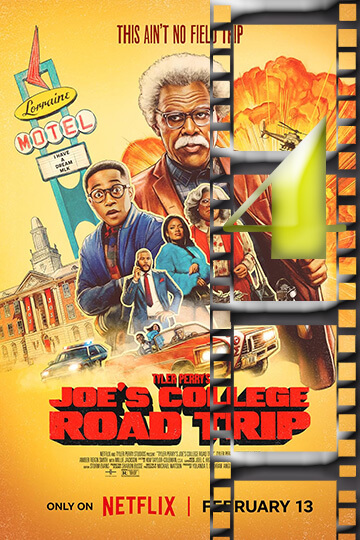

WHAT’S IT ABOUT
To teach his sheltered grandson about the real world, Madea’s foul-mouthed brother Joe takes the college-bound teen on a raucous cross-country road trip.
MOVIESinMO REVIEW
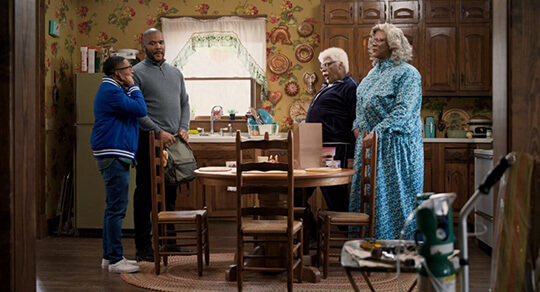
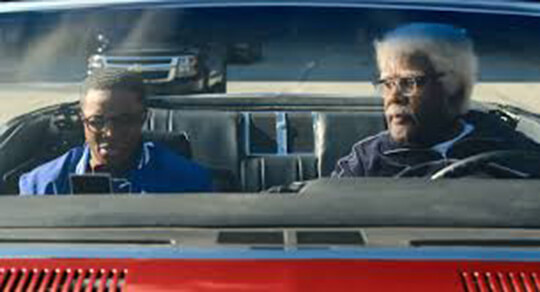
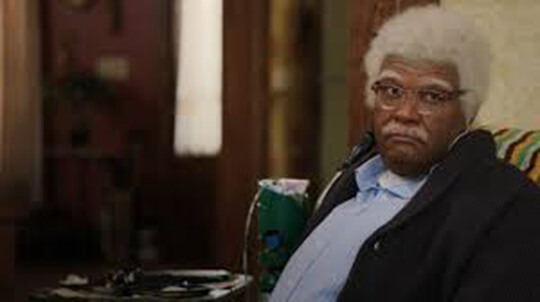
Out of nowhere, Tyler Perry brings us back into the world of Madea through her brother Joe in “Tyler Perry’s Joe’s College Road Trip, ” hitting Netflix on February 13th, 2026, shortly after his previous release, “Madea’s Destination Wedding. ” Though heavy themes around Black identity and history take center stage here, the movie stumbles trying to mix crude jokes with real depth, landing once again as one more easily overlooked title in Perry’s lineup. At the heart is Brian, a district attorney who’s built a stable life raising his son B. J. far from urban struggle. Schoolwork comes easy for the boy; yet he knows almost nothing about the Black legacy, brushing off HBCUs by asking why such schools matter if there are no white colleges. Once he says he’ll tour Pepperdine with his white classmates, Brian sees clearly: something inside his son needs shifting. Joe walks in, followed by Madea, who sticks around just long enough to leave. A man called Joe, labeled outdated and old-fashioned, once worked as a pimp, barely finished school, yet he offers to take his grandson on a cross-country trip. From there, young meets old, expectation bumps into reality, tension builds even when jokes try to soften it. Perry aims for humor mixed with meaning, but most moments fall flat, awkward instead of sharp. The biggest issue? It’s Perry, splitting himself into roles, Joe, Madea, Brian, stretching thin across scenes. His script feels rushed, like pages written before the last idea settled, ideas piling up without breathing room. Eight films have come from Perry since 2024, more arriving soon, yet each scene feels hurried. Jokes fall flat, setups repeat themselves, while the supposed energy of a road journey fails to lift the sluggish rhythm. Instead of depth, B. J. (Jermaine Harris), lands like a caricature: think Urkel remade for online chatter. Concerns about manhood fill his lines, along with plant-based rules, eco-friendly driving, internet trends, and PC talk. Perry’s way of writing is much more raw, almost sarcastic to the point of making you doubt whether or not this is the kind of character you would like to see be helped. On the other hand, Harris is taking a little emotion into a role that otherwise would have been just another cold, hard character. With Joe, the opposite is true: he is always cursing, tearing up the town in his big red Buick that he drives like no one else could possibly drive a vehicle, burning a tremendous amount of gas while destroying B.J.”s medications and food like he thinks they are worth nothing because he is convinced that true toughness and strength are formed by enduring tremendous amounts of pain. Every action you see because of Perry’s description establishes that Joe exists in a state disconnected from modern times, but still holds on to long-standing beliefs with some validity to them. The most striking aspect of Perry’s portrayal is its very harshness, cleverly disguised as what would be considered by Joe to be somewhat acceptable behavior, but not acceptable by anyone else. An early warning suggests he speaks without filter, labeling him a dying breed, not shy about rough language. This turns out to be accurate, soaked in gritty dialogue unlike much found in Perry’s usual tales. Across Tennessee, they move, led by B. Something tugs at J. as he thinks about Graceland, but then Joe yanks him sideways into a dim bar where blues crackle through broken speakers. Inside, walls sag under rebel banners, bikes parked like sentinels outside, tension already simmering beneath laughter. Locals sneer, words sharpen, space tightens, suddenly, one punch splits the air, chaos unfolding fast. Time stutters mid, swing, frames skipping strangely, as if reality glitched and forgot its place. Later, they roll into a brothel squatting off a dusty Texas road, heat pressing down hard. Joe believes moments like these strip away softness, mark real change in young bones. She steps up to the plate, waiting for Destiny to play with the same quiet intensity as Amber Reign Smith does. As she walks through each room of the house, all eyes are on her, and you can see how she is both grounded and restrained at the same time, with invisible strings attached somewhere else. The calm power that she delivers transforms the way we experience the scenes and makes them feel as if they are really happening. When the story strays, it will be Smith standing in the center, unyielding to any outside forces, quietly holding everything together with her calmness and strength. Destiny and B.J.’s relationship is not built on words but rather through moments of silence and shared glances that last longer than any words could possibly last. Every choice Smith makes is subtle, precise, and thought-out. Unfortunately, the writing fails to recognize the depth of her character and that she could have easily changed the entire direction of the story if it had been adequate. Though intentions show, teaching pieces of Black history, reflecting modern hardships, the delivery stumbles under uneven weight. By the Mississippi River, Joe brings B. J. to places that matter, ones tied to real history. What unfolds there reveals Perry wants to speak on racism, inherited pain, policy fixes, and staying true to roots today. Yet he stumbles when fitting those ideas into the shape of his story. Instead of clear delivery, heavy themes swim in crude gags, jokes about bathroom traps, pimps, and endless cursing. One second digs deep into chains of the past, the next laughs at brothel mishaps, flipping mood like a switch too fast to follow. Funny how Perry aims for teaching moments but keeps slipping into jokes, even when they clash. Because of this mix, nobody gets what they came for. Fans of bold humor get slowed by lectures, people interested in real talk on race trip over crude scenes just to spot a point. Seems he’s stepping out of the church, play mold that built Madea’s fame. His older work handled hard topics such as abuse without losing the faithful crowd. Here, Joe’s College Road Trip pushes limits so far that regular Sunday attendees might walk out, though it still tacks on life advice near the close. That tension drags the whole thing sideways, landing nowhere solid. Out of nowhere, Brian listens to his dad despite everything. Flashbacks reveal Joe tossing him into waters full of gators just to teach him to swim. At nine years old, a sex worker was brought in for him by that same father. Still, Brian hands over parenting duties to this man without question. His aunt plays along, excusing it all. Yet nothing digs into why he stays loyal. Perry rushes past any chance to build believable bonds or reasons for their actions. Jokes pop up around how younger folks see older habits as alien. A landline confuses B. J. , while Joe stares blankly at app screens like they’re magic. Starting off, the child goes on about face washes while grandpa cheers old schoolmanliness. Jokes land hard, each one shouting its purpose until laughter feels forced. Humor loses steam fast when everything leans too obvious. Writing acts certain people will stick around no matter what, so why try harder? Original ideas? Missing. Real jokes? Nowhere close. Direction moves just like the script, sluggish, careless, going through motions. Even though it streams on a big platform, the movie seems low-budget. Rushed scenes pop up one after another, built on dull lighting and lifeless shots. Not much has changed over time in how Perry frames a story visually. Instead of shaping moments, he just sets the camera down while actors speak lines that lack strength. This latest effort stumbles since the director keeps wavering between two ideas. A serious take on Black heritage pulls left, yet a crude humor piece tugs right; neither gets room to breathe. The clash leaves everything half-formed. A clash between aims keeps the film from ever landing where it hoped. It stumbles, loses focus, and ends up fading fast from memory. Still, trying to talk about actual struggles in Black neighborhoods counts for something. Questions around HBCUs mattering today, ongoing racial barriers, cultural roots slipping away as kids grow, those discussions mean something. All that could have hit harder without crude humor and shootouts circling every serious moment. Hard to believe this one beats “Madea’s Destination Wedding”, then again, 2025 set the floor mighty low. “Joe’s College Road Trip” slides into view beside a stack of Perry’s other quick, to forget Netflix drops, each vanishing fast, leaving little behind. Unless he hits pause on the assembly line and pours care into storytelling, what shows up will stay broken: hurried scripts trading depth for speed, missing every chance to say something true about Black lives here. Not much else to add.
OUR RATING – A CONFUSED 4