

WHAT’S IT ABOUT
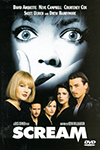
In the small town of Woodsboro, California, a masked killer known as Ghostface begins murdering high school students, and a group of friends must use their knowledge of horror movies to unmask the killer.
MOVIESinMO REVIEW
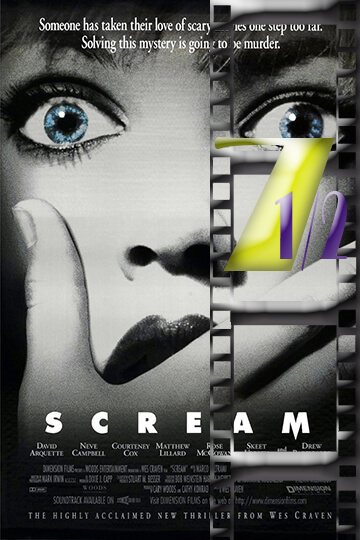
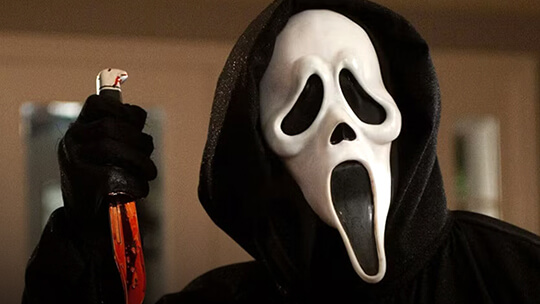
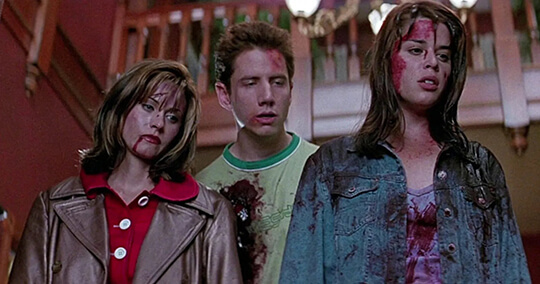
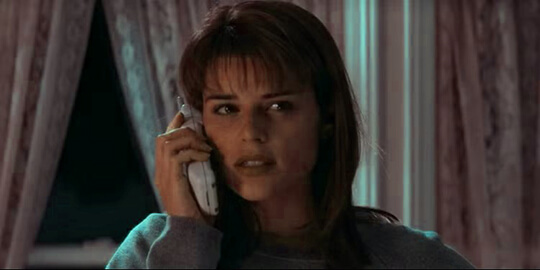
Let me be real with you. Horror movies had gotten lazy. They stopped trying. The killer showed up, teenagers made bad choices, and everybody screamed until the credits rolled. Director Wes Craven knew that too, and he decided to do something about it. He made a horror film that talked back to horror films. And for the most part, it worked really well. Scream opens hard and fast. Drew Barrymore plays Casey, a girl home alone who gets a phone call from a stranger. What starts as a simple conversation turns quickly into something dangerous and terrifying. Before the story even gets going, Casey is gone. That opening scene alone tells you that Craven means business. He does not waste time. He does not play around. He grabs you by the collar and pulls you in, and he does it so smoothly that you almost do not notice how scared you already are. From there, the story moves to Sidney Prescott, played well by Neve Campbell. Sidney is a high school girl dealing with the one-year anniversary of her mother’s murder. She carries that pain quietly, but you can see it in her eyes. She walks carefully through every scene like she already knows the world is not always safe. Campbell plays Sidney with real strength, and that matters. Too many horror movies give us female leads who just react. Sidney actually thinks. She pushes back. She fights. That alone made this film stand out. Now, I have to be honest about something. As a Black man watching horror films, I have always noticed who gets to survive and who does not. Hollywood has a long history of killing off Black characters first and fast, like our lives do not carry the same weight on screen. Scream does not fully fix that problem. The Black characters in this film do not get nearly enough space to breathe or matter. That absence speaks loudly, even when the film does not mean it to. Wes Craven was smart enough to point out what was wrong with horror movies, but he did not go far enough in correcting all of it. Still, what the film does right, it does really right. The script, written by Kevin Williamson, is sharp and full of energy. The characters actually talk like teenagers who have watched movies and grown up thinking about them. Randy, played by Jamie Kennedy, is the film geek who lays out the rules of surviving a horror movie while a horror movie plays around him. That choice was clever and funny at the same time. It gave the film a self-awareness that felt fresh and new in 1996 and still holds up today. Ghostface, the murderer, can function as such due to his really simple costume. Ghostface has a white mask, a long black robe, and a voice that can sound calm but can also threaten you if you don’t give him what he is asking for. This mixture of items is what creates true terror inside of you. Real ‘bad guys’ do not need any special powers or an elaborate history to frighten you. Ghostface has the ability to move very quickly, hit very hard, and will show up when you have no idea that he has just arrived. Simple is sometimes better, and this film proves that clearly. The supporting cast fills out the story nicely. Courteney Cox plays Gale Weathers, a TV reporter chasing the story without caring much about the people in it. David Arquette plays Deputy Dewey, who tries hard but stumbles often. These two characters add humor to a film that could easily feel too heavy. Their scenes together give the audience room to breathe between the tension. What I respect most about Scream is that it treated its audience like they were smart. It did not talk down to viewers. It assumed you had watched horror movies before, and it played with what you already expected. When you thought you knew what was coming next, the film changed direction. That kept me engaged from the beginning to the end. Act III did have a few messy moments. The reveal of the person behind the mask isn’t handled very well, with there being places where it feels really rushed, and places where you have to really think about the logic behind a couple of the choices made by the characters towards the end, because they just don’t seem like human choices, and more like they’re done to manipulate the screenplay. There were a couple of moments in Act III that pulled me out of the story because I wanted to be completely immersed in the story. Despite its issues, Scream brought change by showing Hollywood an audience’s desire for better films when it comes to the horror genre. We wanted creative narratives, characters we could believe in as real human beings rather than merely being scary, and we wanted to be frightened by clever storytelling as opposed to being bombarded with jarring sounds or sudden movements, which were common to a lot of horror films pre-Scream. Wes Craven gave us all of these things with both ability and attention. For those of us who watched horror movies growing up and who felt as though we were talked at during the experience rather than included in the conversation, Scream tried to change this dynamic. Of course, it did not get it all right, but it managed to get enough correct, and that alone is worthy of recognition. Scream earns its place in film history. It is smart, it is well-acted, and it changed horror for the better. It just needed to look a little harder at who it left out of the conversation.
OUR RATING – A KILLER 7.5
MEDIA
- Genre – Horror
Street date
- Digital – October 19, 2021
- 4K – October 19, 2021
- BluRay – March 29, 2011
- DVD – December 3, 1997
- Video – 1080p
- Screen size 2.35:1
- Sound – English DTS-HD Master Audio 5.1
- Subtitles – English SDH
Extras
- Audio Commentary with director Wes Craven joins screenwriter Kevin Williamson
- NEW A Bloody Legacy: Scream 25 years later (HD, 8 min) features recent interviews with the original cast and some fresh young faces sharing their love for the movie and the director.
- Production Featurette (SD, 6 min)
- Behind the Scenes (SD, 6 min)
- Q&A Session (SD, 6 min)