

(To Be Celestial vs That’s the Weight of the World)
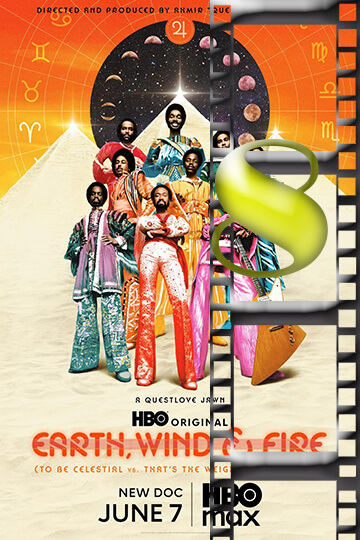

WHAT’S IT ABOUT
Exclusive access to the band’s archives of visual, audio, and written material, as well as the support of the estate of Maurice White and the band members.

MOVIESinMO REVIEW
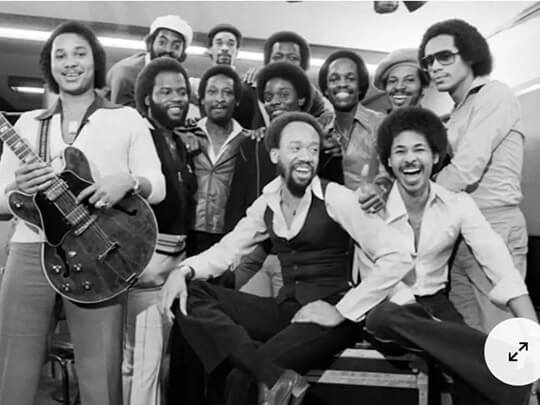
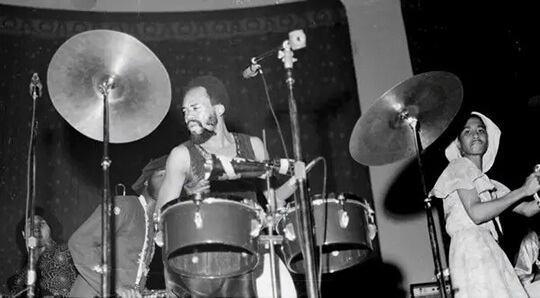
There are documentaries that celebrate. There are documentaries that dig. And then there is what Ahmir “Questlove” Thompson does, something closer to communion. His third entry in what is quickly becoming the most essential body of Black music documentary work of this generation, Earth, Wind & Fire (To Be Celestial vs. That’s the Weight of the World), is not simply a film about a band. It is a reckoning. A love letter written with both hands, one open in admiration, the other balled into a fist of honest truth. I love Earth, Wind & Fire. They are a part of who I am, as with many Black kids growing up looking for an identity. Those album covers, elaborate, cosmic, layered in Egyptian imagery and Afrofuturist symbolism, were the first pieces of art I studied as a child, long before I had words for what art even was. That personal history makes me both the most and least qualified person to review this film. But it also makes me the exact audience Questlove had in mind. Because this documentary speaks directly to the children of the 1970s and to every generation that inherited that music and was changed by it. This documentary focuses on Maurice White, the drummer, composer, producer, and designer of Earth, Wind & Fire. The film gives Maurice sensitive attention like other music documentaries reserved for people who they love and cannot be touched. Born in Memphis, TN, in 1941, he experienced a childhood broken by poverty, being abandoned by his parents, and also the kind of violence he experienced growing up Black in the Deep South. His mom went to Chicago to find a job, and his father was already gone. Maurice was raised primarily by an older Black woman known to her community as Big Mama. She gave Maurice the stability he needed during a time when the world around him gave him virtually no stability. The early traumas he suffered throughout his childhood greatly affected his ability to live with and through love, unity, and elevation. The documentary does a very good job demonstrating that this is the same man who built a musical empire on love, unity, and cosmic elevation, was also a man who profoundly struggled with each of them. Questlove opens the film with the voice of Barack Obama. That is not a casual choice. It announces immediately that what follows is an act of Black cultural reclamation, a legacy being named, honored, and placed exactly where it belongs. From there, the film traces Maurice’s journey from Chicago’s jazz circuit, where he drummed for Ramsey Lewis, through the formation of Earth, Wind & Fire in 1969 and the band’s explosive rise after signing with Columbia Records in 1972. What followed was one of the most remarkable runs in the history of American music: That’s the Way of the World, Spirit, All ‘n All, I Am, and the singles, “Shining Star,” “September,” “Boogie Wonderland,” “After the Love Is Gone,” “Let’s Groove”, that became permanent fixtures in the soundtrack of Black life. Earth, Wind & Fire is very different from their contemporaries because Maurice White created the band with extreme care and foresight. He didn’t just find himself in the right place at the right time; he spent years and years studying transcendental meditation, adopting a vegetarian diet, and keeping the band off drugs and alcohol. Maurice incorporated astrology, metaphysics, and African spirituality into every aspect of the band’s identity through elements like the kalimba, Egyptian motifs, symbols, and decorative elements, along with the horn arrangements to give the music a timeless yet modern feel. The multiple narrations of the film show that many people believe that when they listen to Earth, Wind & Fire, they are somehow receiving transmissions from both Africa and outer space (an Afrofuturism perspective). The way Questlove presents the legacy of Earth, Wind & Fire in this documentary is as a musicologist with a unique insight and tender understanding of what it was like to grow up with Earth, Wind & Fire. To achieve worldwide success, Earth, Wind, and Fire never watered down their Blackness; they did not code-switch, nor did they tone down their edginess for the sake of crossover appeal. They turned their identity into a weapon of transcendence – and it worked. Maurice White’s vision for the band was to connect with all people about meditation, alignment, and the celestial power of the universe. The vessel that relayed that message was clearly and unapologetically Black. This differentiation at this time is hugely important. However, Questlove has no intention of letting it end there. While often preaching about connection and togetherness, he often ran from conflict instead of walking through it. He paid band members very little for many years. He did not give Songwriters credit for the work they put into making those records come to life. He opened a rehearsal studio in Los Angeles called The Complex and had a big grand opening, but not one member of his band was invited to attend. Phillip Bailey’s voice brought so much of the emotion to Earth, Wind & Fire’s music, and he doesn’t hold back in showing how angry he is in this film, which adds to the credibility of the documentary. We have seen so many other films that celebrate the legend while omitting the truth, and the Black community deserves better than this. In terms of Maurice’s complex personal history, the film is equally confrontational. His long-term partner, Marilyn White, tells a story that reveals how egregiously he cheated on her and acted like it was his right as a star. His son, Kahbran, tells a story about how much he was absent as a father until he was diagnosed with Parkinson’s and had to settle down and re-establish a connection with him. Another son, Eden (who was born to a member of Earth, Wind & Fire’s wardrobe team), introduces himself in a humorous way by saying he is “Maurice’s youngest child (that we know of).” It is humorous because of the way he introduces himself; however, the pain behind it is certainly present. Maurice White’s genius and pain were always tied together in some way, so Questlove will not downplay what that connection means. The film’s strength goes well beyond the fact that it is a biographical account. The visual and emotional wealth of the concert sequences is astounding; the way the colors, choreography, and the sound of horns all combine to create an experience that borders on being ceremonial is remarkable. It was said by Lionel Richie that “the concert tours were theatrical productions on the scale of a Broadway show.” Both George Faison (choreographer for The Wiz) and Doug Henning (illusionist) were involved with the show’s choreography and set design. Unfortunately, the same grandiose concepts that built the shows destroyed the touring band’s financial viability. The band was unable to recoup their expenditures from these sold-out arena concerts due to the production costs exceeding ticket sales revenues. Creative vision clearly outpaces the structural support created to sustain it. After Summer of Soul and Sly Lives! (also known as The Burden of Black Genius), Questlove has built a trilogy of three films (Summer of Soul, Sly Lives!) documenting the genius, complexity, and resiliency of the Black experience in film or video with more depth than any film school curriculum can provide. Questlove’s work requires something that cannot be taught: body-based memory (also known as cultural memory), a musician’s sense of rhythm or time, and love. No one can deny that Questlove is an oracle when it comes to the stories of Black artists through their music; he is not just an archivist preserving these artists’ stories–he is also interpreting those stories by providing a unique translation of the works, showing how these artists were actually builiding their musical legacy, which was developed beneath the glitter, the lights, and the kalimba solos. Questlove’s work demonstrates to Black communities that their music is not only entertainment; it is architecture, and it provides a framework for how to live. Earth, Wind & Fire (To Be Celestial vs. That’s the Weight of the World) is essential viewing, not just for fans of the band, but for anyone who wants to understand what it means to build something transcendent out of trauma, discipline, and love. Maurice White gave the world a sound that still lives in the bones of hip-hop, R&B, and soul music today. His DNA is everywhere. Questlove’s gift is making us hear it again for the first time.
OUR RATING – AN AFROCENTRIC 8