

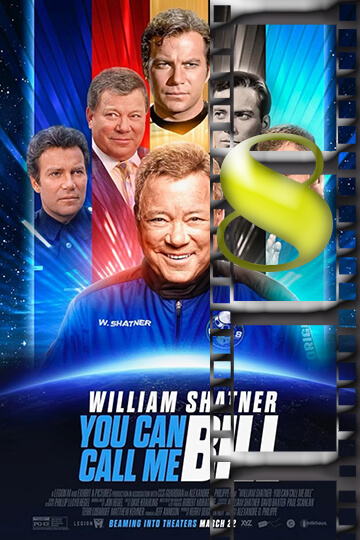

What’s It About
An intimate portrait of William Shatner’s personal journey over nine decades on this Earth, You Can Call Me Bill strips away all the masks he has worn to embody countless characters, and reveals the man behind it all.

MOVIESinMO REVIEW
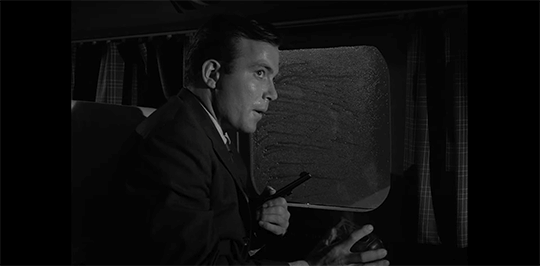
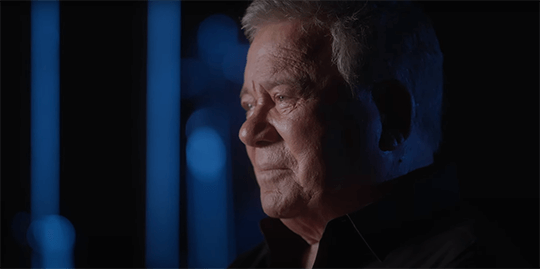
In Alexandre O. Philippe’s self-reflexive documentary “You Can Call Me Bill,” we are drawn into the captivating orbit of William Shatner—a human who has boldly gone where few have ventured, in front of and behind the camera, and throughout his remarkable 93 years on Earth. This is not just another celebrity documentary; it is a philosophical journey, using Shatner’s remarkable life as a prism through which to explore humanity’s deepest questions about existence, mortality, and our place in the great scheme of the cosmos. Presented in the form of a cozy one-on-one chat, the film enables Shatner to look back on his life with astounding frankness. There’s something deeply touching about seeing this cultural legend, now in his tenth decade, come to terms with the impending conclusion of his own narrative while still exuding awe at the universe. Shatner’s voice – that inimitable cadence that has narrated so many of our shared dreams – is our escort through a life lived extraordinarily. Philippe is judicious in his use of archival footage and the usual roll call of talking heads common to celebrity documentaries. Rather, he puts our attention squarely on Shatner’s lined face in tight, searching close-ups, letting the actor’s expressive features tell as much of the story as his words. When the movie does use clips from Shatner’s earlier career, they are selected not for purposes of nostalgia but to shed light on the spiritual and philosophical concepts under discussion. For Black viewers like myself, who were raised on Shatner ordering the Enterprise’s bridge in our childhood, this documentary is particularly moving. “Star Trek” presented future diversity — not just accepted, but welcomed with open arms — an incredibly radical idea at that time of release. While the original show was not entirely inclusive, it was certainly a legacy by opening minds and paving the way in a way that persists. Shatner’s Captain Kirk was a pop cultural phenomenon, more than merely the space traveler who inspired generations of people to think there could be a better tomorrow. Philippe’s movie unapologetically embraces Shatner’s contradictions. The actor who portrayed the galaxy’s greatest diplomat was occasionally hard to work with and demanding. The actor who became the symbol of humanity’s capacity for growth has, at times, struggled with his own. But these contradictions make Shatner all the more fascinating as a subject—he is full of multitudes, as is the movie. The documentary achieves its most transcendent when Shatner discusses his trip to real space in 2021 on Jeff Bezos’s Blue Origin. While previous interviews have touched on the experience, “You Can Call Me Bill” gives Shatner the room he requires to explain the deep existential shift he experienced in the brief moments he spent above the Earth’s atmosphere. His depiction of gazing back at our “blue blanket” of atmosphere and encountering the “overview effect”—the cognitive shift recounted by astronauts when observing Earth from the vastness of space—transforms into a profound meditation on our shared fragility and interconnectedness. “The vastness of it all is just so incredible,” Shatner admits, voice trembling with emotion. “It was mystical. It was primordial. It was profound.” In these moments, the documentary sheds its status as just the portrait of an actor to become something far more rare – an expression of real wonder and change. Though it’s philosophically dense, the film is ultimately an homage to Shatner’s astonishing career. It runs through his early theater work, celebrates his signature performance as Captain Kirk, and makes its way through the desert years to his later-in-life revival, as Philippe provides generous context to fully absorb the breadth of Shatner’s contribution to popular culture. Fans will appreciate the behind-the-scenes details, including his account of how he came to deal with Kirk’s demise in “Star Trek: Generations” – a meta moment when an actor who had so famously played a character who defeated death had finally to confront his own mortality. Perhaps the most powerful thing about the film is its refusal to indulge in easy nostalgia. Rather than basking in past triumphs, Shatner continually looks to the future and the possibilities that it holds – not only for himself but for all of humanity. His anxieties regarding climate change, framed through the prism of his space odyssey, are presented with a sense of urgency rather than didacticism. His ruminations on technology and consciousness show a mind still engaged with the leading edge of human thought. Clocking in at a lean 95 minutes, the documentary sometimes leaves one wishing it would explore certain areas of Shatner’s life more thoroughly. Some viewers might hope for more insight into his personal relationships, especially with Leonard Nimoy and the rest of the Star Trek cast. Others might desire more examination of his latter-day career comeback with “Boston Legal” or his musical explorations. But these omissions appear deliberate; Philippe is less concerned with rendering a complete biography than with capturing Shatner’s essence at this moment. Robert Muratore’s cinematography is also deserving of special note. His choice to film Shatner in front of plain backgrounds, frequently utilizing natural light, allows for a visual intimacy that is the perfect complement to the conversational approach. Philippe intersperses occasional metaphorical imagery—horses in free gallop, a subtle reference to Shatner’s passion for horse riding, and stars twinkling in the vastness—with judicious restraint so that they never detract from the human narrative at the film’s center. For Black audiences in particular, there is a deep power in experiencing a reflection and meditation on aging and mortality. Far too frequently, the story of our elders centers on trauma or pain instead of wisdom and development. “You Can Call Me Bill” reminds us that investigating the greatest questions of life is a human experience that arrives without cultural boundaries. As the credits roll for “You Can Call Me Bill,” one has the feeling of having experienced moments not so much with a celebrity or actor but with a fellow passenger on our journey aboard spaceship Earth – someone who has lived far and wide and observed enough to have gained real perspective. Shatner is a profoundly flawed but ultimately optimistic representative of our species—a man who has gazed into the abyss and come out the other side with hope instead of despair. In bringing Shatner to this introspective moment in his remarkable life’s journey, Philippe has not only painted a picture of an actor but conducted a deep contemplation of the very nature of being human within an incomprehensibly vast cosmos. This documentary challenges you to consider your place among the stars, which is exactly the impact William Shatner would wish it to inspire.
OUR RATING – A COSMIC 8
MEDIA
- Genre – Documentary
- Street date
- Digital – April 26th, 2024
- Blu-Ray/DVD – July 30, 2024
- Video – 1080p
- Screen size 1.85:1
- Sound – English: DTS-HD Master Audio 5.1
- Subtitles – English SDH
Extras
- ScreenRant Presents: A Live Q&A with William Shatner and Director Alexandre O. Philippe, Hosted by Tamara Krinsky