


What’s It About
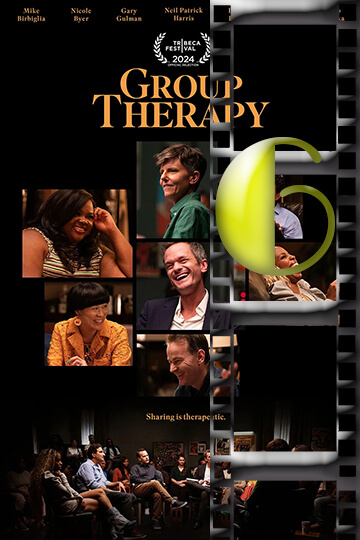
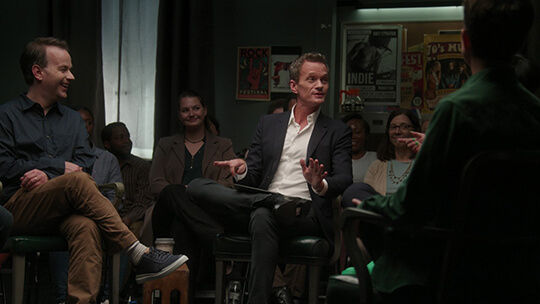
We see a set being built — walls put up to construct a makeshift therapist’s office. Some people walk onto the set and get prepped in makeup chairs. A small audience gathers and sits in an intimate space with chairs lined up in a circle. Neil Patrick Harris leads a few people — a group of comedians — inside the space, and as the comedians sit down and take their places, Harris, with a smile, addresses the room, “Well…who wants to start?” Anchored by Harris as a moderator, Group Therapy foregrounds candid and humorous conversations between Mike Birbiglia, Nicole Byer, Gary Gulman, London Hughes, Tig Notaro and Atsuko Okatsuka.
MOVIESinMO REVIEW
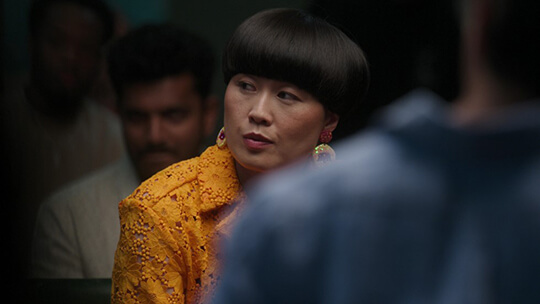
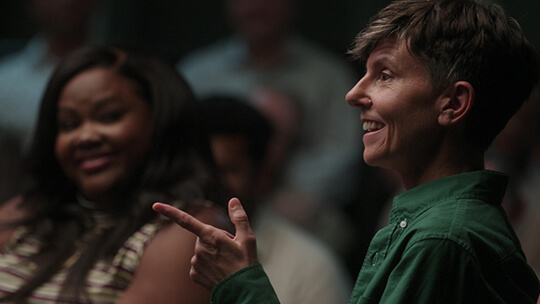
Neil Berkeley’s documentary Group Therapy walks into risky territory. It tries to mix real psychology with the healing power that comedy can bring, and for the most part, it pulls off something honest. Mental health has become a much bigger part of the conversation lately, both on stage and off, and this film wants to sit right in the middle of that shift. The film gathers six comedians, Gary Gulman, Tig Notaro, Mike Birbiglia, Nicole Byer, London Hughes, and Atsuko Okatsuka, inside what looks like a therapy session run by Neil Patrick Harris. Kevin Hart’s company, Hartbeat Productions, backs the project, and the idea behind it stays simple: put comedians in a circle and let them talk about the pain hiding behind the punchlines. The movie claims that comedic performances and therapy have a lot more things in common than what one would think. Both require bravery. Both depend on timing. Both require a person who can pick up on the feelings of the individuals in a room and can tell when it is time to push certain buttons. The relevance of this idea remains strong throughout the film, even if some parts of the movie do not make much sense. Group Therapy’s best feature is its frankness. Gary Gulman shares his experience with depression and suicidal thoughts dating back to kindergarten, which has a lasting effect. He says he has resorted to electroconvulsive therapy after numerous unsuccessful attempts to overcome his illness. Tig Notaro’s part is equally painful, if not more so. She lost her mom, her partner, fell ill herself, and finally discovered she had cancer – all within several years. She tells the story with calmness, and her calmness is more informative than tears. The film does not ask the audience to feel sorry for the comedians but rather demonstrates how they have used their darkest years to create something people could laugh at rather than cry over. This is where the attention of the film begins to fall short. Birbiglia and Byer talk about their ADHD diagnoses, while Okatsuka explains how her immigrant upbringing and her mother’s struggle with schizophrenia influenced her journey into the world of comedy. This is highly respected moments in the documentary, but they get lesser time compared to what has been invested into the stories of Notaro and Gulman. A film that has the base around six voices should be able to give all of the six voices enough space to speak freely, not only those of two well-known comedians that are present. However, Byer, Hughes, and Okatsuka appear to be treated as supporting characters in the film that should have been their own story as much as that of anyone else in that circle. The film’s structure also sabotages itself. Every time a scene is about to feel emotionally heavy, the editing cuts to a funny scene with a laugh track. This sudden jumps from scene to scene don’t allow the viewer to fully appreciate the emotions experienced in the previous scene. Gulman’s pain is barely digested before the audience is made to laugh at something else. Though the comedians share their most difficult stories, they have to do so before they know each other and are not able to develop a relationship. The aspect of having a live public only complicates matters since it brings up the question of whether what happens in this circle is really therapy or just theater in disguise. Neil Patrick Harris doesn’t help matters much either. His role as the group’s facilitator never gets defined clearly, and even the comedians on screen seem unsure why he’s the one guiding the conversation. A documentary this personal needed a steadier, more purposeful hand at the center of it. In this film, the most glaring misstep comes in the way it handles the suicide statistic, bringing it up only to brush it aside completely. In a film dedicated to people with mental issues, it shouldn’t have treated such an important issue so lightly. At 86 minutes long, Group Therapy leaves the viewers feeling as if the subject matter explored in the film is both clouded and unfinished. Besides a very brief mention of long-term therapy toward the film’s end, not much is revealed about the way these comedians cope with their problems. People see how various entertainers apply their comedy styles to the process of healing but fail to form a coherent understanding of whether they succeed in doing it or not.
OUR RATING – AN EMPTY SESSION 6