

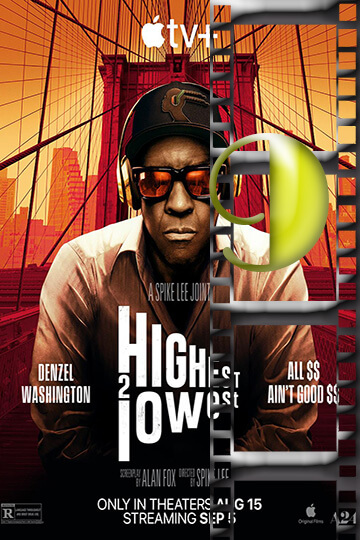

What’s It About
When a titan music mogul is targeted with a ransom plot, he is jammed up in a life-or-death moral dilemma. A reinterpretation of Akira Kurosawa’s crime thriller High and Low, now played out on the mean streets of modern day New York City.
MOVIESinMO REVIEW
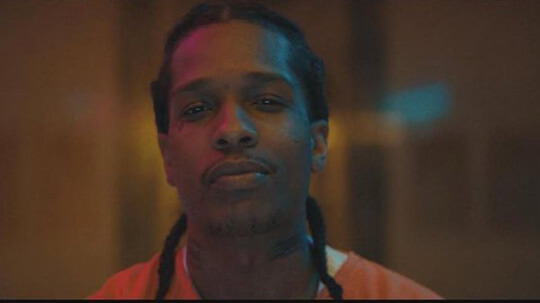
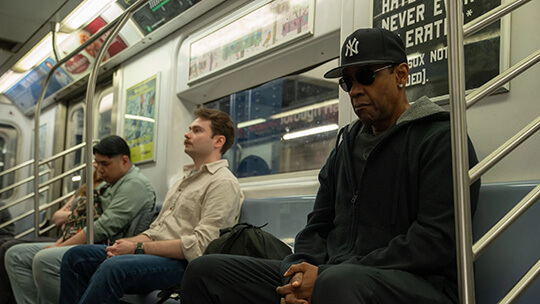
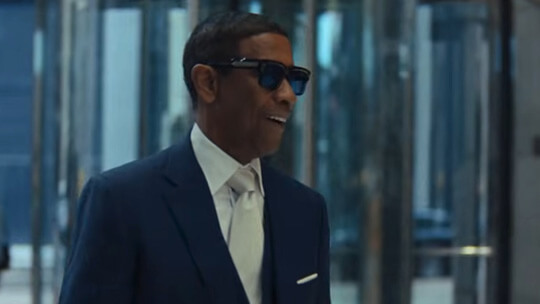
Sometimes the best movies sneak up on you. Spike Lee’s Highest 2 Lowest dropped into theaters with almost no fanfare, which feels crazy considering this might be his strongest work since Malcolm X. After nearly twenty years apart, Lee reunites with Denzel Washington for their fifth collaboration, and the chemistry between director and star burns as bright as ever. This isn’t your typical kidnapping thriller. Sure, it starts with the familiar setup: rich businessman gets a ransom call demanding millions for his son’s safe return. But Lee takes Akira Kurosawa’s classic High and Low and transforms it into something completely different, a meditation on art versus money, friendship versus self-interest, and what it really means to have integrity when everything’s on the line. Washington plays David King, a legendary music producer whose glory days feel distant. His company, Stackin’ Hits Records, discovered some of the biggest names in hip-hop and R&B, but now corporate suits want to buy them out and strip away everything that made the label special. David’s scrambling to buy back control of his own company when disaster strikes: someone kidnaps his teenage son, Trey, and demands $17.5 million in Swiss francs. This is where it gets messy in the very Spike Lee way imaginable. The kidnappers grabbed the wrong kid. They didn’t take David’s kid. They took Kyle, David’s best friend, and driver, Paul’s (Jeffrey Wright), kid. David is suddenly faced with a difficult choice: he must sacrifice his wealth and company to save someone else’s kid or protect his corporation while someone else’s kid suffers. Lee doesn’t rush through this moral crisis. He lets it simmer and burn: David’s obscenity-ridden shame as he cannot immediately pay. Washington’s performance conveys some of his best acting, where we see a man between who he used to be, who he is, and who he is destined to be – a businessman. When his own son confronts him about having “the best ears in the business, but the coldest heart,” you can see David’s world crumble. The relationship between David and Paul forms the movie’s emotional core, and Wright matches Washington beat for beat. These aren’t just employer and employee—they’re brothers who’ve weathered decades together. Paul did hard times years ago, and David helped him rebuild his life. Now the tables have turned, and Paul needs David in ways that go beyond money. Their scenes together crackle with tension and genuine affection, reminding us why both actors rank among our greatest performers. What separates Highest 2 Lowest from other thrillers is how Lee refuses to stay locked into genre expectations. When David finally agrees to pay the ransom, the money drop turns into vintage Spike Lee filmmaking. The sequence weaves together a tense subway ride packed with rowdy Yankees fans, a Puerto Rican Day parade bursting with music and dancing, and an elaborate shell game designed to fool the police. Instead of amping up the tension with aggressive music, Lee lets the city’s natural rhythm carry the scene. This feels like classic Lee territory—the same director who mixed comedy and tragedy in Do the Right Thing, who found poetry in Malcolm X’s pilgrimage to Mecca, who turned a bank robbery into a chess match in Inside Man. Lee understands that real life doesn’t follow movie formulas, so neither do his films. Critics sometimes call his style “messy,” but that misses the point entirely. Lee has been working on this way of working for more than thirty years, and he never nailed it better than he does here. The kidnapper, A$AP Rocky, in a surprisingly effective performance, is everything David is opposing. Rocky’s character, a wannabe rapper named Yung Felon, can get his head around the idea that “attention is the only currency” and the kidnapping is a smart career choice. His confrontation with David in a recording studio becomes a battle for the soul of hip-hop itself—art versus commerce, substance versus flash, legacy versus quick money. Lee fills the movie with his signature touches: characters speaking directly to the camera, those smooth double dolly shots, love letters to New York City that make you want to visit every neighborhood. But these flourishes never feel forced or distracting. They’re organic parts of Lee’s storytelling vocabulary, as natural as a jazz musician’s improvisation. The technical craft matches the emotional depth. Cinematographer Matthew Libatique, who’s worked with everyone from Darren Aronofsky to Bradley Cooper, captures New York in all its gritty glory. Watch the scene where David tells Paul he won’t pay the ransom—the two men stand on a balcony overlooking Manhattan, while a golden light reflected in the window creates a ghostly presence hovering above them, like the shadow of money poisoning their friendship. Highest 2 Lowest works on multiple levels simultaneously. As a crime thriller, it delivers genuine suspense and surprising twists. Whether viewed as a character study, a social commentary, or simply a Spike Lee joint, the film addresses different aspects of how money and power corrupt (even the best of people), how capitalism treats art as a commodity to buy and sell, and how within the celebration of Black culture, Spike Lee challenges us to think more about success and integrity. The movie’s central message, “all money ain’t good money,” feels especially relevant now. We live in an era where everything gets reduced to dollar signs and social media metrics. Lee argues for a different kind of success, one measured in artistic impact and personal relationships rather than bank accounts and follower counts. This theme runs through many of Lee’s best films. In Malcolm X, the title character gives up material wealth for spiritual wealth. In Inside Man, the bank robber’s real aim isn’t money but justice. In BlacKkKlansman, Ron Stallworth chooses principle over professional advancement. Lee is always advocating for characters who give up easy money for harder truths. Every supporting character fleshes out every role. Ilfenesh Hadera gives Pam real agency as David’s wife, not just a worried mother but a partner who challenges her husband’s priorities. Aubrey Joseph makes Trey more than a typical teenager, showing a young man grappling with his father’s legacy. The three detectives—John Douglas Thompson, LaChanze, and Dean Winters—create a believable team without falling into cop movie cliches. Lee’s script, as adapted by Alan Fox, never dumbs down for audiences or oversimplifies difficult issues. The conversations of these characters sound like real people talking rather than like a pair of screenwriters trying to be clever. When the characters are talking about the issue of art vs commerce, they anchor the discussion with specific examples and personal stakes, rather than an abstract philosophical debate. The final act of the film twists and turns in ways that are both surprising and inevitable. Without spoiling anything, Lee finds a way to respect both Kurosawa’s original vision and an artistic voice as valid in its own right. The ending offers a modicum of redemption, but only through honest self-examination and real change. Highest 2 Lowest deserves a much larger audience than it’s got so far. In a landscape of franchises and formulaic movies, Lee is delivering what is a rare and valuable achievement: a film that entertains its audience while asking them to think for themselves about what matters. It is the kind of film that lingers with you long after the movie has ended, and will prompt conversations about friendship, integrity, and the cost of success. At 68, Spike Lee has no intention of slowing down or playing it safe. Highest 2 Lowest ranks as one of his best achievements, a mature work that brings together everything he’s learned about filmmaking, storytelling, and human nature in the process. For those who have been with him since the beginning, this is a resounding return to form. For those who are new, it’s the perfect way to get to know one of cinema’s most valuable voices. This is essential viewing – it’s a reminder that great films don’t have to entertain you with explosions and special effects to create excitement. Sometimes all you need is an accomplished filmmaker, an all-star cast, and a story that deserves to be told. Highest 2 Lowest provides all of these in spades.
OUR RATING – A SPIKE LEE 9