

WHAT’S IT ABOUT
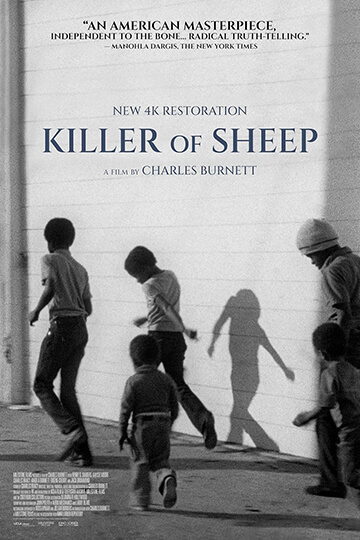
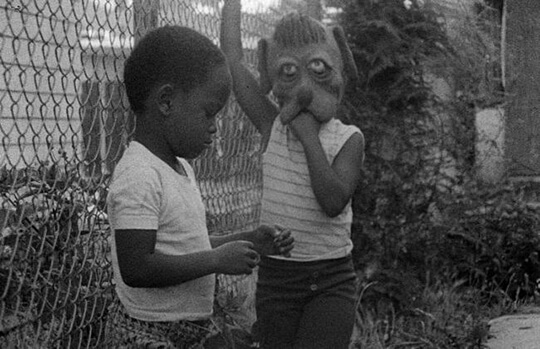
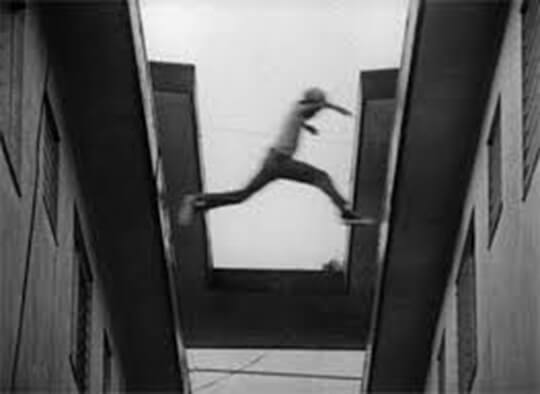
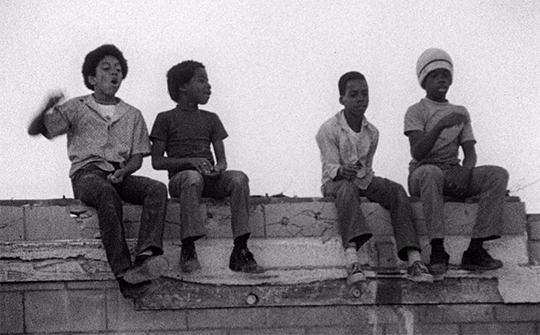
Killer of Sheep, written, directed, produced, and edited by Charles Burnett as his UCLA film school thesis, stands as one of the most significant works in American independent cinema. Shot on weekends over a year with a budget of less than $10,000, this black-and-white 16mm film provides an unflinching yet poetic glimpse into the everyday life of a working-class Black family in the Watts neighborhood of Los Angeles in the 1970s.The film follows Stan (Henry G. Sanders), a sensitive man worn down by his job at a slaughterhouse, as he navigates the challenges of daily life in Watts. Rather than following a traditional narrative structure, Killer of Sheep unfolds through a series of vignettes that capture moments both mundane and profound: children playing in vacant lots, Stan’s strained relationship with his wife, neighborhood men attempting various schemes to make money, and the numbing routine of Stan’s work killing sheep for slaughter. What sets the film apart is Burnett’s remarkable eye for composition and his ability to find beauty in the ordinary. The film’s striking black-and-white photography and its soundtrack (featuring artists like Dinah Washington, Paul Robeson, and Earth, Wind & Fire) create a visual and aural poetry that transforms what could have been mere social observation into transcendent art. The children’s play scenes—jumping between rooftops, throwing rocks at passing trains—are particularly memorable, capturing both the resilience and vulnerability of youth amid harsh circumstances. Throughout, Burnett resists both sentimentality and exploitation, presenting his characters with dignity and humanity while never shying away from the economic realities and psychological toll of systemic inequality. The slaughterhouse sequences provide a powerful metaphor for Stan’s own feelings of being processed by forces beyond his control.
WHY IT’S GONE
The film’s use of music by Dinah Washington, Paul Robeson, Earth, Wind & Fire, and others was initially done without clearing rights. The cost of licensing these tracks—estimated at over $150,000—far exceeded the film’s production budget, making commercial distribution legally impossible. Shot on 16mm black-and-white film with limited resources, the original elements suffered degradation over time. The film existed primarily as poor-quality prints circulated among film schools and museums. Despite its artistic merit, the film faced the systematic marginalization common to independent works by Black filmmakers. It wasn’t considered commercially viable by mainstream distributors. For decades, the film primarily existed as a teaching tool shown in university film programs and occasional museum screenings, keeping it from reaching a wider audience. Despite its limited availability, Killer of Sheep received extraordinary critical recognition. In 1990, it was among the first 50 films selected for preservation in the Library of Congress’ National Film Registry. It was named one of the “100 Essential Films” by the National Society of Film Critics Critics and filmmakers regularly cited it as one of the most important American independent films ever made. Yet even as its reputation grew, most film lovers had no way to actually see it. After thirty years of limited circulation, In 2007, Milestone Films and the UCLA Film & Television Archive completed a restoration project, clearing music rights and creating a new 35mm print. This restored version received a limited theatrical release in 2007, marking the first time the film was commercially distributed. Milestone released a 2-disc DVD set in 2007, including the film and Burnett’s short “My Brother’s Wedding” A Blu-ray release followed in 2019, again through Milestone Films. Despite the restoration, streaming availability remains extremely limited—the film is not available on major streaming platforms like Netflix, Amazon Prime, or Hulu. It occasionally appears on the Criterion Channel during special programming blocks and on smaller specialty streaming services like Kanopy (accessible through some public libraries) Killer of Sheep exemplifies how structural barriers in distribution and preservation can keep essential works of American cinema—particularly those by Black filmmakers—from the audiences they deserve. While its status has improved since the 2007 restoration, it remains surprisingly difficult to access given its status as one of the most acclaimed American films ever made.