
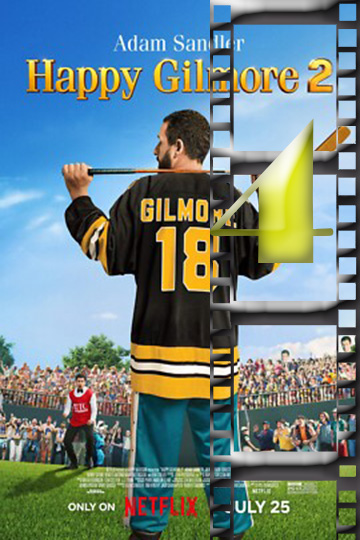

What’s It About
Thirty years after winning his first tour, retired golfer Happy Gilmore returns to the sport to pay for his daughter Vienna’s ballet school.
MOVIESinMO REVIEW
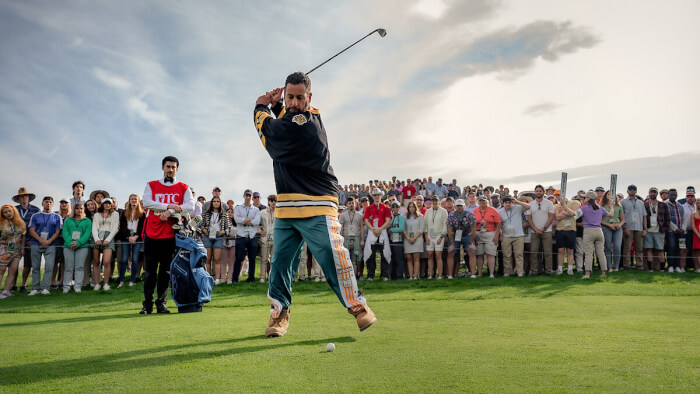
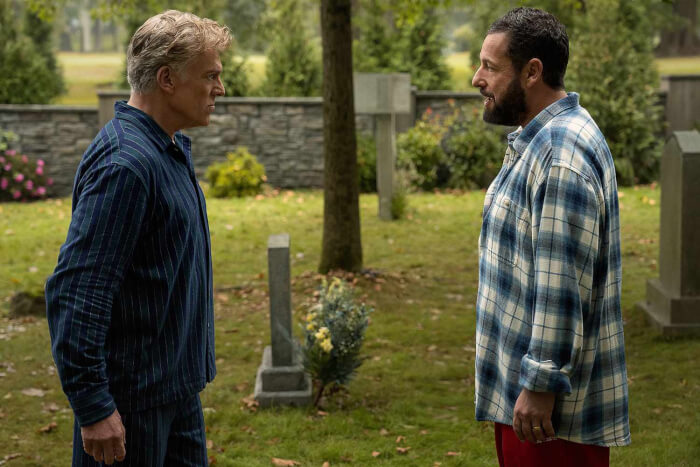
Nearly thirty years after the original Happy Gilmore became a comedy classic, Netflix brings us Happy Gilmore 2. Unfortunately, this sequel feels more like a rushed homework assignment than a worthy follow-up to Adam Sandler’s beloved golf comedy. The movie starts with a shocking twist that immediately sets the wrong tone. Happy’s wife, Virginia, dies after getting hit by one of his golf balls during a tournament. This dark opening completely changes the mood from the fun, lighthearted feel of the first movie. Instead of starting with laughs, we begin with tragedy, and the film never really recovers from this misstep. After losing his wife, Happy becomes a depressed alcoholic living in a rundown neighborhood with his five kids. He works at a grocery store and has given up golf entirely. The only thing that gets him back on the course is his daughter Vienna, who needs seventy thousand dollars to attend ballet school in Paris. To earn the money, Happy must return to professional golf and face off against a new threat to the sport. Enter Frank Manatee, played by Benny Safdie, who runs something called the Maxi League. This new organization wants to turn golf into a circus-like spectacle with ridiculous obstacles like fire and snow. Think mini-golf on steroids, but without any of the charm. Happy must compete against these Maxi League players to save traditional golf and win the prize money for his daughter. The biggest problem with Happy Gilmore 2 is that it tries to do way too much. The first movie worked because it had a simple story: an angry hockey player learns golf to save his grandmother’s house. This sequel juggles between multiple plotlines – saving his daughter’s future, battling alcoholism, defeating the Maxi League, and reuniting with old rivals. None of these stories get enough attention to feel meaningful. The film also suffers from an obsession with the past. Every few minutes, the movie stops to show clips from the original Happy Gilmore, as if the writers don’t trust viewers to remember the jokes. When a character mentions something from the first film, we get a flashback. When someone makes a reference, we see the original scene. This constant looking backward makes the sequel feel lazy and unoriginal. Christopher McDonald returns as Shooter McGavin, Happy’s old rival, but their conflict gets resolved way too quickly. After one fight scene, they become buddies and team up against the real bad guys. This wastes what could have been the movie’s best source of comedy and tension. The humor feels forced and often crude without being clever. Happy’s four sons spend most of their screen time acting wild and showing their butts. Ben Stiller returns as Hal, now running a sketchy support group, but his scenes feel disconnected from the main story. Even the new character Oscar, played by Bad Bunny, starts as comic relief before suddenly becoming surprisingly skilled at golf with no real explanation. What makes this especially frustrating is that glimpses of a better movie shine through occasionally. Adam Sandler still has moments where he captures Happy’s likeable side, especially in scenes with his daughter. The father-daughter relationship could have been the heart of the film, but it gets lost among all the other plot threads and celebrity cameos. Speaking of cameos, the movie is stuffed with appearances from real golfers, athletes, and celebrities. While some are fun (like Eminem playing the son of a character from the first movie), most feel like distractions. The professional golfers deliver their lines awkwardly, making scenes feel stiff and unnatural. Director Kyle Newacheck is clearly trying to combine nostalgia with new ideas, but the end result is disjointed and decidedly unfocused. It cannot decide if it wants to be an absurd family story concerned with redemption, a sports comedy that involves saving golf, or simply a greatest hits arrangement of the most memorable scenes from the original film. The tourney featuring the Maxi League could have been fun as a parody of how sport is commercialized and dumbed down for primetime. Instead, it just seems cartoonish in execution and lacks a real sense of a believable threat posed to the traditional game of golf. The obstacles/gimmicks were so over-the-top that they belong in a different kind of comedy altogether. Lastly, Happy Gilmore 2 has problems with tone throughout. The opening tragedy creates a dark mood that clashes with the silly humor that follows. When Happy hallucinates seeing his dead wife on the golf course, it’s supposed to be touching, but it just reminds viewers of the traumatic way she died. The movie works best when it focuses on simple family moments between Happy and Vienna. Sunny Sandler, playing the daughter, brings a natural sweetness to her role that grounds the more outrageous comedy around her. These scenes suggest what the movie could have been if it had committed to being a story about a father trying to do right by his child. Sadly, all those moments disappeared in a sea of tacky humor, unfunny callbacks, and a plot that tries to do too much. The movie seems like it was made by people who liked the original Happy Gilmore but did not understand what made it good in the first place. For fans of the original, Happy Gilmore 2 may be a nostalgic blanket, but it is more likely to be a disappointment. The movie had good intentions… the desire to recapture the magic of Happy Gilmore, but ended up trying to do too much instead. The result is a sequel that feels overstuffed, but cheerlessly empty. In the end, Happy Gilmore 2 serves as a reminder that some movies are better left as standalone classics. While Adam Sandler still has his moments and the basic premise had potential, the execution falls well short of par. This is one golf movie that should have stayed in the rough.
OUR RATING – A DISAPPOINTING 4