
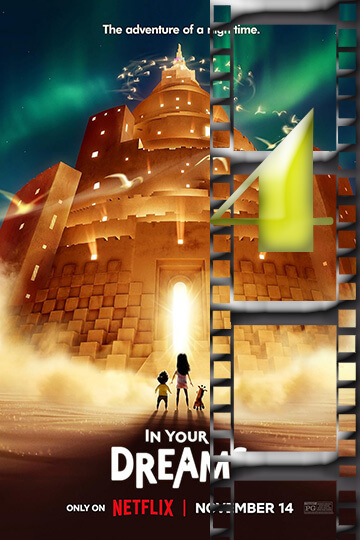
WHAT’S IT ABOUT
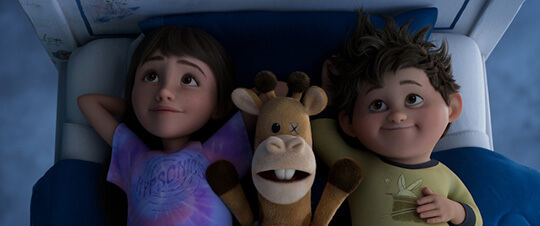
A girl named Stevie and her brother named Elliot magically travel into the world of dreams to find The Sandman, who would grant their wish of saving their parents’ marriage.
MOVIESinMO REVIEW
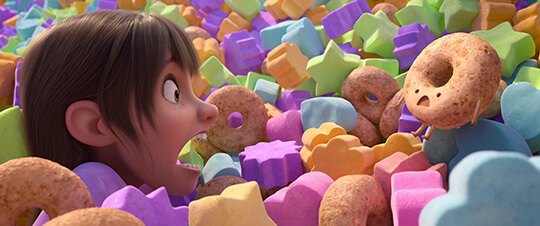
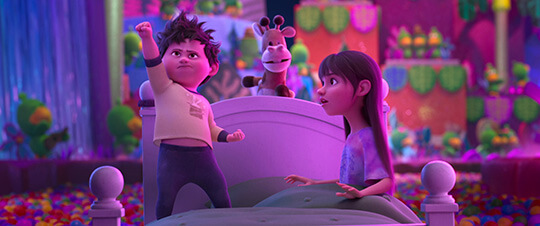
Netflix released another animated film this week, and honestly, I’m still trying to figure out how I feel about it. In Your Dreams debuted on the streaming service with a lot of expectation; after all, this comes from the studio that brought you Klaus, The Mitchells vs. The Machines, and KPop Demon Hunters. But where those films grabbed you by the heart and refused to let go, this one barely holds your attention long enough to remember what happened. Directors Alex Woo and Erik Benson, along with writer Stanley Moore, created something that borrows heavily from better movies. You’ll spot Inside Out’s emotional depth, Over the Moon’s fantasy adventure setup, and even bits of Slumberland’s dream navigation, except none of it hits the way those films did. Woo based the story on his own childhood memories of his mom leaving, which should’ve made everything feel more personal and real. It has more of a plot, it feels like they didn’t actually explore what those experiences were like, and the story follows 12-year-old Stevie and her younger brother Elliot as they explore dreamscapes to find the Sandman for their greatest wish: happy parents. Their parents, played by Simu Liu and Cristin Milioti, are really struggling. The mother feels she is an academic who had some potential, decides she wants to move to Duluth for a temporary role as a professor. Rather than attending to their children, dad is wasting time recording an album he’s never going to finish. Money is tight, arguments are escalating, and kids are watching their world collapse around them. To remove themselves from this experience, Stevie and Elliot utilize a magic book they find in a thrift store basement. Suddenly, they’re traveling through shared dreams with their stuffed giraffe, Baloney Tony, who talks like Craig Robinson and mostly just runs away from danger. They explore strange towns where breakfast foods become zombies rather than simply spoiling, evade stormy skies of the nightmare queen Nightmara, and ultimately track down Sandman. All this is meant to be a lesson on coping with change and family issues, and situating it between wishing for something better and the coldness of reality. The truth is, none of this hangs together. The animation looks pleasant enough, with a soft, realistic, and inviting style that makes the fantasy elements pop. The dreams in the film feel like dreams, which is good, because that’s where we often process our struggles in real life anyway. But looking good isn’t enough when you have all the fluff underneath you. I sat with this film for weeks, trying to understand why it bothered me so much. This year gave us some incredible animated films, Ne Zha 2, The Bad Guys 2, even ELIO wasn’t terrible. In Your Dreams has a beautiful message buried somewhere inside, but it never becomes the kind of movie you’ll remember or want to watch again. Everything needed for greatness exists here, but when it all comes together, the impact barely registers. Let me break down what’s missing by comparing it to KPop Demon Hunters, another Netflix release from this year. Everyone expected In Your Dreams to be the big breakout hit, but KPDH actually delivered something special—and not just because of its perfect soundtrack. That film works because we truly know those characters. Their motivations make sense, their personalities feel real, and the themes weave naturally into both what happens and why we’re watching it happen. KPDH uses themes about finding your voice, accepting your dark side, and trusting people to love you back—all to show Rumi and Jinu becoming better versions of themselves. The characters drive everything forward. But In Your Dreams flips that around. Stevie and Elliot exist mainly to prove a point about how dreams help us process life, but shouldn’t replace actually living it. You see the difference? One film centers on the people; the other centers on the message. Stevie and Elliot feel like cute, funny stand-ins for difficult emotions we all recognize. But who are they really? Of course, their sibling relationship seems authentic, but these characters only serve the purpose of signifying that relationship. They lack the quality of feeling like real kids who exist outside of the movie. They do not exist in reality to last forever like our favorite iconic animated heroes. They fade off into the distance the moment the credits start rolling. Baloney Tony vs. Tiger (the derpy creature from KPDH) take both roles with an almost identical function. Tony essentially completely abandons the kids at important instances. Then, at the last second, he overcomes his apparent fear at just the right moment to help save the day. But what even was he scared of, or why? What back story does he have? Without that, his superhero moment has no effect, as it is merely a fit of the plot at exactly the right time. Tiger, on the other hand, possesses a humorous quirk and a backstory. He is funny, sure, but he also helps Rumi and Jinu develop, at least to some degree. He matters beyond the jokes. The dream world itself feels the same way—built for cuteness and cleverness but not cohesion. The different landscapes don’t connect to show us what’s actually going on inside Stevie and Elliot’s heads beyond surface-level stuff. Think about Inside Out and all those layers upon layers showing not just Riley’s story but each emotion’s journey too. Her inner world reflects something deeper than just her favorite things or surface goals. For Stevie, we get breakfast because making breakfast together is a family tradition. That’s it. Nothing deeper. The dreams themselves trade cheap laughs for substance. Lasers shoot from butts, the kids end up in a “naked dream” with pixelation covering them, and there’s a montage set to “Sweet Dreams (Are Made of This)” that reminds you that nothing happening here actually affects their real lives. The Sandman shows up to Metallica’s “Enter Sandman” because, of course, he does, and turns out to be less helpful than expected. At one point, he proposes to put Stevie and Elliot into an ideal dream in which their parents never separate and everyone lives happily ever after. This false notion of happiness, or even pretense, drives the central conflict of the film, but this should have been the original starting point rather than simply enacting yet another arbitrary plot twist. Parents may be uncomfortable with some of the content in this film. The film is rated PG for scary images, rude humor, and heavy themes surrounding divorce. Talking about parents splitting up felt too intense for a kids’ film—I can’t imagine any child, regardless of their family situation, feeling better after watching this. Yeah, we see siblings learning to rely on each other and discover that heart’s desires can lie to us, but those lessons get buried under forgettable set pieces and half-considered insights. The whole thing runs only seventy-seven minutes before credits, which should make it quick and fun. On the contrary, it feels as if there is no time to explain anything, like a tired parent who just wants to put their child to bed after they have read the 17th bedtime story that evening. Story beats bounce around without a setup. Character motivations change whenever it seems relevant. The fantasy rules of dreams change every time they are pertinent. Even the real-world scenes, including a Chuck E. Cheese knockoff where they perform a pizza-themed version of “Don’t Cha”, feel edited down to nothing. In Your Dreams opens with that tired freeze-frame “Yep, that’s me” voiceover, which tells you everything about its creative ambition. This is a film designed to be half-remembered, processed quickly, and forgotten faster. It preaches a practical lesson about accepting imperfect reality instead of chasing fake nostalgia, but it never makes that lesson feel heartfelt or entertaining. Compared to Pixar’s emotional masterpieces, this blares like an alarm clock, harsh, unwelcome, and easy to ignore. The team behind this came from Pixar, where director Alex Woo worked on Ratatouille, WALL-E, and Incredibles 2. But having that pedigree doesn’t automatically create magic. This feels like someone copied the surface of a Pixar movie without understanding the engine underneath. Netflix and Sony Pictures Imageworks gave us that same smooth CG animation from Over the Moon and Vivo, high-grade, realistic details mixed with dull cartoon roundness that screams expensive but boring. Should families view this? Possibly, as the themes are still important. Kids need stories about dealing with change, about accepting reality, and showing up for each other during hard times. However, I cannot recommend it. In Your Dreams prioritizes jokes and message delivery with the flimsiest of connections to an actual story and no connection or concern for the people living through it. It is sweet enough, it has meaning for sure, but it is a plot with no story, which feels the opposite of dreamy.
OUR RATING – A SLEEPY 4