
WHAT’S IT ABOUT
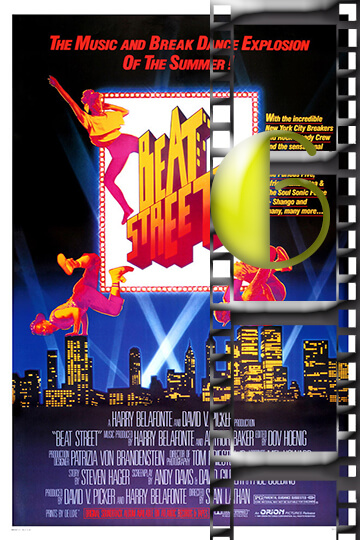
At the forefront of early hip-hop culture, DJ Kenny Kirkland (Guy Davis), his B-boy brother, Lee (Robert Taylor), and graffiti artist Ramon (John Chardiet) all have hopes of showcasing their talents outside the confines of South Bronx, N.Y. When Tracy Carlson (Rae Dawn Chong), a composer and choreographer, runs into Kirkland and Lee at one of Manhattan’s hottest nightclubs, she offers Lee an opportunity to perform on TV. However, the crew has a long way to go before achieving their dreams.
MOVIESinMO REVIEW
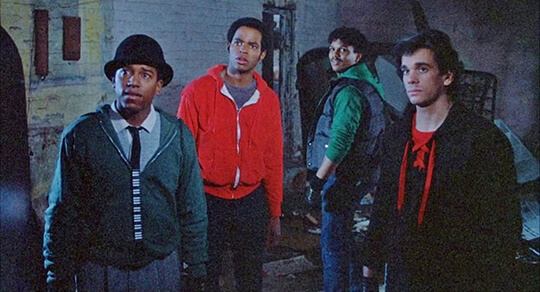
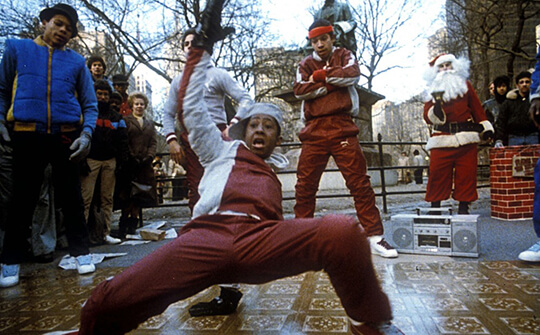
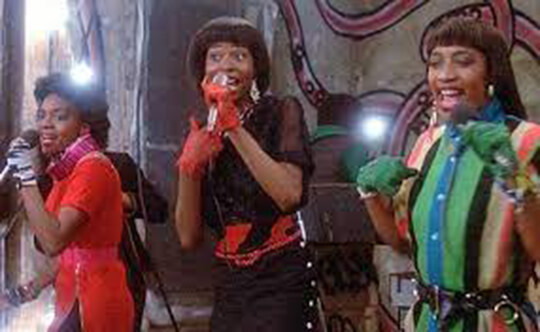
Four decades since its release, “Beat Street” is a fascinating time capsule that captures both the explosive breakout of hip-hop culture and the earnest but ultimately problematic efforts Hollywood made to cash in on it. Directed and written by Stan Lathan and produced by Harry Belafonte, this 1984 film holds a unique position in the annals of cinema—emerging at the exact time rap, breakdancing, and graffiti were starting to transition from subterranean cultures to mainstream phenomena. When “Beat Street” opened in June of 1984, it was revolutionary simply because it existed. This was a period when Black stories, particularly those about youth, rarely received high-budget backing. The film follows on the coattails of “Wild Style” (1983) and “Flashdance” (1983) but differs from its antecedents in that it attempted to present hip-hop culture in a documentary-style manner but still appeals to commerce. Contemporary critics were largely divided. Mainstream publications like Variety praised its zest and performances, particularly noting the authentic casting of authentic hip-hop originators like Grandmaster Melle Mel, Afrika Bambaataa, and the Rock Steady Crew. The film’s refusal to use actors to impersonate rappers and dancers in favor of actual practitioners of the culture was pioneering for its day. Critics complimented the colorful photography and pulsating soundtrack, which included soon-to-be classic songs. However, even during 1984, some critics, namely those who worked for the Black press, perceived the underlying tensions of the film. The film was produced by whites for a predominantly white, suburban population that was interested in this “new” urban spectacle. This gave a natural voyeuristic tone that unsettled some viewers even as they delighted in viewing their culture reflected on the screen. “Beat Street” follows Kenny Kirkland (Guy Davis), an aspiring South Bronx DJ, and his younger brother Lee (Robert Taylor), an accomplished breakdancing graffiti artist. The narrative drifts between the interrelated spheres of breakdancing, DJing, and graffiti art and how those artistic mediums provided youths in economically devastated neighborhoods with both art and potential economic return. The strength of the movie is that it acknowledges that hip-hop culture was born out of some socioeconomic conditions. It doesn’t hesitate to show the poverty, urban decay, and poor opportunities that compelled young people to make something beautiful and powerful out of nothing. The Roxy performance by Kenny and his team, juxtaposed with Lee’s subway vignettes cutting his magnum opus, recalls the rugged energy and creative passion that defined the nascent hip-hop. But for much of its duration, Hollywood tendencies destroy the film’s believability. The romantic subplot involving Tracy (Rae Dawn Chong), a student who dreams of becoming a choreographer, and Kenny is artificial and serves only as a cross-over. The climactic finale, while emotionally powerful, is based on clichéd inner-city movie tropes that would become increasingly insidious in later decades. Seeing “Beat Street” now is a delicate dance between its historical significance and period sensitivities. As a document of early hip-hop life, the movie is invaluable. The performance set pieces remain exhilarating—to watch Rock Steady Crew dance battle or Grandmaster Melle Mel rap is akin to watching history. The film captured aspects of hip-hop’s beginnings that would have otherwise been forgotten to history, and it is compulsory watch for anyone with an interest in the culture’s origins. But modern-day audiences will immediately recognize the film’s “poverty porn” elements—the temptation to present Black inner-city hardship as a spectacle to behold. The white gaze permeates the way the camera lingers on urban decay and the way the narrative ends up punishing Lee for seeking his art. Against the background of the contemporary moment, when discussions of cultural appropriation and authentic representation are centrally at issue in media critique, “Beat Street” reveals the messy dynamic of hip-hop’s initial mainstream success. Most prominently antiquated is the film’s treatment of women. Tracy, played by excellent Rae Dawn Chong, is largely a bridge between worlds rather than an adequately fleshed-out character. The other women are further pushed to the fringes, not only mirroring the 1980s film tradition but also hip-hop’s ambivalence towards gender in its initial decade. “Beat Street” may be imperfect but it was instrumental in spreading hip-hop around the world. Despite its failure to introduce breakdancing, rap, and graffiti into the outside world, it was hip-hop’s transition from a snobby fad to a worldwide phenomenon. Most international hip-hop creators cite this movie as their first exposure to the culture. The film is also to be praised for its employment of actual practitioners rather than Hollywood simulations. Afrika Bambaataa’s appearance lends credibility, and the performances of the Rock Steady Crew remain the best breakdancing ever filmed. These moments of authenticity carry the film over some of its more objectionable material. Modern viewers coming to “Beat Street” will likely react uncomfortably. Hip-hop enthusiasts and students of culture will also appreciate its documentary usefulness and authentic performances. The movie captures a moment when hip-hop remained revolutionary and risky, just before it inevitably became the mainstream phenomenon in pop music. However, a modern day audience, accustomed to more sophisticated representations of Black urban existence, may perceive this film’s depiction to be too naïve. Today’s film audience is also likely to find the beats of the narrative to be arduous and perhaps cliched, as they have watched these same narrative beats play out in urban core dramas for nearly 40 years. Young adults may get lost in the message of the film and can surely struggle with the pacing or earnest tone of the acting because they have been insulated by irony that even common entertainment has offered. The editing of the film isn’t bad. The cinematography certainly portrays the dynamism of live performances, even if perhaps with a pre-processed feel. And the music still resonates with coolness….certainly the breakdance set pieces watch easily. “Beat Street” will always represent an interesting moment in both the history of filmmaking and hip-hop. It’s both groundbreaking and imperfect, authentic and exploitative, historically important and artistically inadequate. The movie did succeed in presenting hip-hop culture to mass audiences while preserving performances and perspectives that otherwise might have been lost. For contemporary viewers, “Beat Street” is best as a historical document and not as unadulterated entertainment. It is a commentary both on early hip-hop existence and on Hollywood during the 1980s’ handling of Black stories. While its paternalism and its narrative shortcuts now appear old-fashioned, its requirement that authentic artists be given a role and its documentation of seminal hip-hop performances make it worthwhile to watch. The film remembers that representation, however flawed, can be valuable. “Beat Street” is not the hip-hop movie we would do today, but it’s the hip-hop movie that could be done in 1984, and for that alone, if nothing else, deserves our respect and subtle appreciation. A historically significant and powerhouse performance-based movie, but it is hurt by Hollywood norms and a repellent stare that’s particularly embarrassing by current standards.
OUR RATING – A THEN AND NOW 6