
WHAT’S IT ABOUT
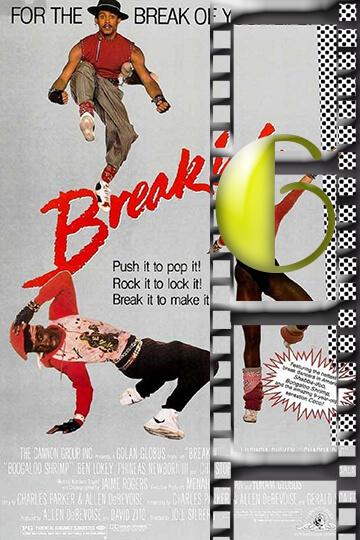
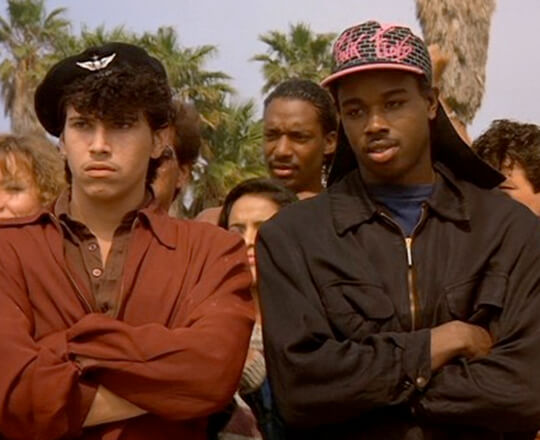
Kelly (Lucinda Dickey) is a classically trained jazz dancer who’s tired of warding off her amorous teacher and hungry for a new outlet. When she befriends street dancers Ozone (Adolfo “Shabba-Doo” Quinones) and Turbo (Michael “Boogaloo Shrimp” Chambers), she’s blown away by their unique and original moves. She soon volunteers to help them defeat a rival group of street dancers, learning breakdancing skills along the way and sharing some moves of her own.
MOVIESinMO REVIEW
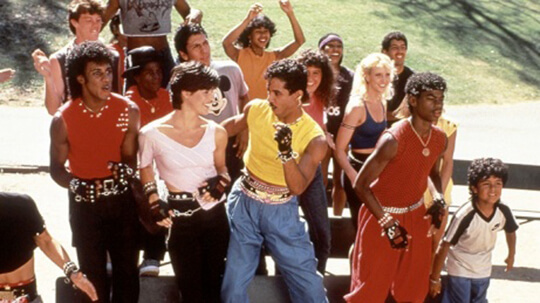
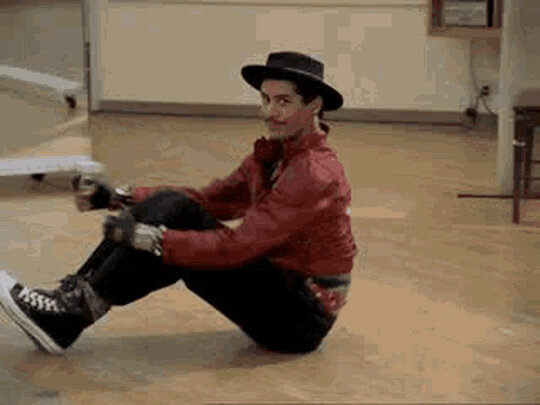
Four decades since its release, “Breakin'” is at once an intriguing cultural document and a profoundly troubling portrait of the mainstream arrival of hip-hop culture. Viewing the movie today involves negotiating the fraught landscape between nostalgic respect and critical analysis of how Black culture was commodified, cleansed, and marketed to white America during the Reagan years. When “Breakin'” premiered in May 1984, it arrived at a pivotal moment in American popular culture. Hip-hop was crossing over from South Bronx street block parties to MTV rotation, and breakdancing had received widespread media attention through news of street brawls and innovative music videos. The film rode that wave, becoming an inadvertent box office success that grossed over $38 million on its lean $1.2 million budget. Contemporary critics tended to dismiss “Breakin'” as exploitation filmmaking – a cash-in event exploiting a cultural trend. Variety called it “a mildly diverting dance picture which scores its targets without much style or substance.” The New York Times was particularly vicious, calling it “an amateurish attempt to capitalize on street dance culture.” White critics, in general, seemed unable or unwilling to see the cultural significance of what they were seeing, complaining instead about the movie’s admittedly poor plot and low-budget production. But these reviews omitted something critical: for most young Black and Latino viewers, “Breakin'” was the first that they had ever witnessed their culture represented on the big screen. The movie, in all its deficits, provided representation that was sorely missing from mainstream cinema during 1984. Looking at “Breakin'” with modern eyes, it is a more multifaceted and troubling text. The core storyline of the movie – young white woman Kelly (Lucinda Dickey) finding and ultimately heading a breakdancing team – takes a well-worn and problematic Hollywood form. Kelly’s progress from jazz dancer to breaking phenom reflects countless movies in which white protagonists are the gatekeepers between Black culture and white acceptance. The dynamic between Kelly and her Black co-stars, Ozone (Adolfo “Shabba-Doo” Quiñones) and Turbo (Michael “Boogaloo Shrimp” Chambers), reflects the racial tensions of the period and the industry’s discomfort in making the Black narrative the foreground. Ozone and Turbo are skilled actors who bring the film’s most memorable moments, but the narrative ultimately positions Kelly as the hero whose classical training will legitimize their street culture. This framing is particularly queasy when held in tandem with the film’s treatment of authenticity. The film portrays breaking as a novelty rather than an art form deeply embedded in culture and imbued with social significance. The poverty, institutional racism, and urban decay that spawned hip-hop culture are glossed out of existence, substituted by a rainbow-colored, risk-free playground where cultural boundaries can be bridged seamlessly through dance. Even amidst the film’s other narrative flaws, the break sequences remain wonderfully impressive. Quiñones and Chambers were genuine form innovators, and their choreography captures the athleticism, imagination, and energy of breakdancing that made it revolutionary. Turbo’s robot dance and Ozone’s power moves are authentic depictions of the culture, even in the manufactured context of the film. The rest of the ensemble cast of dancers also delivers genuine street credibility in their performances. The people seen in the breaking scenes were largely actual members of the breaking community, and their casting provides the dance scenes with an authenticity and dynamism that the scripted dramatic scenes entirely lack. The production approach of the film, however, has the effect of killing this raw talent. The breaking battles feel staged rather than naturally performed, without the competitive fervor and cultural necessity that drove actual cipher sessions. The sanitized presentation eliminates a lot of the art form’s militancy and social critique. From a purely technical standpoint, “Breakin'” succeeds in its limitations. Director Joel Silberg captures the movement and dynamism of the dancing, although his technique lacks artistic sense. The music on the soundtrack, which features Ollie & Jerry, FireFox, and Ice-T, is the real sonic texture that made hip-hop music more mainstream with broader audiences. The film’s cultural impact cannot be overstated. It reached video stores and cable television circulations at the same time hip-hop was exploding throughout the nation, exposing many to breaking, popping, and locking for the first time. Whether positively or negatively, “Breakin'” helped America’s mainstream understand these art forms differently. Now, in our current cultural climate, “Breakin'” would be forcefully condemned for its racial dynamics and cultural appropriation. The easy treatment of Black and Latino culture as white spectacle in this movie would not fly today under more advanced discussion of representation and authenticity. Modern audiences, particularly younger ones, would likely find the racial politics of this film gravely objectionable. The narrative structure that centers on Kelly without sidestepping over the white creators of breaking would be immediately recognized as an extension of a lengthy process of white-washing Black art practices. But then again, the movie might still find appeal among audiences who are concerned with hip-hop heritage and the emergence of dance culture. The initial breaking sequences remain effective, and the film itself is a valuable documentation of how these styles were first presented to mainstream crowds. “Breakin'” occupies a complicated position in film history. It contributed to an influential early representation of hip-hop culture even as it distorted and stole that culture for the consumption of mainstream America. The historical significance of the film can’t excuse its ill-conceived approach to race and authenticity, but neither can its failures take away from the talents and professionalism of its Black and Latino cast. As a time capsule, “Breakin'” teaches us how far we’ve come in discussing cultural representation and how common certain appropriation patterns are. It’s obligatory viewing for anyone interested in the methods through which Black culture has been marketed and sold in American popular entertainment, even though it doesn’t always work to universally appreciate the cultures that it’s representing. The film is amplified by real instances of artistic value and historical importance but weighed down by its exploitative application of the culture that it claims to honor. It’s still worth watching today, but it demands critical viewing, and its first audiences were seldom encouraged to apply it to their entertainment.
OUR RATING – A TIME CAPSULE 6