
WHAT’S IT ABOUT
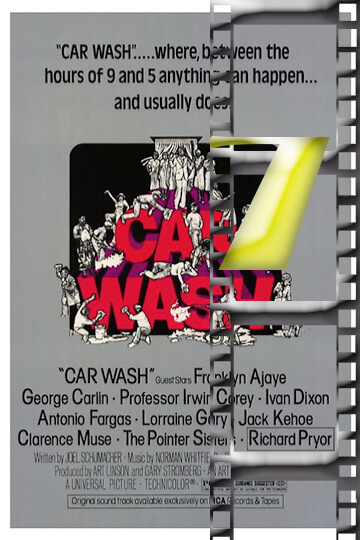
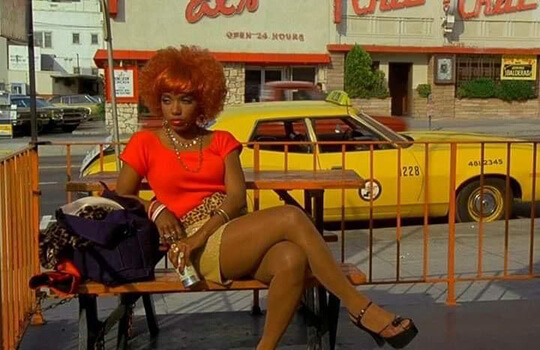
This day-in-the-life cult comedy focuses on a group of friends working at Sully Boyar’s Car Wash in the Los Angeles ghetto. The team meets dozens of eccentric customers — including a smooth-talking preacher (Richard Pryor), a wacky cab driver (George Carlin) and an ex-convict — while cracking politically incorrect jokes to a constant soundtrack of disco and funk. Some of the workers find romance as the day moves along, but most are just happy to get through another shift.
MOVIESinMO REVIEW
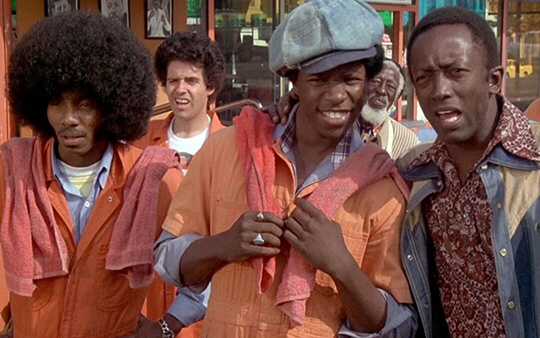
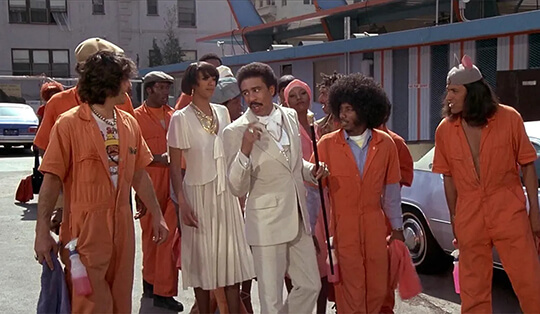
From its funky soundtrack to its slice-of-life story, Michael Schultz’s “Car Wash” provides a lively portrait of 1970s Black urban life that is entertaining as well as thoughtful. As a screwball farce of a comedy spanning one workday at the Dee-Luxe Car Wash in Los Angeles, the film marries humor with social commentary in a manner that resonates with different generations. When “Car Wash” premiered in 1976, the majority of mainstream reviewers did not share its cultural significance. The New York Times reviewed it as “a cheerful, slightly vulgar, highly cleverly done comedy,” and others could not relate to its free-flowing narrative process. White critics liked its entertainment but disregarded its understated depiction of Black working-class life. On the other hand, Black media like Jet magazine valued something more profound—a uniqueness of a movie where Black characters could be themselves naturally without projecting their experience from a white perspective. The star-studded cast of Richard Pryor, Bill Duke, Antonio Fargas, and Franklyn Ajaye represented diverse forms of Black masculinity not commonly found in one film at a time. Today’s critical perspective would undoubtedly praise what “Car Wash” accomplished. Contemporary film analysis recognizes its pioneering approach of intersectionality, presenting characters experiencing race, class, sexuality, and religion in a manner that was revolutionary in its day. Contemporary critics would appreciate how the documentary approach of the film recorded authentic cultural expression that mainstream film traditionally ignored. “Car Wash” stands out for its nonpatronizing representation of working-class Black men. In contrast to much of its era’s films that depended on stereotypes or reductionist characterizations, Schultz’s ensemble film provides dignity and depth to each of its characters. From ex-convict Lonnie (Ivan Dixon) struggling to take care of his family to young college student Duane (Bill Duke) becoming a revolutionary political activist, the film portrays Black masculinity as multifaceted and complex. Most revolutionary of all was the presence of Lindy (Antonio Fargas), an openly gay character whose femininity is embraced by the car wash crew. While much of the humor that exists around Lindy’s character feels stale by today’s standards, incredible is the manner in which his coworkers ultimately defend and accept him. During an era when LGBTQ+ characters were often jokes or aggressors, Lindy was a breakthrough—a character with agency, with dignity, and with community acceptance. Why “Car Wash” remains so relevant today is its class consciousness. The film portrays labor with an honesty that is too often absent in American films. We witness the economic pressures, shopfloor solidarity, and power struggles that shape these characters’ lives. When Abdullah (Bill Duke) rants against exploitation, when Lonnie campaigns for promotion on merit, when workers debate unionization—these debates sound unexpectedly contemporary in our own struggles about labor rights and economic injustice. The film presents alternative methods of progress and resistance: Abdullah’s ideological discourse compared to Lonnie’s pragmatism; the son’s idealism in relation to progress compares to his father’s motivation by profit. “Car Wash” puts forward no easy answers, but presents varying epistemologies around living within an unjust system. The Rose Royce soundtrack is not merely in harmony with the film—it adds to its cultural authenticity. The tunes aren’t just catchy tunes; they are the manifestation of the soul of the film, capturing the rhythm, energy, and spirit of urban Black America in the mid-1970s.The production by Norman Whitfield offers an elaborate auditory environment that takes the movie beyond a simple comedy. The dialogue, replete with cultural idioms and vernacular speech, retains linguistic forms recorded in Black urban speech without apology or translation into white speech. This linguistic verisimilitude, combined with the film and music setting, creates a cultural time capsule that remains valuable to help us comprehend a turning point in Black American history. Modern-day viewers would likely enjoy “Car Wash” while being able to appreciate its anachronisms. Some of the comedy relies on stereotypes now subjected to scrutiny, particularly those concerning gender and sexuality. Some of the character interactions and some of the word usage are predicated on their era. But these are trumped by its virtues. For viewers attuned to films like “Sorry to Bother You,” “Hustlers,” or “Support the Girls,” which investigate work dynamics from the point of view of intersectionality, “Car Wash” would be a master text. Its structure in episodes, similar to the “day in the life” technique used in series TV, would feel extremely up-to-date. Younger viewers will be astonished by how many issues were still open nearly five decades later—economic inequalities, police relations, job respect, and political polarization still characterize our national conversation. The film’s refusal to offer neat solutions but rather to depict life in all its contradictory complexity would appeal to contemporary audiences weary of simplistic stories. “Car Wash” gave us more than a best-selling album and cult heroes. It made common Black experience valid enough to deserve the attention of cinema. It demonstrated that Black life movies could be successful without compromising cultural reality. It demonstrated that social commentary could be maintained through comedy without being preachy. The readiness of the movie to engage in hard realities without losing humor and warmth set a precedent emulated by filmmakers ranging from Spike Lee to Issa Rae. Its influence resonates beyond cinema into television, music, and broader cultural debates about representation. Almost half a century later, “Car Wash” is not just acceptable but essential viewing. It captures a specific moment in American culture and addresses shared experiences of work, community, and self-respect. For contemporary audiences who want to know how Black cinema evolved and how office tale can serve as a vehicle for social commentary, “Car Wash” is as revitalizing as a newly waxed car, gleaming with cultural significance and filmmaking mastery.
OUR RATING – A JUST FOR US 7