

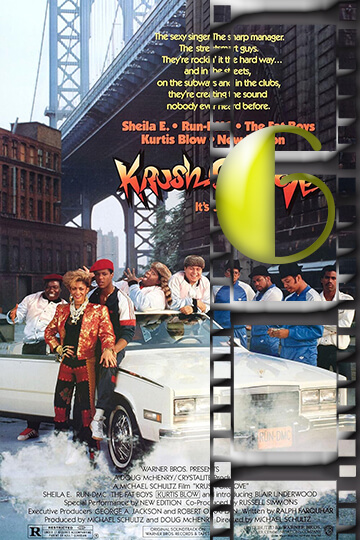
WHAT’S IT ABOUT
Russell Walker (Blair Underwood) has started a new hip-hop and rap label called Krush Groove, which features a stellar list of acts that includes Kurtis Blow and Run-D.M.C. However, Walker doesn’t have sufficient money to keep up the label, especially after Run-D.M.C. scores a big single. As he struggles to fund the label, more and more rap groups, like the Beastie Boys and LL Cool J, emerge in the New York City hip-hop scene. The film is based on the beginning of Def Jam Records.

MOVIESinMO REVIEW
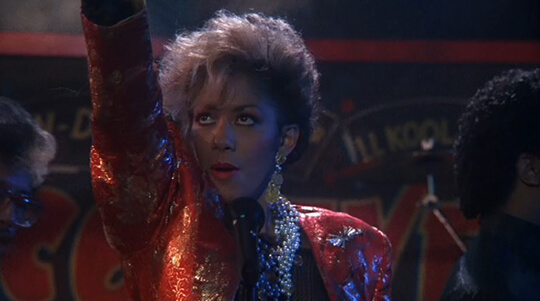
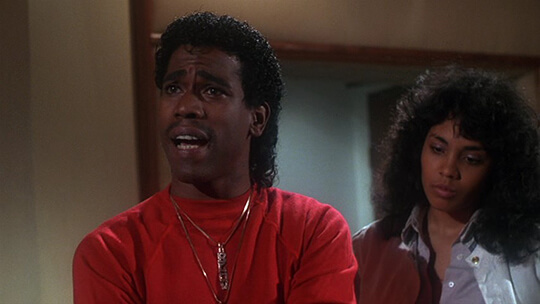
“‘Krush Groove'” is a film that truly encapsulated the early spirit of hip-hop culture in the mid-1980s, and that’s what makes it special to Black cinematic history. Loosely based on Def Jam Recordings’ early days and directed by Michael Schultz, this musical drama film serves as history but is also a delight to witness worth revisiting almost four decades later. When “Krush Groove” hit theaters in 1985, critics had opinions firmly split. Mainstream critics mostly dismissed it as a weakly plotted commercial for Russell Simmons’ Def Jam artists. The Washington Post called it “a quickie cash-in on the rap phenomenon,” and although some praised the energy, they panned the plot. Black publications were more receptive, and many praised its realistic portrayal of urban youth culture and the showcased musical talent within. Going back to “Krush Groove” in 2025, the film proves to be far more than initial notices suggested. What critics did not appreciate was that they were witnessing the on-screen declaration of the cinematic entrance of what would prove to be the most significant musical and cultural phenomenon of the late 20th century. The film features some cameo appearances from LL Cool J, Run-DMC, the Fat Boys, Kurtis Blow, and a young Blair Underwood as “Russell Walker” (basically a version of Russell Simmons). And Rick Rubin appears as himself as well. Having all these hip-hop legends present alone makes the film incredibly significant culturally. The narrative follows Russell Walker and his brother Run as they attempt to fund their record label, which is under strain amidst romantic entanglements and the temptation of mob financing. In spite of its straightforward storyline, “Krush Groove” pulses with the dynamic energy of late-’80s New York. The concert sequences—most effectively Run-DMC doing “King of Rock” and the Fat Boys’ “All You Can Eat”—record the vigor and imagination of early hip-hop performance. What’s so cool about today is the way the movie documents hip-hop culture before it all became commercialized. The style, the slang, the way they made the music, and that street hustle energy are authentic because they hadn’t all been staged for the mass market yet. Director Schultz, who was already established from “Cooley High” and “Car Wash,” brought a Black filmmaker’s sensibility to a tale that might’ve been exploited by somebody else. By the standards of today, “Krush Groove” remains largely safe to view, though some elements of it age. The movie’s handling of women is dubious by contemporary standards—women characters largely exist either as romantic interests or background extras and not as participants in the cultural revolution being chronicled. Sheila E.’s character is the sole exception as a talented artist with her own ambitions, though even her storyline is centered on a romantic engagement with Russell. The movie’s casual homophobia, relatively mild as it is when compared with some of the hip-hop lyrics of the time, would certainly raise eyebrows today. And the scenes of the Fat Boys exploiting their girth for comedic effect may leave contemporary audiences a little uncomfortable. However, “Krush Groove” avoids some of the more troubling aspects that would come to characterize some of hip-hop entertainment. There is minimal violence in the film, no guns, minimal uses of misogynistic language, and a focus instead on innovation, entrepreneurial spirit, and joy in the community. Russell’s worst transgression is a brief flirtation with a loan shark—one plot point intended to outline challenges faced by Black businesspeople in securing legitimate loans. Do you think that today’s people would get “Krush Groove”? Absolutely! The film has a lot going for it: it’s a fun music romp, a flashback to the good times, and a snapshot of a huge cultural phenomenon when it was just beginning. For hip-hop enthusiasts, seeing those iconic artists when they were young is really thrilling. The concert footage is still so energetic, revealing exactly why these performers became such total icons. The technical aspects of the movie are fairly decent. The cinematography acutely captures the gritty feel of New York City in the mid-’80s, and while Schultz’s direction isn’t necessarily groundbreaking, it gets the balance between musical performances and plot correct. The soundtrack is still incredible, blending not only hip-hop but also R&B songs that demonstrate the musical diversity in Black culture during those times. You know what’s really surprising for viewers seeing it now? The film’s got this innocent feel. It was released before gangsta rap revolutionized the entire genre, so “Krush Groove” presents hip-hop as this energetic, innovative movement born out of difficult circumstances but not necessarily about crime or violence. The hustle within the narrative actually gets at that DIY ethos of hip-hop-young Black creatives making something revolutionary even when they didn’t have much to work with. If you’re younger and only considering hip-hop as this big commercial phenomenon, then “Krush Groove” is a nice way to get the history of how it began. The movie depicts that significant time when hip-hop was making the move from being a local phenomenon to something that everyone knew about, but corporate forces hadn’t yet fully consumed it. More and more, film enthusiasts are acknowledging “Krush Groove” as a big deal in Black cinema history—it’s a film that opened up musical expression on screen and chronicled a cultural revolution in real-time. What initially seemed like just a way to sell music now seems to be an actual chronicle of hip-hop’s rise into the mainstream. “Krush Groove” is not without its flaws, certainly. The acting is a little hit or miss, the plot is sort of predictable, and certain things are a little old school. But genuinely, the cultural feel and playful energy compensate for it. If you can view it both historically and as fun, the film is a great experience that combines nostalgia with actual cultural knowledge. In retrospect, “Krush Groove” is completely more than the sum of its parts—it’s a movie that perfectly captured a particular time in Black culture. Okay, yeah, if you see it now, you’ll roll your eyes at some of the old-school things, but believe me, you’ll get a fresh and authentic glimpse of when hip-hop was first exploding. Honestly, whether you’re just looking to chill or dive into some culture, “Krush Groove” really deserves a second look from today’s crowd who want to get where all this global culture hype started.
OUR RATING – A TIME-CAPSULED 6