

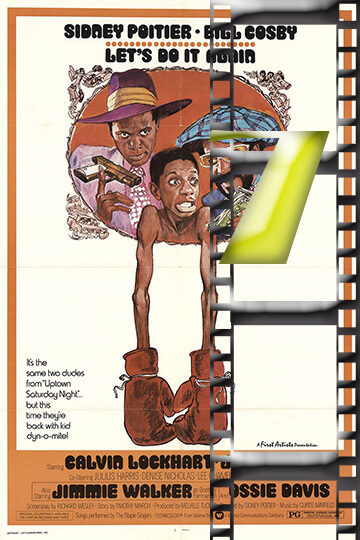
WHAT’S IT ABOUT
Milkman Clyde Williams (Sidney Poitier) and his best friend, Billy Foster (Bill Cosby), are members of a fraternal lodge, The Brothers and Sisters of Shaka, that needs money for the retirement home they sponsor. Since Clyde has a gift for hypnotism, they decide to fix an upcoming boxing match by hypnotizing the underdog fighter (Jimmie Walker). The scam works, and the men collect big winnings before a couple of mafia dons realize they’ve been tricked and decide to track Clyde and Billy down.
MOVIESinMO REVIEW
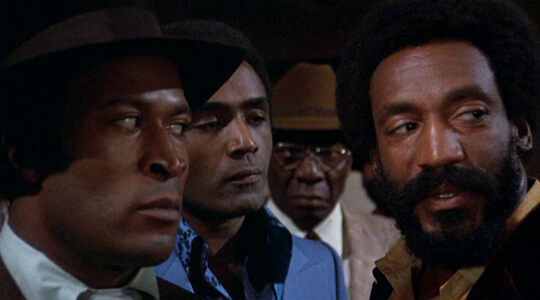
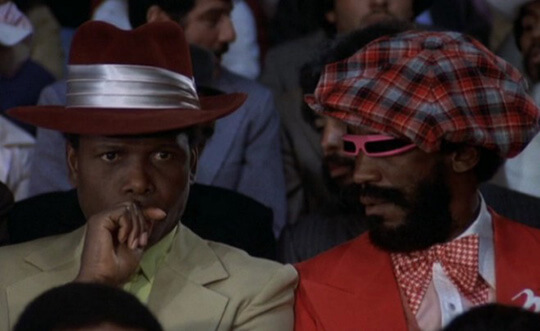
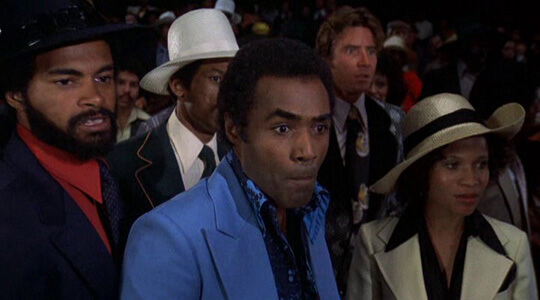
Sidney Poitier’s 1975 comedy film “Let’s Do It Again” is a snapshot of Black films in the mid-70s. As a film critic examining this film from its past and present, there is much to examine regarding why it is significant, how funny it is, and its cultural significance over the years. When “Let’s Do It Again” hit theaters, it debuted during a transitional period of Black films. The Blaxploitation period remained significant, but Poitier along with Bill Cosby was building a different trajectory with comedies that were mainstream and centered on Black people and stories. Critics of the time enjoyed the movie primarily for its playful concept and the good chemistry among its leads. The New York Times called it “affable” and “good-natured,” and the majority of Black papers celebrated the vision of top Black actors performing roles not delineated by racial strife. The premise is straightforward but effective: two Atlanta blue-collar friends, Clyde Williams (Poitier) and Billy Foster (Cosby), hypnotize gamblers and boxers in order to fix boxing matches and betting odds to raise funds for their fraternal lodge. This puts them at odds with other gangsters and creates comedic moments as they try to carry out their plan. It’s great to be able to see “Let’s Do It Again” today because it is of its time and yet, there are some scenes that are still timely. The movie shows Black people in power, operating in their community for their own purposes and reasons. They are not primarily featured in interaction with white characters, which was still quite rare in mainstream films of the era. The group depicted (the Sons and Daughters of Shaka) provides an authentic glimpse into significant Black social organizations that are not often highlighted in films. Contemporary audiences will notice, however, aspects that have not aged well. The movie portrays women largely as supportive wives or background figures. Denise Nicholas and Lee Chamberlin deliver good work but are less integral to the story than the male leads. The sexist attitudes in some of the dialogue are reflective of the period but grate today. The humor of the film depends a great deal on Cosby’s and Poitier’s charm, using physical humor and situations that mostly stand the test of time. Yet what we do know now about Bill Cosby’s sexual assault past history makes his work hard to enjoy today. That is not the film’s fault, yet audiences today can’t entirely separate that knowledge. Technically, Curtis Mayfield’s funk-scored soundtrack is a real highlight, adding energy and cultural authenticity that helps place the film in its time but is still fun to listen to today. The direction by Poitier is solid but not particularly creative. He is more interested in highlighting the actors’ performances and humorous moments rather than stylish touches. Would “Let’s Do It Again” be a hit if it were released today? In some respects, yes. In this film, Black men are shown relying on intelligence to negotiate unjust systems, something that relates to themes observable in films to this day. The film’s optimism regarding relationships and characters’ hopefulness in attempting to better their lives are still attractive elements of the story. Audiences today would appreciate the way the film presents Black characters who aren’t solely characterized by pain or adversity—something that Black films today are accused of dwelling on too much. There’s a joy and a commonality to the characters that feels genuine and compelling. A modern film like this would probably need better female characters and more subtle character development to keep pace with what people expect today. The film’s pacing might also seem old-fashioned to those who are used to the faster pace of modern comedies. What is most important about “Let’s Do It Again” is its position in the history of Black cinema. It is a bridge between earlier, more politicized Black films and the mainstream Black-starred comedies that came into popular usage in the 1980s and thereafter. It shows Poitier’s dedication to creating entertainment that reflected Black life without stereotyping it or focusing on race as the only concern. For the Black audience, there is nostalgia in watching esteemed communities such as fraternal organizations presented in a common and endearing manner. The movie takes it for granted that the audience is familiar with its Black cultural allusions, which is simple and real rather than requiring an explanation. “Let’s Do It Again” remains worth watching today, but some of its perspectives reflect the period it was produced. Its PG rating holds up well—the violence is cartoonish, language tame, and sexual content limited to innuendo. Families could watch this together with minimal worry, though parents might want to explain a bit of the period gender politics. In short, as much as “Let’s Do It Again” is not a classic by new or old standards, it is still a light-hearted comedy of cultural importance that rises above its mere entertainment. It is a film that shows us an era when Black films were breaking out of the confines of mainstream thinking and Blaxploitation stereotypes, giving us characters that were real and not just icons. For viewers today who are interested in Black representation in American cinema, “Let’s Do It Again” is an enjoyable watch and a lesson in how Black filmmakers and actors operated within the industry in the mid-1970s. Its legacy continues in the work of filmmakers who persist in making films in which being Black is important but not overly extraordinary, creating films that can be specific to Black culture and yet universal.
OUR RATING – A CLASSIC DUO 7