

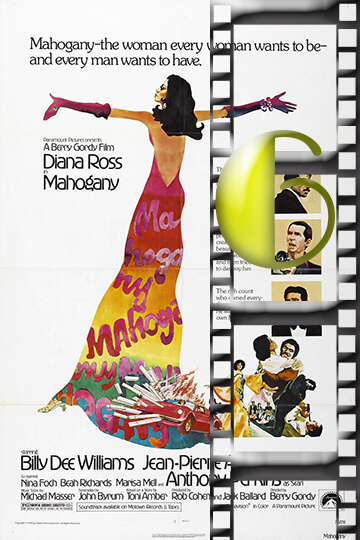
WHAT’S IT ABOUT
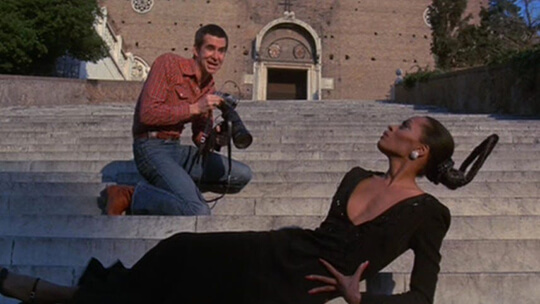
Struggling Chicago fashion design student Tracy (Diana Ross) goes from rags to riches when a chance meeting with hotshot fashion photographer Sean (Anthony Perkins) in the department store where she works leads to a runway life as a model in Rome. Tracy’s overnight success and strong ambitions bring her professional success as a designer, but her diva antics may destroy her relationship with social activist Brian (Billy Dee Williams), as well as her respect in the fashion world.
MOVIESinMO REVIEW
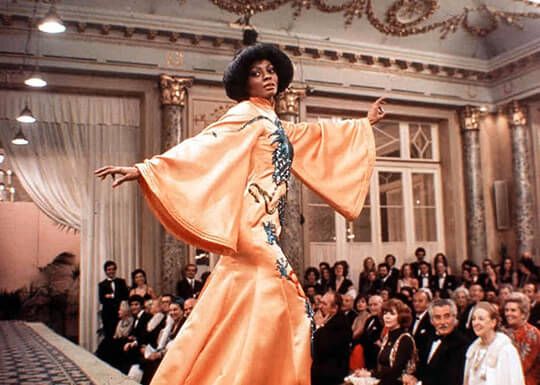
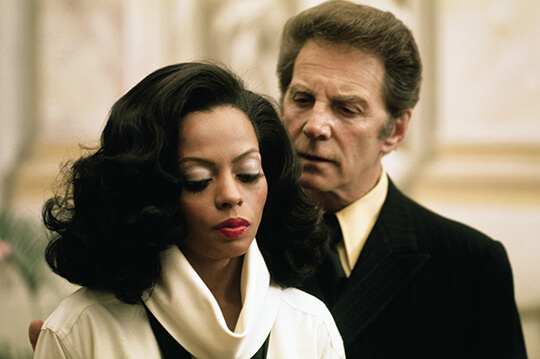
Nearly fifty years after its release, “Mahogany” remains a fascinating cultural artifact that demands examination through both the lens of its era and our contemporary understanding of Black cinema. Diana Ross’s starring vehicle, directed by Berry Gordy (taking over from Tony Richardson mid-production), represents both the pinnacle and the limitations of 1970s Black Hollywood glamour. When “Mahogany” premiered, it arrived during a complex moment for Black cinema. The blaxploitation era was in full swing, offering raw urban narratives that spoke directly to Black audiences hungry for representation. Against this backdrop, “Mahogany” stood as something different entirely—a glossy, aspirational fairy tale that dared to place a Black woman at the center of high fashion and international romance. Contemporary critics were largely dismissive. The film earned a 33% on Rotten Tomatoes, with white critics particularly harsh in their assessments. Roger Ebert called it “a rags-to-riches story told with such remarkable incompetence that maybe it’s a riches-to-rags story.” The New York Times dismissed it as “hopelessly garbled.” These reviews, while addressing genuine structural flaws, missed the cultural significance of seeing Diana Ross command the screen in Milan’s fashion houses and Roman photo shoots. What many critics failed to grasp was the radical nature of the film’s central premise. Tracy Chambers (Ross) isn’t just another struggling model—she’s a Black woman from Chicago’s South Side who refuses to accept limitations on her dreams. In 1975, this was revolutionary imagery. Black women were rarely afforded such glamorous, internationally-set narratives in mainstream cinema. “Mahogany” succeeds most powerfully in its visual presentation. Ross is undeniably magnetic, bringing genuine star power to every frame. Her costumes, many designed by herself, are spectacular—from the avant-garde fashion show pieces to the elegant evening wear. The film’s aesthetic captures mid-70s luxury with impressive production values, particularly in the European sequences. The romance between Tracy and Brian Walker (Billy Dee Williams) provides the film’s emotional core. Williams, fresh off “Lady Sings the Blues,” brings his characteristic charm and gravitas to the role of the politically-minded photographer who becomes Tracy’s moral compass. Their chemistry feels authentic, even when the script fails them. However, the film’s problems are substantial. Berry Gordy’s direction is often clunky, with jarring tonal shifts between romantic drama and fashion industry satire. The portrayal of Sean McAvoy (Anthony Perkins), the predatory fashion photographer, veers into caricature. The script, credited to John Byrum, struggles to balance its multiple themes—the cost of fame, the tension between personal ambition and community responsibility, and the fashion world’s exploitation of creativity. Most problematically, the film’s third act devolves into melodrama. Tracy’s breakdown and eventual return to Chicago feels rushed and somewhat unearned, despite Ross’s committed performance in these scenes. The 1975 critical establishment largely judged “Mahogany” by standards that rarely accommodated Black women’s stories or perspectives. Critics focused on technical flaws while ignoring the film’s cultural importance. Today, we understand that representation matters in ways that weren’t fully acknowledged in mainstream film criticism of the era. By today’s standards, “Mahogany” would likely receive more nuanced critical attention. Contemporary critics are more attuned to issues of representation, the male gaze, and the complexities of depicting Black women’s ambitions. The film’s exploration of colorism—notice how Tracy’s success in fashion coincides with increasingly Eurocentric styling—would be examined more thoroughly. However, the film would also face contemporary criticism for its sometimes shallow treatment of serious issues. Tracy’s political awakening feels superficial, and the film doesn’t adequately address the systemic barriers she would realistically face as a Black woman in 1970s high fashion. “Mahogany” gave us one of cinema’s most enduring anthems in “Do You Know Where You’re Going To?” Ross’s performance of the song remains a masterclass in emotional vulnerability. The film also established visual templates for Black luxury that influenced everything from music videos to fashion photography. More importantly, “Mahogany” presented Black female ambition as legitimate and worthy of cinematic exploration. Tracy Chambers joins a lineage of complex Black female protagonists that runs from Josephine Baker to contemporary figures like Issa Rae’s characters. Modern audiences would likely have mixed reactions to “Mahogany.” Younger viewers, accustomed to more sophisticated narratives about identity and ambition, might find the plot simplistic. However, the film’s aesthetic pleasures remain undeniable. Ross’s performance, the costume design, and the film’s commitment to Black glamour would likely find appreciation among contemporary audiences hungry for diverse stories. The film would probably perform better on streaming platforms than in theaters, where viewers can appreciate its historical significance while acknowledging its flaws. Social media would likely celebrate the film’s fashion moments while critiquing its dated gender dynamics. “Mahogany” is neither the disaster its original critics claimed nor a misunderstood masterpiece. It’s a flawed but important film that deserves recognition for its ambition and cultural significance. Diana Ross delivers a committed star performance in a story that, despite its problems, takes Black women’s dreams seriously. The film works best when viewed as a product of its time—a moment when Black artists were claiming space in mainstream Hollywood and demanding stories that matched their aspirations. Its technical shortcomings pale beside its cultural importance as a showcase for Black glamour, ambition, and complexity. For contemporary viewers, “Mahogany” offers a fascinating glimpse into 1970s ideas about success, identity, and the price of fame. It’s worth watching for Ross’s performance alone, and for its place in the evolution of Black cinema. While it may not fully satisfy modern narrative expectations, it remains a valuable and entertaining piece of Black film history that deserves more respect than it initially received. A culturally significant film that succeeds as a showcase for Diana Ross’s talents and Black glamour, despite structural flaws that prevent it from achieving greatness.
OUR RATING – A PERSPECTIVE 6