

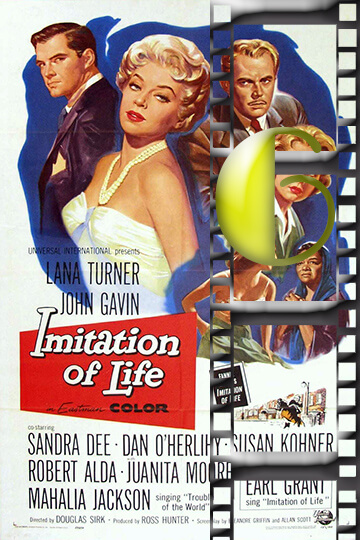
WHAT’S IT ABOUT
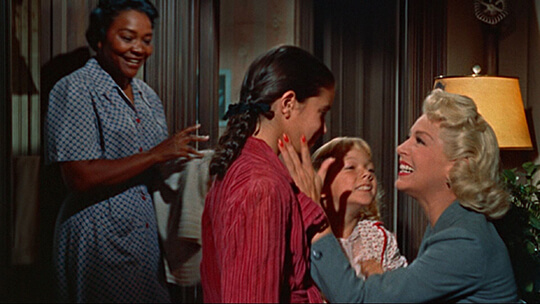
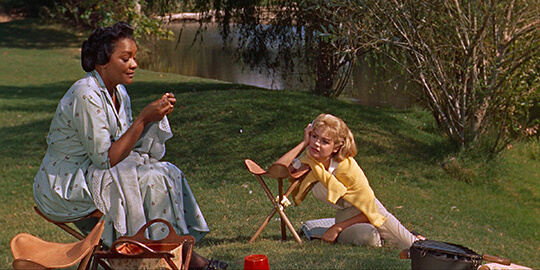
Lora Meredith (Lana Turner), a white single mother who dreams of being on Broadway, has a chance encounter with Annie Johnson (Juanita Moore), a black widow. Annie becomes the caretaker of Lora’s daughter, Suzie (Sandra Dee), while Lora pursues her stage career. Both women deal with the difficulties of motherhood: Lora’s thirst for fame threatens her relationship with Suzie, while Annie’s light-skinned daughter, Sarah Jane (Susan Kohner), struggles with her African-American identity
MOVIESinMO REVIEW
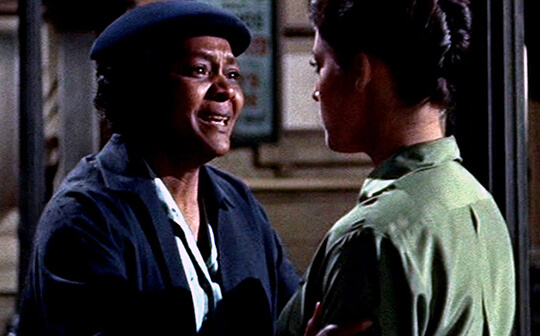
Douglas Sirk’s “Imitation of Life” is a complicated film that deserves both praise and criticism. As a black film critic looking at this 1959 melodrama, I see a movie that tried to tackle serious racial issues but often missed the mark. It’s a film that was groundbreaking for its time yet deeply flawed by today’s standards. The movie follows two mothers and their daughters. Lora Meredith, played by Lana Turner, is a white aspiring actress who becomes successful on Broadway. Annie Johnson, played by Juanita Moore, is a black woman who becomes Lora’s housekeeper and helps raise both their daughters. The primary action of the drama directly comes from Annie’s light-skinned daughter Sarah Jane, who can pass for white and whose core desire is to abandon her black identity altogether. The biggest flaw of the film is its treatment of race. While it tries to address some of the pain that is inflicted by racism, the narrative is primarily from a white point of view that does not resonate and tends to miss the mark. The premise is set up so that the tragedy is not the racism or how that hurts a black family, but instead, Sarah Jane is running away from racism. One more time, the blame directed at Sarah Jane is for denying her heritage, not for letting herself off the hook of any responsibility in tolerating or engaging in racist behaviors. Annie Johnson represents the “good” black character who knows her place and never challenges the white power structure. She’s grateful, loyal, and self-sacrificing to a fault. This character type was common in 1950s Hollywood, but it’s troubling because it suggests that black people should accept their lower status in society. Annie never questions why she has to be a servant while her white friend gets to be a star. Despite its problems, the film does have some powerful moments. Juanita Moore gives an incredible performance as Annie. She brings a great deal of depth and humanity to what could have been simply a stereotype. When Annie experiences anguish after learning that her daughter has rejected her, Moore shares that agony with the viewer. Moore’s work earned her an Oscar nomination, which was a rarity for black actresses in that time period. The movie also does not pull any punches in terms of showing how racism hurts families. The struggle that Sarah Jane [Susan Kohner] goes through about her own identity is very real and painful. Kohner, as Sarah Jane, poignantly expresses the profound sense of hopelessness and self-loathing her character embodies. The scene at a dive nightclub when the mother watches her daughter Sarah Jane “perform” is painfully heart-wrenching. Sirk created a beautiful film. The film has rich, dramatic colors. Every shot seems to be constructed with precision. The director understood how to use melodrama to make emotional points, even if those points weren’t always the right ones. When “Imitation of Life” came out in 1959, many white critics praised it as a brave film that dealt with important social issues. They saw it as progressive because it showed racism’s effects and featured black characters in significant roles. Imitation of Life was a huge box office success, partly because it gave audiences a way to feel good about race relations without actually challenging anything. Black critics and audiences had mixed reactions even then. Some appreciated seeing black actors in a major Hollywood production with serious roles. Others criticized the film for its stereotypical characters and its suggestion that the solution to racism was for black people to accept their place in society. By today’s standards, the film is much more problematic. Modern audiences can see how the story reinforces harmful stereotypes and fails to challenge white supremacy. The idea that Annie should be grateful for her servant role while never questioning the system that keeps her there feels outdated and wrong. “Imitation of Life” would likely face significant criticism if released today. The portrayal of Annie as the perfect, self-sacrificing servant would be seen as racist. The film’s suggestion that Sarah Jane’s desire to pass for white is the real problem, rather than the racism that makes passing seem necessary, would be called out immediately. However, the film might still have value as a historical document that shows how Hollywood dealt with race in the 1950s. It could be used to discuss how far we’ve come and how far we still need to go. The fundamental principle would be to provide it with appropriate context and critique. This depends on the audience. Older viewers who view this with nostalgia for having viewed it in their youth might still be moved by the film, regardless…the performance by Moore is aspirational. Some may have appreciation of the film’s historical impact/relevance and Sirk’s visual design style. However, younger viewers and viewers more sensitive to current racial issues would likely find the film exasperating. The film’s treatment of race feels dated and harmful. Many would be bothered by how Annie never stands up for herself or questions why she has to be a servant. Film students and critics might find it interesting as an example of how Hollywood tried to address social issues while still maintaining the status quo. But as entertainment, it would probably struggle to find a wide audience today. “Imitation of Life” represents a common problem in Hollywood’s history with race. The film industry often made movies that seemed progressive on the surface but actually reinforced racist ideas. By making Annie the “good” black character who never challenges white authority, the film sends the message that black people should accept inequality. The movie also reflects the limited options available to black actors in 1959. Moore and Kohner gave powerful performances, but they were working within a system that only offered them certain types of roles. The film’s success showed that audiences were interested in stories about race, but Hollywood wasn’t ready to tell those stories honestly. “Imitation of Life” is a film that tried to do something important but failed in crucial ways. While it deserves praise for attempting to address issues of racism and showcasing strong black performances it simply upholds the silly distinctions it attempts to critique. As piece of movie history it should be engaged with with a critical eye. Any serious film buff would find Moore’s performance worth the price of admission. But you have to know what you are engaging with and expose the negative messaging it promotes. The film serves as a reminder of how far we’ve come in discussing race in America, while also showing how much work remains. It’s a flawed but historically significant work that tells us as much about 1950s attitudes toward race as it does about the characters on screen. While “Imitation of Life” will likely serve as a basis for conversations regarding representation, racism, and the way Hollywood has dealt with black experience, it serves audiences best not as thenatural happy viewing experience, but as an important project that can provide us with guidance as we reflect on our prior historical moments, and present-day situations.
OUR RATING- AN IMITATED 6