

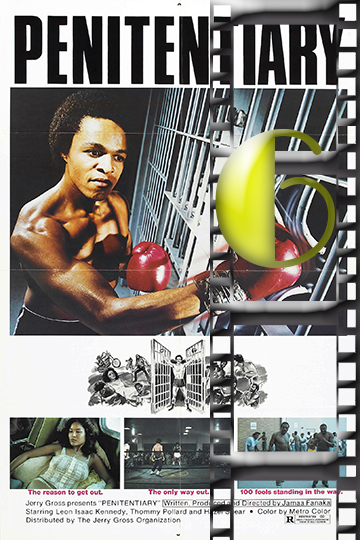
WHAT’S IT ABOUT
Hitchhiker Martel “Too Sweet” Gordone (Leon Isaac Kennedy) gets a lift from prostitute Linda (Hazel Spears) in her van and travels with her to meet her clients. After a fight breaks out with the men, Gordone is knocked unconscious and awakens to find he has been wrongly charged with murder. As a way to protect himself in prison, Gordone starts fighting other inmates. This leads him to discover an underground boxing tournament, with the top prize being a prison release.
MOVIESinMO REVIEW
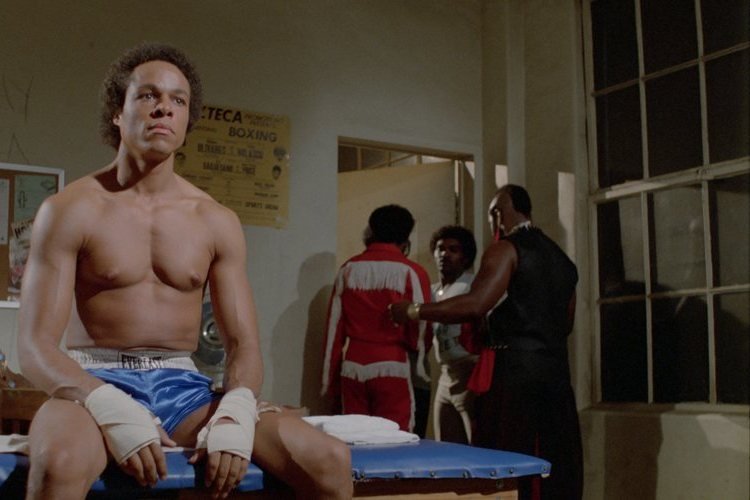
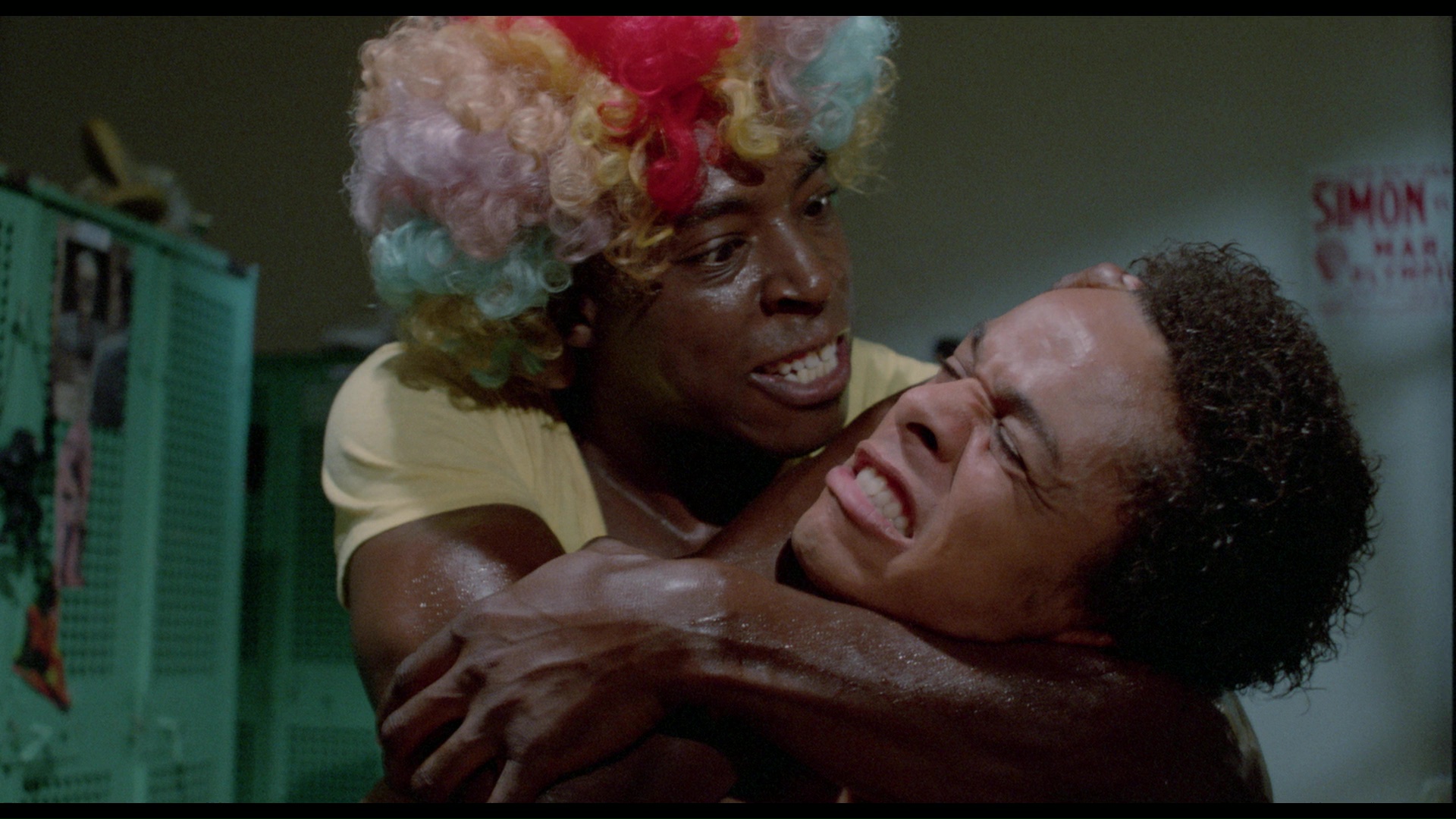
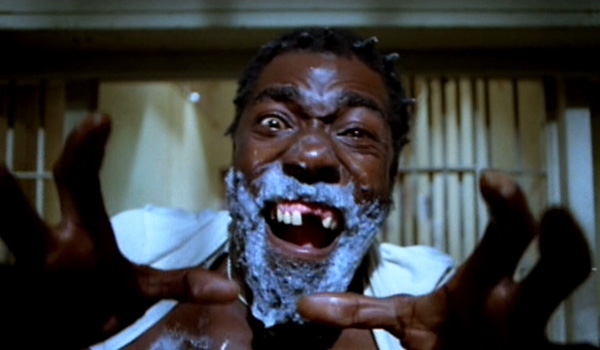
Jamaa Fanaka’s “Penitentiary” occupies a curious position within the cinematic past, a film that was revolutionary and regressive, groundbreaking and flawed. Nearly half a century on from its initial release, this low-budget prison drama is deserving of honest examination through both the lens of its era and our present understanding of the evolution of Black cinema. When “Penitentiary” was released in 1979, it was at the tail end of the blaxploitation era, a period where Black films were attempting to find out who they were following the “Shaft” heyday. “Penitentiary” is a part of the culture of the film school at UCLA, which is where Fanaka was part of the initial group of Black filmmakers to receive formal schooling. Modern critics were generally disdainful, viewing it as another exploitative product in a genre they believed was finished. Variety labeled it “predictable,” and other mainstream critics barely noticed it. But this critic disdain ignored the key point: “Penitentiary” was one of the only films of its time that attempted to seriously take on the prison-industrial complex’s impact on Black men. While other blaxploitation films worried about pimps, private investigators, and city antiheroes, Fanaka dared to venture into incarceration – a theme that would increase in importance in the subsequent decades. The film is about Too Sweet (Leon Isaac Kennedy), a wrongly accused young Black man who must navigate through the brutal hierarchy of life in prison as he learns to box. The narrative style is typical, borrowing heavily from prison movie conventions, but Fanaka infuses it with Black experiences that mainstream cinema too often avoids. The greatness of “Penitentiary” is its unflinching portrayal of violence inside the walls and its psychological effect. Fanaka never sentimentalizes prison life or proffers false compromises. The boxing subplot, though clichéd, is a metaphorical and literal survival tool and source of dignity. Leon Isaac Kennedy provides a committed performance, bringing Too Sweet’s development from wide-eyed newcomer to hardened survivor a sense of genuine vulnerability. The best thing about the movie is its location and character realism. Fanaka was familiar with the world he was depicting in detail, and the supporting cast, mostly made up of amateur actors, brought lived-in realism to their performances. The prison is recognizably cramped, not a Hollywood set. Yet “Penitentiary” is flawed as well, in ways that were questionable at the time and seem even worse now. The film’s attitude towards women is especially disturbing – they serve largely as sex objects or rewards for male success. The female characters are prostitutes, victims, or rewards for male success. This is symptomatic of greater issues in blaxploitation cinema, but it does not excuse the film’s regressive gender politics. The violence, occasionally critical to the story, occasionally blurs over into exploitation. Fanaka grapples with balancing the making of significant social commentary and offering the sort of sensational content that sells tickets. This tension makes the film’s improved moments less effective. The film also suffers in its pacing due to financial constraints. Some of the scenes stumble, and others shop along too rapidly, and the technical deficits are distracting. The dialogue, while at times riveting, is at times awkward and overexpository. Seeing “Penitentiary” in 2025 is a mixed bag. On the one hand, its examination of mass incarceration seems prophetic. The film predates debates about prison reform, rehabilitation instead of punishment, and the school-to-prison pipeline that would become central to social justice arguments decades later. Here, Fanaka was, in a sense, ahead of his time. The movie’s depiction of boxing as freedom and exploitation also sounds different now. We know more about sports as an opportunity and possible exploitation for young Black men, so Too Sweet’s journey then no longer reads so much as a sheer triumph but rather as a negotiated complexity of limited options. But the movie’s gender politics increasingly feel dated and troubled. Contemporary audiences, particularly younger audiences, will likely be offended by how women are treated and the heteronormative assumptions of the film. The gay characters in the prison are treated through negative stereotypes that would not pass muster in modern media. From a purely cinematic standpoint, “Penitentiary” is too ambitious but uneven. Fanaka’s direction is promising—some of the scenes, especially the boxing matches and the quieter character-building portions, show some real filmmaking chops. The cinematography is limited by its low budget, but it occasionally has an effective mood and atmosphere. Editing is probably the film’s weakest technical category, and the cuts are often jarring; the pacing is super uneven, indicating that it wasn’t what the director might have expected in post-production. The soundtrack is typical of the era, with a lot of wandering between effective mood and intrusive over-scoring – which becomes distracting and never consistent. “Penitentiary” has two sequels and leads a whole generation of urban filmmakers. Its impact can be traced through to later prison films and urban dramas that borrowed more subtle methods of addressing similar issues. Directors like Spike Lee and John Singleton appreciated the importance of films like “Penitentiary” in paving the way for Black stories on the screen while further evolving beyond its limitations. The film is also one of the important works in Black cinema studies and low-budget filmmaking. Fanaka’s UCLA background and independent financing of “Penitentiary” predicted later trends in Black independent filmmaking. Modern audiences would respond to “Penitentiary” ambivalently. Students of cinema and film scholars would appreciate its period relevance and Fanaka’s willingness to address serious issues. Audiences interested in prison reform and social justice might appreciate its pioneering themes. But mainstream audiences would find difficulty with its technical flaws, dawdling pace, and outdated social mores. The film is a product of its period in ways that are not entirely flattering. Young adult audiences, particularly women and gay/lesbian viewers, would find large parts of the film objectionable or alienating. “Penitentiary” deserves a place in Black cinema history as a flawed but substantial achievement. It is both the best and worst it could be given its time – a serious director with significant stories to tell encased in commercial and cultural limitations that held back the full expression of his vision. It works as a piece of history and succeeds to some extent as social commentary. It fails at entertainment for today’s audience and doesn’t quite live up to being the great prison movie it could have been with more means and fewer commercial demands. At its best, “Penitentiary” actually offers insight into institutionalized violence and personal strength. At its worst, it perpetuates harmful stereotypes and takes advantage of the very communities it claims to reflect. This contradiction makes it an intriguing but ultimately frustrating viewing experience – notable enough to remember, defective enough to view skeptically. For contemporary viewers, “Penitentiary” is best appreciated as a period artifact illuminating how far Black filmmaking has come and how much farther it has to go.
OUR RATING – A LOCKED DOWN 6