

WHAT’S IT ABOUT
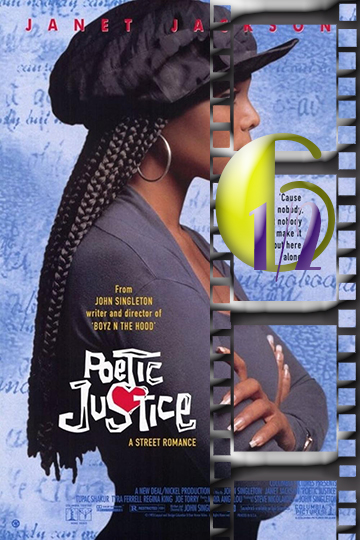
Still grieving after the murder of her boyfriend, hairdresser Justice (Janet Jackson) writes poetry to deal with the pain of her loss. Unable to get to Oakland to attend a convention because of her broken-down car, Justice gets a lift with her friend, Iesha (Regina King) and Iesha’s postal worker boyfriend, Chicago (Joe Torry). Along for the ride is Chicago’s co-worker, Lucky (Tupac Shakur), to whom Justice grows close after some initial problems. But is she ready to open her heart again?
MOVIESinMO REVIEW
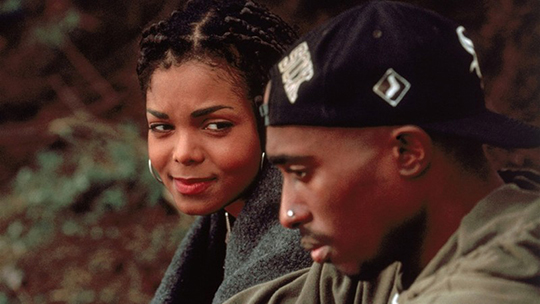
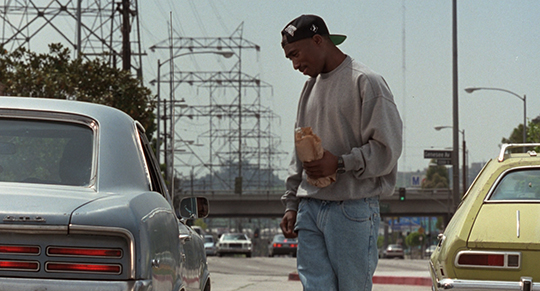
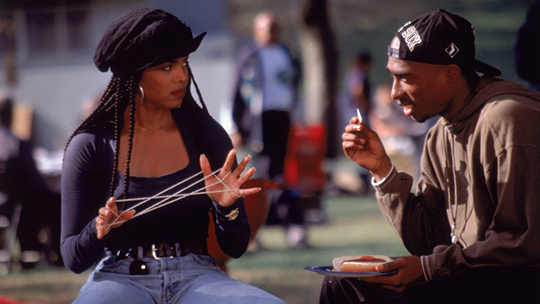
John Singleton’s “Poetic Justice” arrived in 1993 with the Himalayan burden of expectation following his seminal debut “Boyz n the Hood.” What viewers received instead was a quieter, more introspective search for love, trauma, and healing set against the epicenter of South Central Los Angeles. Thirty years later, this movie deserves a reevaluation, one that acknowledges its very tangible shortcomings and its slowly revolutionary moments. When “Poetic Justice” debuted, the critics were principally brutal. The film was described as self-indulgent, wandering, and second-effort disappointment by a director who had emerged out of nowhere with so much promise. Most reviewers seemed stunned that Singleton was giving up the socially conscious commentary of “Boyz n the Hood” for what appeared to be a relaxed road movie punctuated by recitations of Maya Angelou’s poetry. Janet Jackson’s Justice was also subject to particular criticism. Pop star or not, critics questioned whether she could deliver dramatic material, more concerned with her celebrity status than her acting. Tupac Shakur’s Lucky was similarly shortchanged, with far too many reviews reduced to discussions of his casting as stunt work rather than responding to his visceral plausibility in the role. The pacing was also the film’s most trashed element. In an era when high-concept blockbusters and rapid pace ruled, “Poetic Justice” danced to the beat of reality—dialogue spilled organically, silences were accorded space, and characters developed organically rather than being constructed via sensationalistic plot points. This was a foreign method used by many mass critics of the high-strung energy of “Boyz n the Hood.” To view “Poetic Justice” through the frame of modern critical thought is to view a film that was remarkably progressive in its handling of Black women’s narratives, depiction of trauma, and interaction between art and healing. What in 1993 may have seemed like narrative missteps are now seen as deliberate artistic choices prioritizing character over plot machinery. Justice’s trajectory as a poet grappling with grief through verse is so completely contemporary in our current age of mental health emphasis and healing art. Her retreat from others following her boyfriend’s homicide is not cast as a weakness but as a good response to trauma. The film’s acknowledgment that healing is neither linear nor something that can be easily done speaks to modern attitudes regarding mental health in ways that are forward-thinking. Janet Jackson’s performance once boiled down to passable at best, is revealed to have added depths when reevaluated. Her interpretation of Justice captures the specific way that young Black women navigate public space with inner pain. Jackson brings a naturalistic presence to the role that aligns with the realistic appearance of the film. She is not acting as Justice. She is living as her and therefore creates a character who is lived-in rather than fabricated. Tupac’s Lucky remains one of his most stunning dramatic roles, and he shows a depth that the roles he performed later on would only imply prior to his untimely death. The chemistry between Jackson and Shakur prevails because it progresses organically, the way real relationships in life stem from moment by moment instances rather than manufactured meet-cutes. The direction by Singleton deserves special praise for telling the story through images. Singleton shows South Central Los Angeles, not as a foreign land for urban drama, but as a dynamic and real world with its own pauses and beauty. The montage of images of the hair salon, the family barbeque, and the step show at the college, all capture the richness of Black life, offered neither euphemistically nor pathologically. The incorporation of Maya Angelou’s poetry into the narrative structure of the movie was revolutionary at the time. Rather than employing literature as highbrow adornment, the film depicts poetry as a living, breathing part of Black cultural life. Justice’s poetry is character development and commentary all at once, demonstrating how art is used as a survival mechanism and resistance tool. The film’s most significant contribution is perhaps its depiction of Black female agency. Justice makes choices throughout the film—whether to open up, whether to close down, whether to trust, whether to leave. She is not saved by romantic love but comes to integrate it into her already-formed sense of self. This was a rare model for creating a female character in 1993 and remains one today. The film presents multiple models of Black manhood as well in Lucky and his friend Chicago (Joe Torry). Rather than clichéd representations, Singleton portrays men grappling with their own weaknesses as they learn to honor women’s boundaries and independence. Would “Poetic Justice” work today? The answer is both melancholy and ultimately optimistic. The film’s slow pace is perfectly suited for character-driven narratives only available on a streaming service. Mental illness, creative expression, and genuine relationship building are themes that can resonate with audiences today that long for real representation. The film’s aesthetic, from fashion to soundtracks, has aged beautifully and is more timeless than of its time.The affirmation of natural hair, Afrocentric images, and integration of hip-hop culture all register as progressive rather than nostalgic. But some of it would most likely be condemned in our modern cultural climate. The film’s brief brush against LGBTQ+ existence among Black individuals and occasionally hyperbolic presentation of straight love may not be sufficient to satisfy today’s audience’s expectations for intersectional representation. “Poetic Justice” is a misunderstood film that was judged by the wrong standards during its initial release. Instead of the fiery social commentary of “Boyz n the Hood,” Singleton presented a quieter but equally valuable reflection on healing, creativity, and love that presumed audiences were willing to accommodate more restrained, more thoughtful narratives. The film’s dedication to showing if given the space, not telling, a respect for the intelligence and agency of its characters, and its faith in poetry as a plot device and cultural affirmation results in an original work in Black film. While it can’t reach the high level of artistic achievement Singleton’s first film did, it does give something as invaluable: an image of Black life that can allow for kindness, imagination, and a sense of love. In our own era, when discussions of representation, mental illness, and creative expression are of supreme cultural interest, “Poetic Justice” seems more pressing than it did thirty years ago. It’s a film that should be reassessed not as a misguided sequel but as a quietly revolutionary film that prioritized emotional truth over box office obligation.
OUR RATING – A FLAWED 6.5