
WHAT’S IT ABOUT
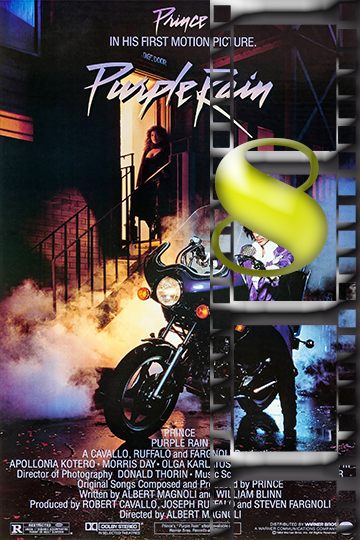
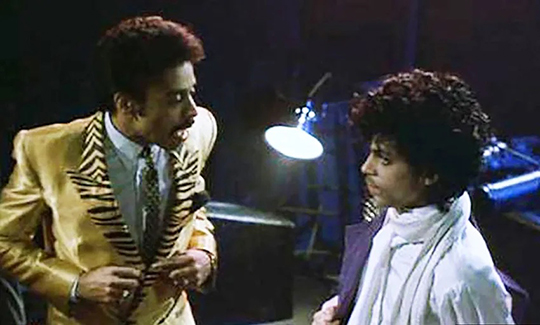
A victim of his own anger, the Kid (Prince) is a Minneapolis musician on the rise with his band, the Revolution, escaping a tumultuous home life through music. While trying to avoid making the same mistakes as his truculent father (Clarence Williams III), the Kid navigates the club scene and a rocky relationship with a captivating singer, Apollonia (Apollonia Kotero). But another musician, Morris (Morris Day), looks to steal the Kid’s spotlight — and his girl.
MOVIESinMO REVIEW
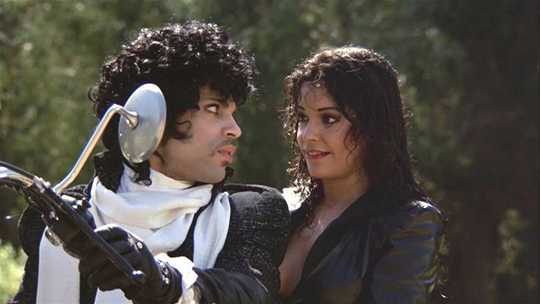
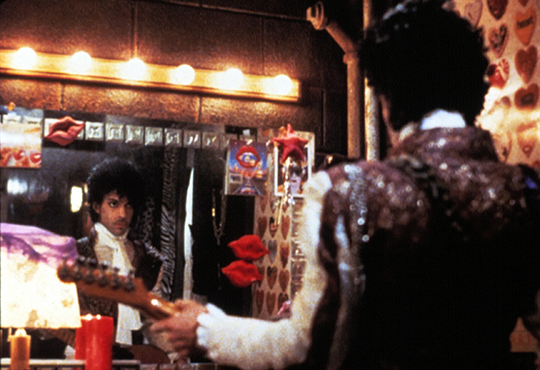
Prince’s magnum opus “Purple Rain” was released in 1984, delivering a musical drama biopic of his life that turned the young Minneapolis talent into an international superstar. As a Black film critic forty years on from this seminal film, I view a combination of nostalgia, excellent art, and some problematic elements that inform this groundbreaking movie. When “Purple Rain” came out, critics saw it mainly as a bid to make Prince a star. They were highlighting his charismatic on-screen presence and the groundbreaking music. Roger Ebert wrote, “Prince stars in a movie that brings together his musical concepts and Hollywood conventions, and the conventions don’t always serve him. But. the music numbers in the movie are some of the best in recent films.” Black newspapers praised the movie as a breakthrough in showcasing Black musical talent, although some critics were troubled by its presentation of women and relationships. The lens of today captures a more complex portrait. “Purple Rain” is still an energetic musical coup, with concert scenes that continue to sizzle with unvarnished power. Prince’s rendition of the title song is one of the most transcendent musical experiences in cinema—a seamless blend of poignant lyricism and pyrotechnic showmanship. The Lake Minnetonka sequence (“Purify yourself”) is rightly enshrined in movie history. But modern audiences will be struck right away by the film’s problematic gender politics. The Kid (Prince) physically mistreats his love interest, Apollonia, slamming her to the ground in one scene and hitting her in another. These instances are not subject to enough moral criticism—The Kid’s later transformation is the result of working out his father problems instead of explicitly dealing with his misogyny. The women in the movie are depicted as objects that men crave and as sources of men’s fears, which sounds archaic. Women characters are there mainly to be fought over, beaten, or to inspire men creatively. Apollonia’s life is all about being torn between two men and doing a suggestive, unfair stage act. Morris Day provides some humor as The Kid’s ostentatious counterpart, but the character’s misogyny—especially in a bit where he convinces his friend to throw a woman into a dumpster—is treated as funny that modern audiences would consider reprehensible. Even with the film’s groundbreaking visuals and soundtrack, it’s clear the attitudes toward women are outdated. There are racial elements to the film. “Purple Rain” portrays a very interracial musical culture in Minneapolis, where Black, white, and multiracial artists perform and share an audience. That was a big deal in 1984, showing how Prince was able to cross racial boundaries in popular music. Yet the movie doesn’t do much explicit talking about race, instead sticking to universal themes of artistic struggle and family conflict. Is “Purple Rain” acceptable to watch today? Yes, but with reservations. Viewers today must see it as a product of a culture that expressed both the positive and negative attitudes of the time. The film has to be watched carefully—admiring its artistic merit but accepting its faults. Parents need to be especially careful, for the film’s naive way of showing domestic violence and sex makes it not suitable for children. Would audiences today like “Purple Rain”? Most would, especially those who can place its more disturbing elements in context. The concert scenes in the movie are still unparalleled in their kinetic energy and musical creativity. Prince’s own performance combines vulnerability and swagger in manners that are still revelatory. The soundtrack—with “When Doves Cry,” “Let’s Go Crazy,” and the immortal title song—is one of the all-time greats in movie history. Fans of the 80s style will enjoy the film’s garish look—the purple bikes, ruffled shirts, and smoke-filled clubs provide a world that is immediately recognizable. Younger viewers discovering Prince’s talent will think “Purple Rain” is a movie they must see, imperfections and all, just as students of cinema study “Gone With the Wind” and “Breakfast at Tiffany’s” with their imperfections. What is most captivating about “Purple Rain” forty years later is how it captures Prince at his height— a Black artist working with unprecedented creative control in an industry that has too frequently worked against that sort of autonomy. That he was able to write, act, and record a soundtrack album that transformed popular music while starring in a successful film is a remarkable achievement of Black genius. The movie addresses intergenerational trauma in The Kid’s relationship with his abusive father. This adds complexity not typically seen in musical dramas. These moments are impactful and show how violent cycles repeat themselves if not stopped. Prince’s choice to show his character’s vulnerability and weaknesses, especially in the heart-wrenching performance of “The Beautiful Ones,” shows great emotional honesty. “Purple Rain” is a problematic component of our collective memory. It illustrates the high potential of Black creativity and the problems inherent in much of entertainment in the 1980s. We can admire Prince’s skill while being aware of the faults of the movie—how it diminished women as insignificant, its casual attitude toward violence, and its refusal to discuss race matters openly. In a lot of ways, then, “Purple Rain” is best understood as a document of transition—a movie caught between the old sexism of the past and the newer attitudes that would gradually emerge. Its shortcomings don’t diminish its importance, but they do serve to remind us how far we’ve come in our conversations about gender, race, and representation. For viewers in 2025, “Purple Rain” is still mandatory watching. It isn’t perfect, but it showcases an iconic artist at the height of his powers. The film still has a vitality that you can sense despite some ideas being dated. Like Prince, the movie also has many facets: it’s brilliant and maddening, forward-thinking and backward-looking, timeless, and very much of its time.
OUR RATING – A CULTURAL TOUCHSTONE 8