

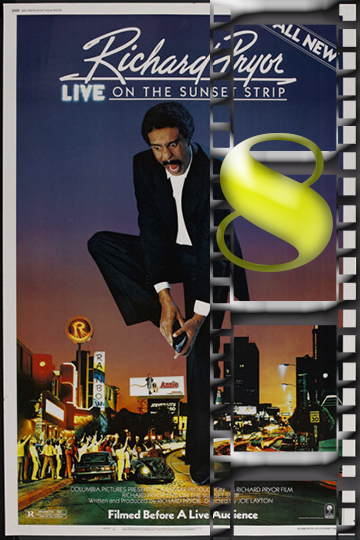
WHAT’S IT ABOUT
Richard Pryor takes the stage at the infamous Hollywood Palladium in one of his first performances after a well-publicized battle with drugs. Older, wiser and funnier than ever, the venerable comic tells outrageous jokes and a number of moving stories about his personal past — including one about a life-changing trip to Africa. Pryor’s trenchant social commentary touches on an array of subjects, from prison and mobsters to hospitals and cocaine.
MOVIESinMO REVIEW
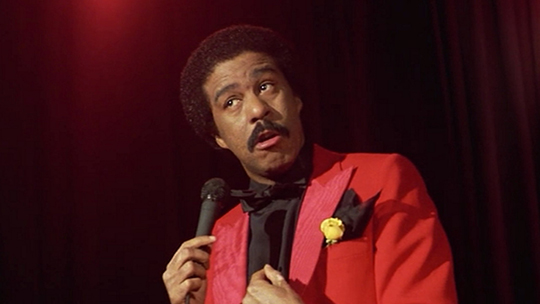
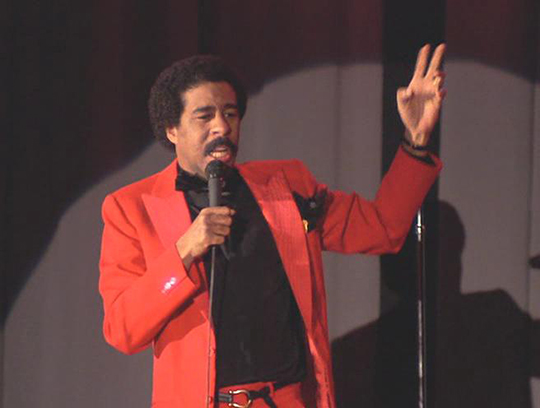
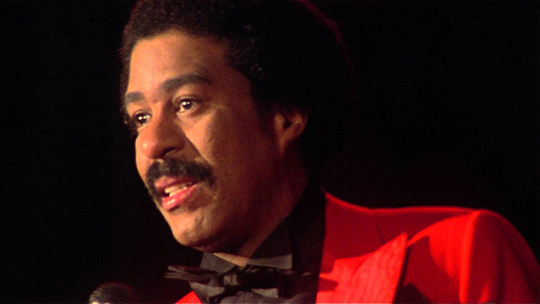
Richard Pryor’s “Live on the Sunset Strip” is as much a celebration of comic brilliance, as it is a savage reminder of just how much the culture has changed in forty years. Today, its nearly impossible to watch this film without balancing the wonder of its spectacular craft with the fact that the same content would not even get out of the comedy club today, let alone in front of a major studio. When “Live on the Sunset Strip” was released, critics praised it as comedy filmmaking at its most daring. Roger Ebert awarded it four stars, describing it as “one of the most honest and revealing movies ever made about a comedian’s life.” The New York Times commended Pryor’s “devastating honesty” and his capacity to turn personal tragedy into universal truth. This was not simply stand-up filmed—it was confessional theater, as Pryor analyzed his drug addiction, his near-fatal freebasing accident that had left him with third-degree burns, and his turbulent relationships with a surgical precision that made people laugh and cringe at the same time. The critical establishment in 1982 recognized what they were witnessing: a Black artist using comedy as something other than a means of entertainment but as a means of survival, processing trauma in real-time in front of a live audience. Pryor’s willingness to discuss his addiction, his self-destructive impulses, and his recovery was unprecedented. He wasn’t performing blackness for white comfort—he was offering up unmediated Black interiority, complications, and contradictions intact. Pryor’s stage presence remains unstoppable. His physicality is amazing—every gesture, every facial expression, every vocal inflection is in the service of the story he’s telling. When he recounts waking up on fire running down his street while he’s on fire, the performance is both horrifying and amusing. It is because he can joke about real trauma without diminishing its impact that he influenced everyone from Eddie Murphy to Dave Chappelle to newer talent like Jerrod Carmichael. The material transitions from observational comedy of air travel security and matrimony to nearly confessional, intensely intimate revelations of hitting rock bottom. His character work on his drug dealer, his narration of debates with his own conscience, and his physical comedy about his accident weave a tapestry that’s both intimately personal and universally relatable in its examination of human weakness. Here’s where modern viewing gets tricky. Large swaths of Pryor’s routine would be entirely unacceptable today. His cavalier use of homophobic slurs, his domestic abuse shtick that makes egregious abuse the punchline, and other bits that trade in ugly stereotypes of women are all moments that are truly cringe-inducing. What white critics in 1982 would have perhaps written off as “edgy” or “provocative,” we can see today as material that is actually hurtful and does harm. Most discomforting is Pryor’s extended stand-up routine about violence against women, performed with the same vigor and craft as his more perceptive work. In 1982, this was either overlooked by mainstream critics or excused as a portion of his “raw honesty.” Today, it’s unwatchable without being aware of how it trivializes and glamorizes actual domestic violence. This isn’t political correctness—this is an issue of basic human dignity. Similarly, his homophobic slurs during the set reflect the casual bigotry that was acceptable in most circles in the early 1980s. While we can historicize this, that doesn’t make the slurs any less jarring or hurtful to contemporary listeners. For all those big problems, much of what made Pryor innovative continues to land with a punch today. His unflinching examination of addiction confronts our contemporary understanding of substance abuse as a health issue rather than a moral failing. His sketch about the internal dialogue of his sobriety—literally performing the arguments between the different aspects of his own mind—anticipates our current discussion of mental health with surprising sophistication. His insights on racism, while sometimes dated in their particulars, confront aspects of the Black American experience that remain relevant. His soliloquy on visiting Africa and finding his American roots, his observations on code-switching in different social situations, and his exploration of internalized self-hatred all sound very contemporary in their psychological insight. Director Joe Layton’s direction also fits the subject matter, using several cameras to capture Pryor’s whole body without losing the close-up intimacy of the performance. The decision to release the show largely in its raw, live state, maintaining the rhythm and pace of actual performance, adds a sense of immediacy lacking in many contemporary comedy specials. This is not comedy as content—it’s comedy as art. Would this special be made today? Not on your life. Should it be watched today? That is less certain. For students of comedy, film historians, and anyone who wants to see how American comedy has developed, “Live on the Sunset Strip” is a goldmine of information about comic technique along with cultural mores of the day. It just demands active, critical watching, not passive audience reception. Modern audiences who view this material must be aware they are seeing a historical document as much as they are being entertained. Pryor’s impact on comedy is unquestionable, but his casual misogyny and homophobia reflect attitudes we’ve rightly left behind. The difficulty lies in celebrating his innovations in vulnerability and storytelling without apologizing for or minimizing the toxic aspects of his work. “Live on the Sunset Strip” is still must-see viewing for anyone looking to understand the evolution of American comedy, but must-see viewing with massive reservations. Pryor’s ability to take personal suffering and turn it into art was revolutionary and continues to influence artists today. His honesty about addiction, mental health, and the complexity of Black identity in America sounds ahead of its time. But the special is also a jarring reminder of how normalized some of this prejudice was in mainstream media just a few decades ago. Today’s audiences can appreciate Pryor’s innovative work, but they can also understand that forward progress means moving past the cruel, free-swinging disorder that accompanied his brilliance. Not censoring the past is important. As is understanding it honestly, not just focusing on the high points, but the lows as well. “Live on the Sunset Strip” deserves its place in the comedy canon, but that place needs to be one of truthful acknowledgment of both its brilliance and its harm. Groundbreaking in its vulnerability and in its effect, problematic in ways that cannot be disregarded.
OUR RATING – A RAW TRUTH 8