

WHAT’S IT ABOUT
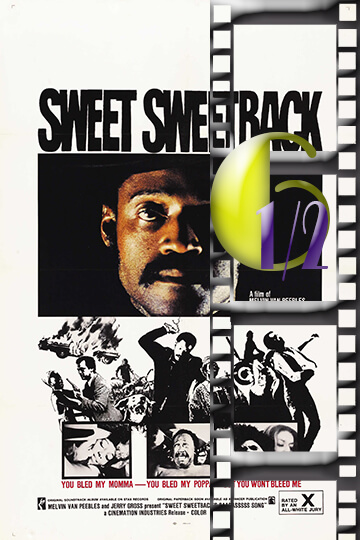
Sweet Sweetback (Melvin Van Peebles) is a black orphan who, having grown up in a brothel, now works there as part of a sex show. When the police need a patsy for a murder in the black community, Sweetback’s employer gives him up to two white cops, whom Sweetback ends up killing. Suddenly the target of a massive manhunt, he decides to flee to Mexico. As he makes his way there, he is captured by, and escapes from, both the cops and a chapter of the Hell’s Angels.
MOVIESinMO REVIEW
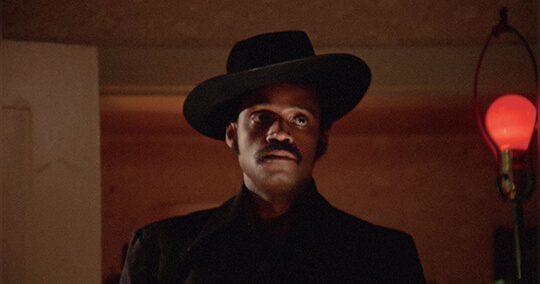
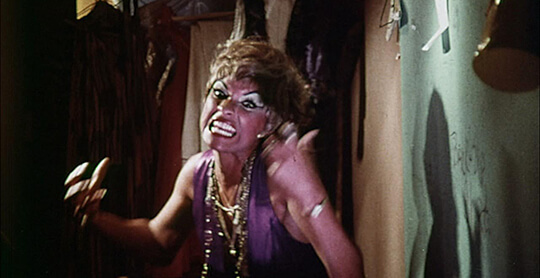
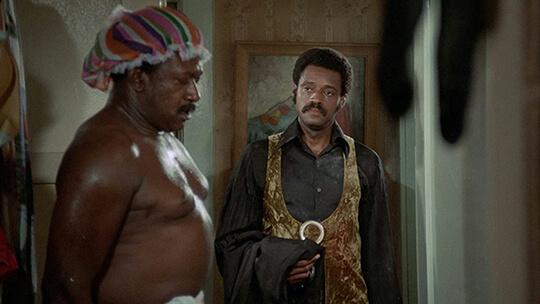
“Sweet Sweetback’s Baadasssss Song” by Melvin Van Peebles, is the most divisive milestone of cinema, a film that detonated like a Molotov cocktail in 1971 that continues to spark outrage more than half a century later. As avant-garde cinema, it is to be respected and studied. As entertainment for the general audience today, it presents daunting challenges that cannot be avoided. When “Sweet Sweetback’s Baadasssss Song” arrived in 1971, it was in the midst of a powder keg era of race relations in America. The Civil Rights Movement was fast becoming Black Power, the Black Riots had destroyed the major urban areas, and Hollywood was still churning out sanitized, white-slanted versions. Van Peebles did not just break the mold, he smashed it to pieces. The subtext of the movie is about Sweetback, who is a prostitute in one of the South Central Los Angeles brothels and becomes an outlaw when he intervenes in the brutal police beating of a young Black revolutionary. The ensuing chase sequence is an allegory of Black resistance against systemic oppression. Van Peebles wrote, directed, produced, edited, and acted in the film, with complete control over it during an era when complete liberty was all but impossible for Black filmmakers. Contemporary critics were typically perplexed and occasionally venomous. The New York Times declared it “an outrageous, one-note movie.” White critics simply failed to grasp its brutal anger or unconventional narrative construction. Black audiences greeted it with record passion. The movie took in more than $4 million at a budget of $500,000, demonstrating that Black narratives presented by Black voices would pay at the box office—a fact that Hollywood could no longer deny. Just like his substance, Van Peebles’ technical style was revolutionary. The guerilla filmmaking style of the ‘hood, with it’s handheld cameras and available lights, gave a raw, documentary type of realism which was exactly the opposite of the Hollywood sheen. The jazz-rock score by Earth’s Wind and Fire was full of urban energy, a culture unto itself, like every component of the film. The montage is defiantly discomfiting, employing jump cuts, freeze frames, and intercutting sound to match Sweetback’s fragmented state of mind on the lam. Those techniques, now standard in independent film, were genuinely revolutionary in 1971. Van Peebles understood that revolutionary content needed revolutionary form. But genuine criticism must also yield the film’s deeply unsettling aspects, namely its portrayal of women and sexuality. The film starts with a haunting set-up of the adult Sweetback having sex with a much younger woman in what is staged as his sexual awakening. At times along the way, some of the scenes display women as crude, sexual objects revealing the ugliest aspects of 1970s masculinity. The film’s sexual politics are especially uncomfortable to look at today. While Van Peebles was attempting to exhibit Black male sexuality in its strong, unapologetic form as opposed to decades of Hollywood emasculation, almost without exception, it feels misogynistic. Women appear largely to enable male desire or move the plot forward, with little agency or interiority of their own. The film’s cultural significance cannot be overstated. It plain old inspired the next blaxploitation genre, ranging from “Shaft” to “Foxy Brown.” Directors like Spike Lee, John Singleton, and Quentin Tarantino have cited it as being at the center of their own artistic formulation. Its unprofessionally-produced film aesthetic pre-empted the independent film movement by decades. Unfortunately, cultural relevance doesn’t necessarily translate to today’s digestibility. Modern-day audiences, particularly young ones, may find the pacing, non-linear style, and era-specific gender politics of the film difficult to pin down. The film is consciously paced and can be slow by modern standards, and occasionally, its experimentalism seems self-indulgent rather than deliberate. If you lived through the Civil Rights movement, however, “Sweet Sweetback’s Baadasssss Song” remains a potent time capsule of righteous anger and artistic rebellion. Its uncompromising vision of the Black struggle resonated with historical facts of systemic subordination that resonated strongly with viewers today. Younger viewers socialized on more complex portrayals of Black life on screen, may see the film’s approach as blunt and reductive. Our audiences can now witness urbane Black narrative through such directors as Ava DuVernay, Ryan Coogler, and Barry Jenkins, so Van Peebles’ rough-hewn style seems virtually barbaric in contrast. Whether or not “Sweet Sweetback’s Baadasssss Song” remains “acceptable” to watch is questionable. The movie contains content that would garner many content warnings: sexual assault, hardcore sex, racial slurs, and graphic imagery. Its treatment of women and children contains sequences which would be deeply objectionable if they were produced today. These are, however, within a specific artistic and historical context, which has to be appreciated. The film was produced as an act of cultural resistance by an artist working outside regular industry structures. Its subversive content was intended to shock people into challenging complacency and force them to face uncomfortable realities about American racism. Even though the film is quite dated, the core messages are still painfully relevant. Police abuse towards African Americans still leads the news cycle, and racism persists in various forms in many institutions. The panic of Sweetback’s flight from racist police is relatable to groups that are mobilizing around the themes raised recently in the Black Lives Matter movement, although movements could also critique the film’s reliance on a particular style of individualism in a time of oppression. The film’s insistence on Black power and Black pride continues to be inspiring. Van Peebles’ insistence on creative control and telling Black stories on Black terms established a precedent that is still followed by filmmakers today. “Sweet Sweetback’s Baadasssss Song” remains a must-watch for serious film students and scholars of American culture, but with great reservations. It’s a film that must be viewed in its specific time and place while acknowledging its flaws. Modern audiences ought to watch it as a product of history and not as contemporary entertainment. The movie, as a work of revolutionary acts of cultural expression, succeeds but, as a complete film, fails. Its technological innovation and cultural impact are to be appreciated, but its narrative failings and its sexual politics are too flawed to allow us to consider it truly great art. For the contemporary viewer, I would recommend watching it along with Mario Van Peebles’ son Mario’s 2003 film “Baadasssss!” which provides rich context about the production of the original film and has a more balanced take on its influence. The two films together provide a better sense of both the achievement and the failing of this one piece of work. “Sweet Sweetback’s Baadasssss Song” changed the nature of the film, but if modern audiences are going to accept that change, it will be only if they are able to embrace tough, uncompromising art that reflects a specific moment in the existence of America, warts and all.
OUR RATING – A CRITICAL 6.5