
WHAT’S IT ABOUT
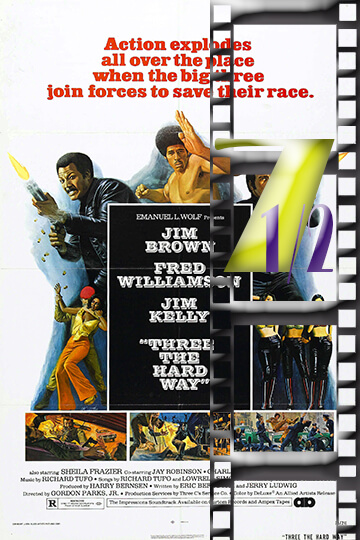
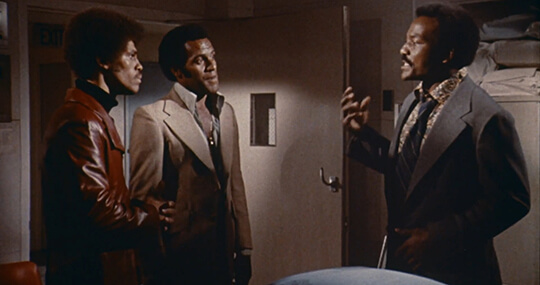
A record producer (Jim Brown), a PR man (Fred Williamson) and a black belt (Jim Kelly) in karate foil a racist plot to poison part of a city.
MOVIESinMO REVIEW
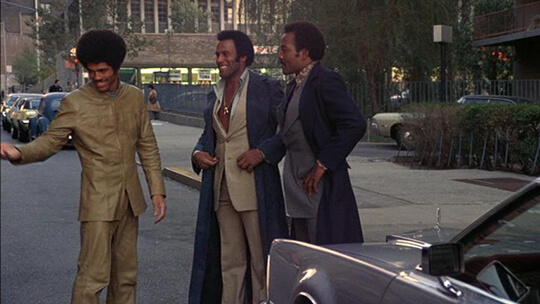
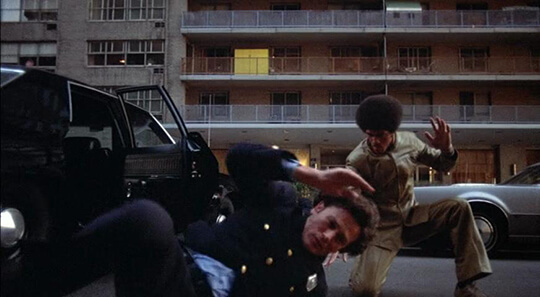
Gordon Parks Jr.’s “Three the Hard Way” is one of the more ambitious of the blaxploitation films, uniting three of the period’s largest Black action stars—Jim Brown, Fred Williamson, and Jim Kelly—in what was touted as the ultimate badass trio. Almost five decades since its release, the movie is both a time capsule of Black 1970s cinema and an intriguing look at how racial politics, representation, and action filmmaking have changed. When “Three the Hard Way” arrived in cinemas in 1974, it did so at the commercial height of blaxploitation. The genre had blown up after “Sweet Sweetback’s Baadasssss Song” and “Shaft” struck paydirt in 1971, providing Black audiences with heroes that took on “The Man” with style, swagger, and a whole lot of violence. Critics at the time were split along predictable lines. White mainstream critics tended to dismiss the film as exploitation garbage, citing its violence and what they saw as rough filmmaking. Black audiences and critics were more divided in their responses. The storyline—three buddies who have to prevent a cell of white supremacists from poisoning the water supply in New York, Los Angeles, and Washington D.C. with a serum that is only toxic to Black people—was both outlandish and based in very real racial genocidal anxieties. In 1974, the memories of COINTELPRO, the Tuskegee experiments, and systematic medical experimentation on Black bodies were open wounds. The premise of the film, while outrageous, traded on actual fears within Black communities about government-sanctioned racial violence. Black critics at the time recognized this subtext even as they registered the film’s failures. They praised the unusual spectacle of three Black men working together as equals, none of them answering to white authority figures. Black masculinity in the film was righteous, competent, and confident—a stern contradiction to decades of Hollywood emasculation of the Black male image. Parks Jr., son of the legendary director and photographer Gordon Parks, demonstrates capable direction that is more concerned with character rapport than flashy cinematography. The film’s strongest asset is the easy rapport between Brown, Williamson, and Kelly. All three deliver their signature screen presence: Brown’s troubled intensity; Williamson’s urbane self-possession; Kelly’s martial arts skills. They’re interacting more naturally instead of forcefully; they’re friends, not just co-workers. The action scenes, however derivative, are well executed and keep the pace going. Kelly’s fight scenes showcase his actual martial arts expertise, and Brown and Williamson manage the gunplay and car chases with the proper gravitas. The pace of the film is brisk, never allowing philosophical debate regarding racism to get in the way of entertainment. The supporting cast, which includes Sheila Frazier and Jay Robinson as the egotistical villain, offers sufficient support. Robinson’s campy performance as the racist scientist borders on being too much but somehow works within the film’s stylized reality. His character is representative of white supremacy as systemically menacing and simultaneously personally pitiful—a tension that sounds as intended rather than incidental. Seeing “Three the Hard Way” today discloses both its forward-leaning inclination and its limitations. The film’s handling of women, common for its time, is troubling by today’s standards. Women exist largely as love interests, victims, or motivational impulses for men. Sheila Frazier, a talented actress, is not given much to do but appears worried and is rescued. The racial politics of the film, however, are surprisingly advanced. Unlike most blaxploitation films, which addressed Black-on-Black crime or individual success, “Three the Hard Way” not only specifically names white supremacy as the foe. The villains aren’t street corner dealers or crooked cops but well-organized racists with institutions and resources behind them. This construction foresees modern debates regarding systemic racism in ways that are almost clairvoyant. The violence of the film, gratuitous for 1974, resonates differently now. Audiences today, who are used to Marvel superhero movies and John Wick franchises, may consider the action quaint by comparison. But the violence holds differently because it’s racially charged. When our protagonists kill white supremacists, it’s not merely action film violence—it’s Black men resisting attempted genocide. Would “Three the Hard Way” be acceptable today? The answer is complex. The overall message of the film—that Black people must work together to fight against white supremacist violence—remains valid, perhaps even more so in light of current political unrest. The recent rise of white nationalist groups and reported cases of racially motivated violence give the film’s concept uncomfortable relevance today. The movie would be criticized for its gender politics and the more stereotypical scenes. The dialogue is occasionally dated, and some of the character motivations are based on tropes that Black cinema has since largely moved away from. A contemporary remake would require extensive updating of women characters and a more sophisticated exploration of racial politics. Contemporary audiences would react to “Three the Hard Way” ambivalently. Fans of action movies would enjoy the chemistry between the leads and the direct plotting. The movie moves quickly and pays off its promises of conflict and resolution. Young people, especially those with an interest in the history of cinema or Black films, would benefit from observing how filmmakers during the 1970s dealt with questions of race. The movie is a bridge between the formal end of the civil rights movement and the more subtly nuanced racial discussion of the subsequent decades. The pacing and production values of the movie can, however, try the patience of those used to modern filmmaking style. The dialogue sometimes seems clunky, and some of the plot twists strain credibility even within the movie’s own over-the-top universe. “Three the Hard Way” is both entertainment and a historical document. It preserves a moment of the racial politics of America and offers the action and camaraderie that blaxploitation brought into being. The film’s willingness to address white supremacy fairly directly, rather than translating racial tension into class or personal enmities, gives the film enduring relevance. The film is not perfect—it has outdated gender politics, there is some campiness in some of the performances, and the plot relies too much on chance. These shortcomings don’t, however, detract from its essential success: putting three Black men front and center as heroes in their own tale, battling an adversary worthy of their collective skills. “Three the Hard Way” is enjoyable nostalgia and a piece of history for today’s audiences. It should also serve as a reminder that 1970s Black cinema, flaws and all, was willing to address a number of subjects that mainstream Hollywood would not touch. During a time where understanding representation and systemic racism are playing a big part in cultural conversation and understanding, the film’s candor is refreshing and welcomed.
OUR RATING – A SOLID 7.5