

WHAT’S IT ABOUT
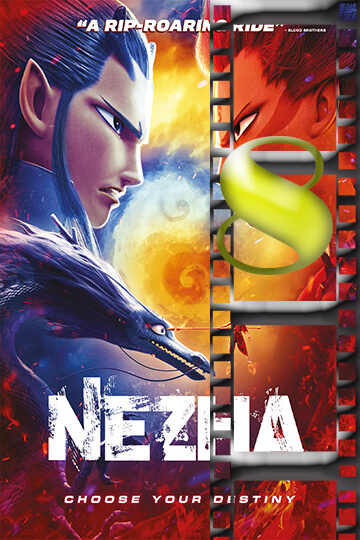
The Primus extracts a Mixed Yuan Bead into a spirit bead and a demon bead. The spirit bead can be reincarnated in a human to help King Zhou establish a new dynasty, the demon bead will create a devil and harm humans. Ne Zha is the one who should be the spirit bead hero, but he becomes a devil incarnate, because the spirit bead and the demon bead is switched.
MOVIESinMO REVIEW
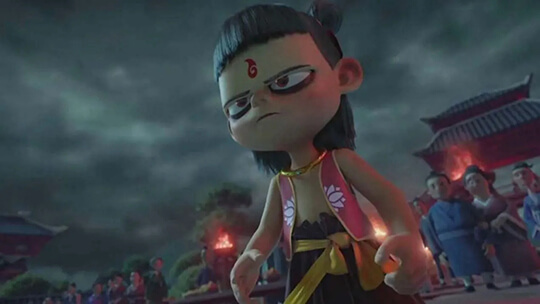
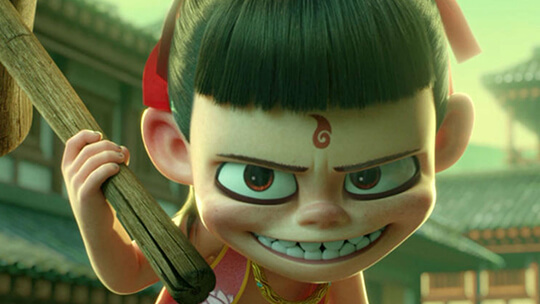
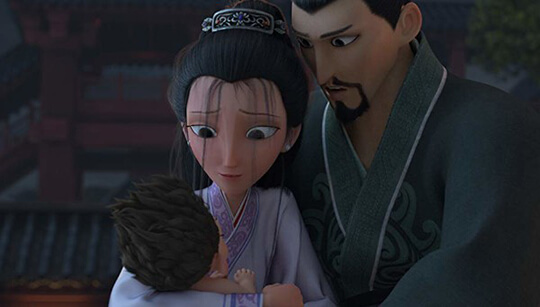
As an animation lover and a lover of stories that subvert what we know, I couldn’t wait to check out Ne Zha since it is a retelling of a classic Chinese myth. What I discovered was an impressive animated feature that is visually rich and filled with heart, and manages to cover themes that feel surprisingly relatable to most. The film follows Ne Zha, a young boy who is literally born evil, after a celestial mix-up with pearls means he gets the demon pearl instead of the spirit pearl (hence, he is marked for evil). Everyone in his village is immediately terrified of him once he is born, and they treat him like a monster just waiting to explode. His parents love him, but struggle with the knowledge that he’s supposedly fated to become a demon who will destroy everything around him. What makes this story work so well is how it flips the typical “chosen one” narrative on its head. Instead of being chosen for greatness, Ne Zha is chosen for destruction. The film explores what happens when society decides you’re bad before you even have a chance to choose who you want to be. This hit me particularly hard as a Black viewer, because the themes of prejudgment and fighting against negative expectations felt deeply familiar. The pacing is strong, balancing action-heavy sequences with quiet moments for our characters. Ne Zha starts as a bratty kid who seems to meet everyone’s expectations of him in a negative way, pulling pranks and creating havoc around him. However, as we follow Ne Zha throughout the plot, we see that much of his behavior is a result of isolation, loneliness, and the pain of social rejection. Ne Zha only experiences genuine love from his parents, particularly his father, who goes to great lengths to ensure the happiness and protection of his son. Ne Zha himself is a complex protagonist. He is a character who we don’t automatically like – he is self-centered, destructive, and has a short temper. What the film does well is that Ne Zha’s flaws seem like realistic responses to the situation he is in. When everyone expects you to be a monster, why not act like one? His character development throughout the film feels earned rather than rushed. His relationship with Ao Bing, another young person with magical powers, forms the emotional core of the movie. Ao Bing receives Ne Zha’s spirit pearl, making him all that Ne Zha was meant to be: good, strong, and heroic. Their brotherhood feels authentic, and the bittersweet feeling of watching these two clearly set-out antagonists support each other is among the emotional punches of the film. Ne Zha’s parents, especially his father in particular, are written with real emotion and depth. The father’s insistence throughout the film that he can find a way to change his son’s fate, even when that possibility appears to have evaporated, is a poignant example of a type of parental love that crosses cultural lines. His mother is fierce, protective, and takes matters into her own hands in refusal to let others impose their meaning onto her son. Ne Zha’s animation is absolutely breathtaking. The designs of the characters are a great integration of traditional Chinese art style and modern 3D animation in ways that seem to be cutting-edge and enjoyable. The design of Ne Zha is great; he actually looks like a child with mischievous characteristics, but with a flair that represents his supernatural heritage. The animation also pulls some of its strength from the action sequences. The fighting is innovative and lively, Ne Zha utilizes his powers in creative ways, and the magical elements feel heavy and accountable, not just fancy. The climax of the film had some of the most exciting animated sequences I’ve seen, with engaging action and slightly simplified stakes for emotion. The world-building is good, too. The village feels like a real place that exists, and the heavenly world is visually stunning in a way that complements the earthbound scenes. You can tell the filmmakers wanted each place to feel unique and specific on purpose. Ne Zha is based on Chinese mythology, but the themes resonate with any viewer. The core question is, can you select your own fate when everyone is anticipating that you will not succeed? It is understandable for anyone who has felt prejudice or lived their life with low expectations. As a Black critic, I could not help but draw parallels to the experiences of my own community. The ways in which Ne Zha is treated as if he is some unavoidable threat, where people will cross the street to avoid him, the mindset that he is going to be bad regardless of his choices – so many of those variables were painfully familiar. The message of the film was that you have the power to define yourself in spite of others’ expectations, a message that has resonance with other cultures. In addition to human potential, the movie is also in conversation regarding supporting themes of friendship, loyalty to one’s family, and the implications of attempting to change destiny. Ne Zha’s father’s attempts to alter fate has heavy implications and provides questions as to how far a parent can go to protect their child, while also bringing up whether there are situations that are worth fighting for, even when the chance of success is slim. Ne Zha takes a traditional Chinese story and re-envisions it in a modern sense, and it does so while holding on to the cultural meaning. It is nice that the movie does not attempt to hide cultural traditions to appeal to Western audiences. In many ways, the tender and inclusive positions that the film arrives at indicates faith that storytelling, narrative, and reaching into universal themes have kinship globally, and the film is correct. The sheer success of the film shows that there is a demand for stories that communicate issues relevant to modern society, while honouring and not forgetting culture. As someone who appreciates seeing diversity represented on screen, I found Ne Zha fresh and unapologetic about its cultural identity. The film holds up well, although some of the humour is a bit forced, and I did feel that there were points, just points, mind you, where the pacing was a bit slow. There are additional supporting characters that could have had greater depth, and a few plot points feel a bit contrived. The film is a little long at 110 minutes, although the strong emotional core kept my attention throughout the running time. Ne Zha is an outstanding film in that it tells a story through stunning animation that is an exploration of challenge bias and making your own decisions in life. Even though this story is rooted in Chinese culture, stories of identity, family, and growing into one’s potential are universal. It is artistic and entertaining – with amazing action and real emotion. This is one of those films that short-changes the child audience and allows the viewer to enjoy it at an adult level as well. If you are looking to experience animated narratives outside the lens of a Western view, Ne Zha offers an alternative view and provides an example of how effective storytelling is shared across cultures. It’s a film that has stayed with me since the credits rolled, and I would suggest anyone interested to see how traditional stories are modernized for contemporary viewers. Ne Zha is a beautiful film, both visually and emotionally, that modernizes a classic mythology while delivering poignant messages about identity and self-agency.
OUR RATING – A DEMONIC 8