

WHAT’S IT ABOUT
Reveals a superfan’s intensely personal connection to iconic rapper Eminem and that artist’s profound influence. Explores fandom’s power to forge identity and community.
MOVIESinMO REVIEW
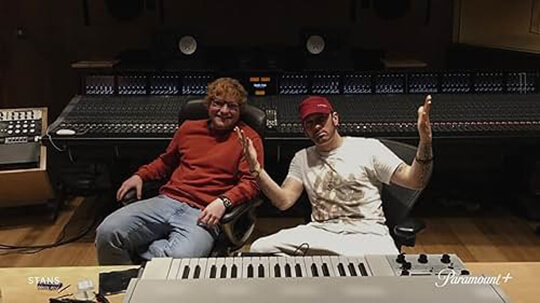
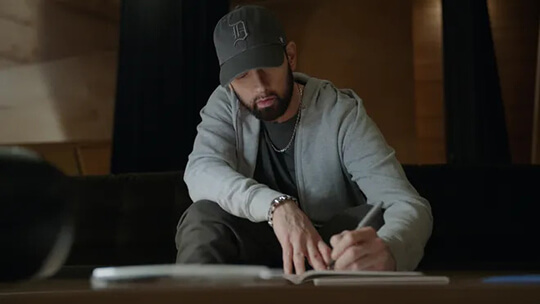
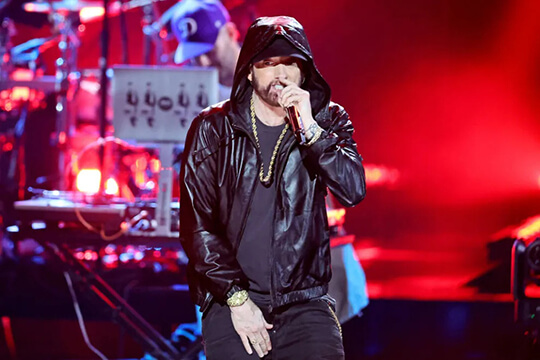
Steven Leckart’s documentary “Stans” attempts to explore an unfamiliar territory with a reproduction of a trial undertaken by superfans, specifically people who idolize Eminem like he’s some sort of rap deity. Though the motivation behind the documentary is admirable, it feels more like a two-hour advertisement for Marshall Mathers than a consideration of the moments when people become distressed in their idolization of celebrities. The documentary begins by referencing Eminem’s 2000 single “Stan,” about a psychotic fan who kills his pregnant girlfriend and then kills himself. It has become a common reference point in the American lexicon, as this song had enough resonance that it created a word, Stan. Nowadays, if one declares they Stan an artist, you can easily tell at what level of obsession they have. But here’s the thing – this documentary doesn’t really want to explore what that obsession actually costs people. Instead, we are being shown a falsely manufactured group of fans sharing how Eminem literally saved their lives. Zolt from Paris, who looks exactly like Em and knows the cars he drives. Nikki, who has 22 Eminem tattoos on her body. Marshall, a transgender man who changed his name to match his idol’s real first name. And, these people open up with their trauma stories – bullying, addiction, parent issues – and how Eminem’s music helped prevent them from killing themselves. I get it. Music is a sort of therapy. Nothing wrong with that. And, when an artist kneads his struggles into his music and shares it openly with the world, it can help any fans who are unfortunately facing similar struggles to feel like they don’t have to go through it alone. But, to act as if this documentary is presenting all of these connections in a healthy and beautiful way is borderline irresponsible. It never asks the hard questions: What did these fans give up to maintain their obsession? How much money have they spent? What relationships have they damaged? How do their families feel about coming second to a celebrity they’ll never really know? The most disturbing part? When they ask Zolt what makes him different from the murderous Stan in the song, his answer is basically “I haven’t killed my wife because I’m not married.” That should have been a red flag moment, but the filmmakers just move on like it’s no big deal. Eminem himself appears throughout the movie, sitting in rooms talking about his rough childhood in Detroit and his struggles with fame and addiction. But here’s the problem – none of this is new information. Anyone who’s followed his career already knows about his absent father, his toxic relationship with his ex-wife Kim, his drug problems, and how his friend Proof’s death in 2006 sent him spiraling. The documentary doesn’t reveal anything we haven’t heard in his songs or previous interviews. What’s really missing is any serious discussion about race. Eminem succeeded as a white rapper in a Black-created art form, but the movie barely touches on this. Sure, they show him with Dr. Dre and other Black artists who helped legitimize him early on. But they don’t explore why he got opportunities that equally talented Black rappers didn’t get, or why MTV and radio stations played his controversial songs when they might not have done the same for Black artists with similar content. The documentary also ignores some of Eminem’s most problematic lyrics – the homophobic slurs, the violent fantasies, the misogynistic content that made parents and politicians lose their minds in the early 2000s. They show him performing with Elton John at the Grammys and call it good, like that one moment erased years of harmful language. They could have asked transgender fan Marshall what he thinks about Em’s past anti-LBGTQ lyrics, but they didn’t bother. What we get instead are celebrity interviews from Ed Sheeran, LL Cool J, and Adam Sandler praising Eminem’s talent and vulnerability. Dr. Dre examines the idea that strength arises from being vulnerable, while, of course, ignoring rappers such as Tupac, who were sharing their hearts in songs years before Eminem existed, or LL Cool J and his emotional single ” I Need Love” in 1987. The notion that Eminem invented vulnerable rap is incorrect. The documentary is more effective as it accidentally shows how discomforting fame is for Eminem. He talks about never going to malls without disguises after getting mobbed with his daughter. He seems genuinely disturbed by the shrine fans built where his childhood home used to stand. You can see he never wanted to be anyone’s savior, but that’s exactly what happened. The most interesting part is how this connects to our modern obsession with celebrities. When “Stan” was released in its time, devoted fans handwrote letters. Now, with social media, fans can follow what their favorite idol is doing at any given point in time. The documentary alludes to this broader cultural issue, but never fully engages with it. The documentary is produced by Eminem, his manager Paul Rosenberg, and MTV Entertainment Studios, which are probably part of the reason the movie is so promotional. MTV gets praised like they single-handedly made Eminem the most influential rapper ever. Interscope Records gets similar treatment. It’s all very convenient when the people making the documentary are also the ones who profit from the Eminem brand. At the end, we see photos of all the fan interviewees meeting Eminem at the movie’s New York premiere. There is a sweetness to it, I suppose, but it also feels like the whole documentary was merely an elaborate mechanism to give his superfans their ultimate prize: actually meeting their idol. “Stans” might engage audiences who do not know much more about Eminem than his chart-topping hits. But for anyone who knows Em’s story well, it feels like drinking stale coffee, but with fans giving testimonials. A better documentary would have acted as an authentic portrayal, engaging with the darker side of stan culture, and exploring the racial politics of Em’s rise to success, while also provoking tougher questions about what happens when love and admiration transform into a dangerous obsession. The documentary earns points for having some good archival footage and letting fans tell their own stories in their own voices. However, it loses a lot of points for playing it safe, avoiding controversy, and functioning more as an infomercial than journalism. In a landscape becoming increasingly defined by parasocial relationships that are becoming increasingly extreme (and possibly dangerous), we needed a documentary that presented bravery and confronted the actual negative consequences of intense fandom. Instead, we get a love letter that holds back from asking the difficult questions. Lastly, Stans is watchable but forgettable, more promotional than revealing.
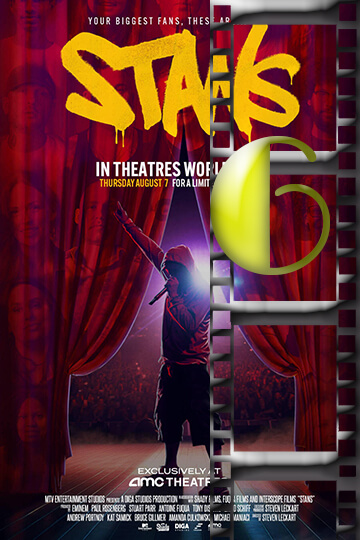
OUR RATING – A FAN-BASED 6