

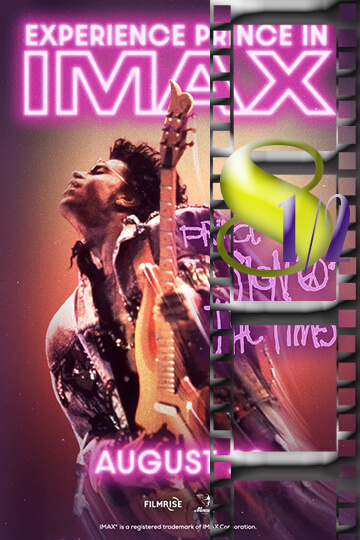
WHAT’S IT ABOUT
Punctuated with specially filmed, dramatic vignettes, Prince and his band bring his Grammy nominated album `Sign ‘o’ the Times’ to life in one of the greatest concert films ever made, capturing Prince at the peak of his musical powers.
MOVIESinMO REVIEW
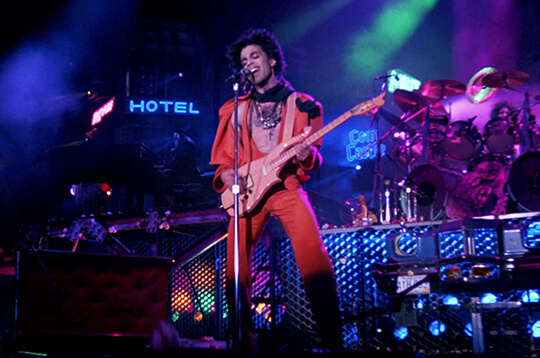
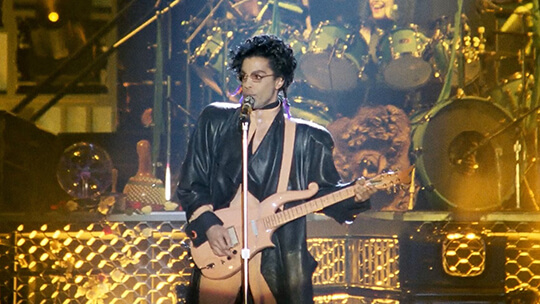
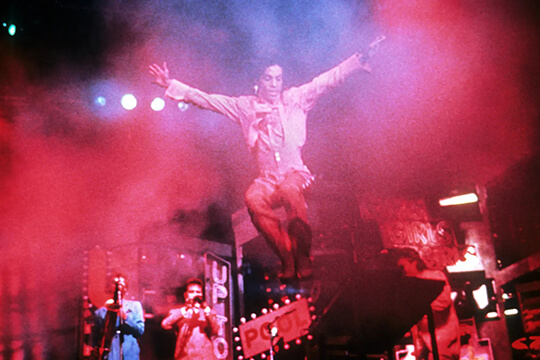
Seeing Prince’s Sign O’ The Times in IMAX forty years after its release is like stepping into a time machine; you come face-to-face with sheer musical genius. As a Black film critic, I’m wrestling with two different perspectives: what this film meant on its original release in 1987, and what it means in our present cultural moment. When Sign O’ The Times was first put in theaters, critics were still comparing everything Prince executed to Purple Rain.” Roger Ebert captured this perfectly, noting that Prince “labors under the misfortune of having made one of the greatest rock movies of all time” and was now “a sitting duck with whatever film he made next.” The film was well-reviewed, but was not a blockbuster, just like the album it supported. I think back to 1987, and there were many critics who appreciated the film, but seemed to miss out on appreciating what they were actually experiencing. They thought of it as a concert film with some narrative elements included, understanding they saw someone Black at the absolute height of his creative powers and completely in control of his vision. He wasn’t afraid to also expand the envelope in ways that few artists do, regardless of color. Today, looking at this film through a modern lens, what strikes me most is how ahead of its time Prince was in terms of artistic control and visual storytelling. The man directed, starred in, and essentially controlled every aspect of this production at a time when Black artists rarely had that level of creative freedom in Hollywood. This wasn’t just a concert film—it was a statement of independence. The heart of “Sign O’ The Times” is Prince himself, captured during what many consider his creative peak. The film showcases him backed by one of his strongest bands, featuring powerhouse drummer Sheila E., keyboardist Boni Boyer, and the electrifying dancer Cat Glover. What makes this special isn’t just the music—though the setlist draws heavily from what many consider his masterpiece album—it’s watching an artist who has complete command over every element of performance. Prince makes incredibly difficult things look effortless. He’s singing complex vocal arrangements while peeling off guitar solos, dancing intricate choreography, and conducting his band all at the same time. There’s a moment where he does a crabwalk across the stage, drops into a full split, then spins back up without missing a beat. It’s the kind of physical and musical virtuosity that you simply don’t see anymore. The band is equally impressive. Sheila E. doesn’t just play drums; she commands them like a general leading an army. When she comes down from her kit for her featured numbers, the energy in the room shifts to an entirely different level. Boyer brings a gospel-trained power to the keyboards that gives songs like “Forever in My Life” a church-like intensity that wasn’t present on the album versions. The “Sign O’ The Times” album showcased Prince’s incredible range, and the live versions here often improve on the studio recordings. “I Could Never Take the Place of Your Man” gets a horn arrangement that makes it even more joyous. The title track, performed with just Prince and Cat Glover at the start of the show, builds into something massive when the full band marches on stage like they’re leading a revolution. What’s remarkable is how these songs tackle serious subjects—social issues, relationships, spirituality—while remaining incredibly funky and danceable. This was Prince showing that pop music could be both entertaining and meaningful, a lesson that many of today’s artists are still trying to learn. The film isn’t just a straightforward concert recording. Prince restaged much of the performance at his Paisley Park studios with a few hundred extras serving as the audience, and he wove in narrative elements between songs. Some critics at the time dismissed these dramatic interludes as unnecessary, but in hindsight, they feel like early music videos mixed into a larger artistic vision. The costumes and stage design tie into the album-the imagery of peace signs, hearts, and arrows is omnipresent, along with Prince’s colors peach and black. Every costume change seems deliberate, every choice of lighting feels intentional. This is world-building in much the same way that today’s artists like Beyoncé or Kendrick Lamar conceive their visual work as an integrated whole. In 1987, there was a portion of the audience who was not yet ready to fully embrace what Prince was presenting. The film disappeared from distribution for decades because Prince insisted on careful control of what he made and how he was compensated. While that was a great protection for his artistic integrity, it actually meant that whole generations of music fans could not get to see this incredible document of performance and Black excellence. Today, with streaming platforms and social media giving artists more control over their content, Prince’s approach seems prescient rather than difficult. He was fighting battles about artist ownership and fair compensation that are still being fought today, though artists like Taylor Swift have found more mainstream-friendly ways to explain these concepts.
The 2025 IMAX Experience: Why It Matters
Seeing “Sign O’ The Times” in IMAX is a revelation. The sound shows every instrument and every vocal harmony in all its glory. You can hear the slump at which one musician joins another, the in-between creases that are lost to the prior release. Of the 1987 video quality, you can see when there is film grain, and I observed some minor technical issues at the end, but who cares when Prince slithers on the floor, and steals Cat Glover’s skirt with his teeth and never misses a note. This is as close to a Prince concert as most will ever get, and with three of the main performers, Prince, Cat, and Boni Boyer, no longer with us, it becomes less entertainment and more a historical chronicle of art that cannot be replaced. Would people in 2023 watch “Sign O’ The Times”? Absolutely. In a time of programmed, choreographed performances and pitch-corrected vocals, to be able to watch Prince and his utterly raw, unencumbered talent is notably refreshing; at one viewing, it is humbling. This is what it looks like when someone has complete mastery over their craft and the confidence to let that mastery speak for itself. The film works on several levels. As a concert film, it captures one of the greatest performers of all time at his peak. As a cultural document, it shows a Black artist exercising complete creative control in ways that were revolutionary for its time. As a form of entertainment, it’s just thrilling from beginning to end. Is it acceptable to watch today? More than acceptable, it’s required viewing. While there are elements of the gender dynamics and sexual determinants that may read differently currently, the artistry goes beyond the dated content they contain. This is a masterclass of performance, artistry, and artistic vision that feels shockingly contemporary. The IMAX screening that lasts for a week starting on August 29, 2025, is something of a gift to longtime fans and new fans alike. In an era of live music that is transforming into something far removed from the art and humanity of people creating in a space, and the unfortunate losses of authentic artistic expression being overwhelmed by the ferocious noise of social media, “sign o’ the times” helps us remember not just what we’ve lost, but what is, and why it makes a difference. It is more than a concert film; it is the celebration of Black creativity at its bravest and most complete. “Sign O’ The Times” is a near-perfect capture of artistic genius that remains essential viewing nearly four decades later.
OUR RATING – A GENRE-DEFYING 8.5