

WHAT’S IT ABOUT
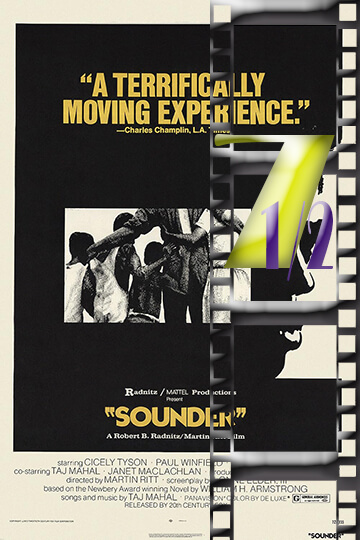
The Morgans, a family of poor black sharecroppers in the Depression-plagued South, struggle to find enough to eat despite the help their hunting dog, Sounder. When father Nathan (Paul Winfield) resorts to stealing food, he is captured by police and sent to prison, and his wife, Rebecca (Cicely Tyson), is left to care for their son, David (Kevin Hooks). Though Sounder has run away, David never gives up hope that his dog will return, just as he believes that he will see his father again someday.
MOVIESinMO REVIEW
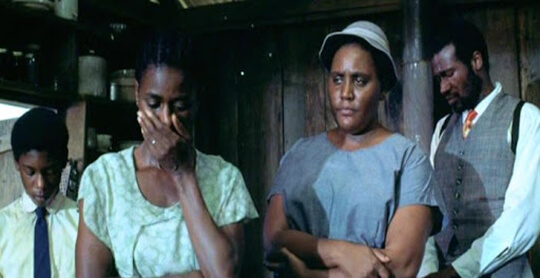
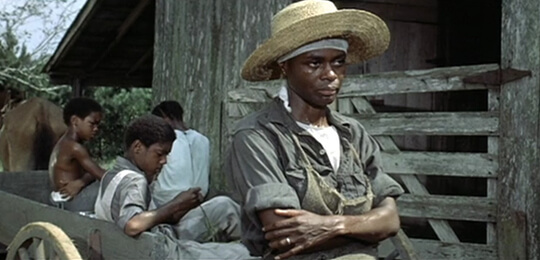
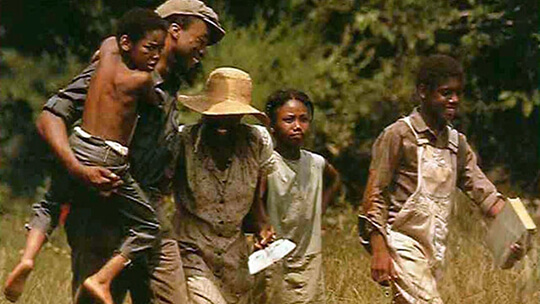
Seeing “Sounder” in 2025 is like opening a time capsule with treasure, but also painfully uncomfortable reminders about how Hollywood once saw and normalized Black stories. This 1972 film, directed by Martin Ritt and starring Cicely Tyson and Paul Winfield, reflects on a family of Depression-era Louisiana sharecroppers as they struggle to survive after we learn father Nathan has gone to jail for theft to feed his family. It’s a movie that was celebrated in critical circles and picked up some Oscar nominations back in the day, but, watching it now through my eyes as a Black man, I only see complexity beyond this simple “human spirit rises above” narrative that was celebrated in white critical circles half a century ago. Let me be clear right off the bat – “Sounder” is a flawed, not a bad movie. There is certainly much to appreciate here. Cicely Tyson is formidable as Rebecca Morgan, a mother trying to keep the family from falling apart while her husband, Nathan, is serving a prison sentence. She brings strength and dignity to a character who probably could have been a mammy representation in the hands of a less skilled actress. Paul Winfield counteracts her strength in a performance that finds some level of desperation behind Nathan’s actions – his decisions push his family further and further away. Young Kevin Hooks shoulders a lot of this movie’s emotional weight playing son David, who’s required to become a man too soon in this difficult world. The cinematography captures a powerful image of this rough terrain against the rough landscape of the Depression-era rural South without glorifying it. When David plows those dirt roads in search of his father or when the family tills their own wee bit of land, you can almost smell the sweat and taste the dirt. The film doesn’t blink at showing the grinding poverty that was life to so many Black families during this period, and there’s something matter-of-fact about how it goes about treating their daily hardship that doesn’t quite feel exploitative. But this is where things get complicated, and where my perspective as a Black critic in 2025 parts ways with those white critics who celebrated this film back in 1972. When “Sounder” was released, critics celebrated it as a triumph because it showed Black people as fully developed human beings rather than caricatures. They celebrated it as having “dignity” and “authenticity.” What they didn’t realize, or perhaps couldn’t recognize coming from a certain standpoint of perspective, was that this barrier was ridiculously low. That showing Black people as actual people was considered revolutionary in 1972 speaks a lot more to what was lacking in Hollywood rather than anything laudable about this film. Viewing “Sounder” today, I see a movie that was perhaps forward-thinking within the limitations of its own time but seems bound within parameters provided by white liberal sensibilities. It’s a movie that’s mighty concerned about suffering and perseverance and sees Black people mostly from a perspective of how they suffered. Now I don’t mind showing the actual sufferings our people went through; I mind how this was made to be the primary way we were represented on movie screens. We were acceptable on screen if we were suffering majestically, but not any threat to anybody, and learning valuable lessons about clinging on. What about tales about victory? Songs about triumph? We weren’t “acceptable” if we weren’t suffering stoically. What we get here feels especially prescient about this movie’s portrayal of racism. Though the movie shows the effects of systemic oppression, it does this in ways that will be comfortable for white viewers. The white characters aren’t presented as overtly malevolent but instead part of a system that just happens to be discriminatory. We receive no real anger here, any acknowledgment that such injustice should make people angry. Instead, we receive serene dignity and Christian forgiveness that likely made white viewers feel better about themselves for pitying such “good” Black people. That’s part of a broader problem around how “Sounder” was accepted and celebrated. White reviewers in 1972 did this because it made them feel enlightened without challenging them too much. They could praise the acting, feel bad about poverty and racism, and then go home having felt like they’d done some valuable work around social topics. And in between, a lot of Black viewers even then recognized this was still a narrow and rather condescending take on our lives. Is “Sounder” acceptable viewing these days? Absolutely. Regardless of my criticism, it’s still a well-crafted movie with powerful acting that treats its Black people with respect and humanity. Young people today might find it too long and drawn-out compared to today’s faster-paced movies and shows, but this simple narrative about family love and strength still has legs. It doesn’t contain anything offensive or exploitative in a manner that would make it watchable only if absolutely necessary. But I don’t think audiences today would be as impressed with “Sounder” as critics were in 1972. Audiences today, particularly Black audiences, have films like “Moonlight,” “Black Panther,” “If Beale Street Could Talk,” and “The Hate U Give” that narrate Black stories within complexity, within anger, within joy, within a depth and range of humanity that “Sounder” can’t touch. When you can watch Ava DuVernay or Ryan Coogler or Jordan Peele or anything else that these directors bring out, “Sounder’s” limitations become readily apparent. “Sounder’s” pacing would be a problem for audiences today, too. “Sounder” drags along slowly, slowly creating moments that lead up to emotional moments in ways modern audiences might find boring. It’s pretty to watch this style, but it requires patience that a lot of people these days can’t provide. What’s most striking about watching “Sounder” again is how it encapsulates a particular era in movie history in which Hollywood was only beginning to realize that Black stories could be successful artistically and financially. “Sounder” made over $10 million at the box office and was nominated for four Oscars, including Best Picture. That success paved the way forward for later films featuring a concentration on Black people that makes “Sounder” historically valuable, regardless of how narrow it feels today. Cicely Tyson’s performance alone is worth watching “Sounder.” She’s such depth and nuance in Rebecca that you forget that’s a performance. There’s a scene in which she’s teaching her son how to read while managing her own bereavement and concerns about how things might be going on without her husband around, and Tyson is able to display strength and vulnerability and love and resolve all at once. It’s this type of acting that makes you understand why people went on to call her a legend. “Sounder” gets a 7.5 out of 10 from me because it succeeds at what it’s trying to accomplish, even if what it’s trying to accomplish seems a little constricted today. It’s a solidly developed film with great acting that tackles its subject matter sensitively. While it was immense at the time and opened the door for better, deeper Black stories to emerge, it is also a product of a certain time, a work shaped by what white people were willing to accept and, more importantly, what Black stories they were able to hear. If you have any interest in film history or learning about the progression of Black people in film, “Sounder” is definitely a film you have to see. Just don’t go into it expecting it to feel quite revolutionary today, as it did half a century ago.
OUR RATING – AN EMOTIONAL 7.5