

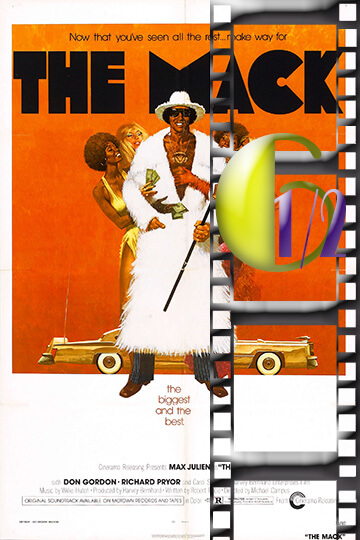
WHAT’S IT ABOUT
After a few years in the slammer on a drug bust, John “Goldie” Mickens (Max Julien) returns to Oakland, Calif., determined to raise himself up in the world. When his old friend turned prostitute Lulu (Carol Speed) asks him to look out for her, Goldie accepts and enters the life of pimping. Soon, he’s the most notorious “mack” in town, but it earns him some unwanted attention. A pair of crooked cops wants him back in jail, and a rival pimp (Dick Williams) tries to steal his business.
MOVIESinMO REVIEW
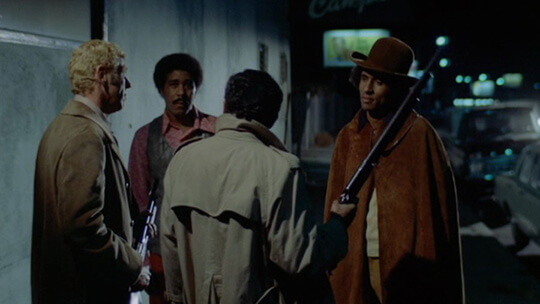
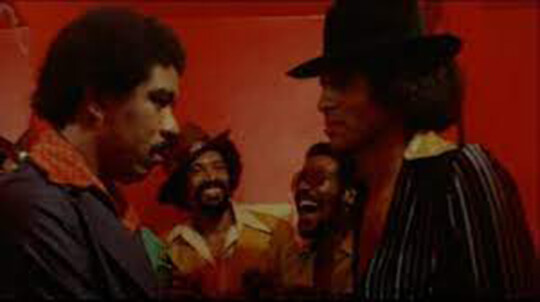
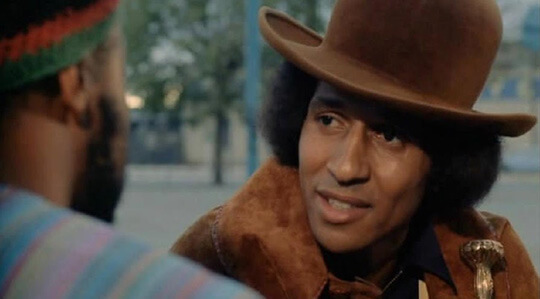
As I begin my 2025 viewing of “The Mack,” I am ‘watching’ through two different sets of eyes. Part of me understands what this film meant for its intended Black viewing audience in 1973, and the other part of me must deal with what it means now. It is the complexity of this tension that makes the critique both necessary and complicated. “The Mack” chronicles the life of Goldie, played by Max Julien, as he returns home from prison passionately committed to becoming the most successful pimp in Oakland. The film showcases the exotic aspects of the lifestyle, violence, and sexual exploitation associated with this world. The talent of director Michael Campus and actors like Richard Pryor in a supporting role produced something that was very popular with Black audiences, but it also spurred the intense critique of representation and values. In fact, in 1973, mainstream critics quickly dismissed “The Mack.” Critics viewed it as another movie in the blaxploitation genre that was corrupting Black youth and (re)enforcing stereotypes. Particularly, white critics felt uneasy about the film’s unapologetic depiction of life on the street and resisting moralizing the way they would expect. Many reviews took umbrage at the violence and sex and missed the deeper currents running through the narrative. However, the critiques of the film fail to recognize something important. For many Black people in the audience in the early 70s, “The Mack” presented something they had never seen in films: a viable, Black character who was able to carve out his own destiny — even when that destiny was morally questionable. Goldie was not seeking white approval or to show that he was respectable. He was taking what he wanted from a system that had dismissed him long ago. At a time when respectable, positive Black representations in Hollywood were dominated by Sidney Poitier playing succumbing characters, the story and character of “The Mack” presented a different kind of Black masculinity that resonated with audience members who found themselves excluded from the American Dream. The film also captured something genuine about urban Black life that mainstream Hollywood was either too uncomfortable or unknowledgeable about to capture. The locations, the music, the slang, and the street view of the lives being lived all felt actual in ways that few films of that era did. Richard Pryor’s portrayal of Slim, Goldie’s friend who becomes a sort of Black Panther revolutionary, added layers of political commentary and elevated the material beyond a film that simply existed in the exploitation genre. Watching it today, though, I have to acknowledge the problems that were always there but feel even more troubling now. The film’s treatment of women is deeply problematic. Women are depicted as items to be controlled, bought, and sold, without any real exploration of consequences for women involved in prostitution, and Goldie’s triumph is celebratory without any regard for the human cost of that encompassing all women in sex work. In 2025, when we have a more nuanced understanding of sex trafficking and exploitation, those are less forgivable. The violence in the film also feels different. What may have been framed as justified revenge, or just a necessary toughness in 1973, now looks like trauma being transference through a community clearly suffering enough. The film’s celebration of criminal success sends a message that feels particularly harmful when we know more about how mass incarceration and street violence have devastated Black communities over the past fifty years. Yet I can’t completely dismiss “The Mack” either. There’s still something powerful about watching Max Julien command the screen with confidence and style. The film’s examination of law enforcement corruption and institutional racism feels relevant. Goldie’s relationship with his mother, played by Juanita Moore, gives real emotional heft and depth of character that is often not present in these types of movies. The tension between Goldie’s life of crime and Slim’s life of politics still invites important questions regarding how people act in the face of oppression and lack of opportunity. The film is reasonably sound from a technical aspect. The cinematography captures the gritty beauty of Oakland in ways that come off as genuine and not exploitative. The soundtrack, supplied by Willie Hutch, enhances the vibe and remains genuinely funky, even after all these years(!). Max Julien’s acting possesses a magnetic quality that holds our interest in Goldie as a character, no matter how objectionable his behavior. Would audiences be remiss when watching The Mack today? I believe many viewers would, but for different reasons than they would have in 1973. Younger viewers might celebrate the historical relevance of the film and its uncompromising depiction of black urban life. The struggles for economic survival and to resist authority still make sense. However, the gender politics and endorsement of exploitation would likely prove controversial, as they rightly should. The film is in a complicated area of black cinema history. It’s part of a tradition that includes everything from “Sweet Sweetback’s Baadasssss Song” to “Boyz n the Hood” to “Moonlight” – films that try to show Black life as it really is rather than as others think it should be. But “The Mack” is also a reminder that authentic doesn’t always mean positive or progressive. As a Black critic in 2025, one can appreciate the cultural significance of The Mack in its time, while also appreciating its flaws, and even its harmful flaws. It can be appreciated for its cultural resonance, and it offers an opportunity for Black characters to exist as characters instead of tropes or caricatures. It can also be critiqued for its gender politics and ignorance of the backlash of the lifestyle it idolizes and glorifies as the right way to live. The Mack is still a worthwhile watch today, but with thoughts and condemnation. It is a time capsule of both the best and worst of 1970s Black cinema. Today’s audiences can learn from what it gets right and from what it gets wrong: It is a springboard for conversations about representation, authenticity, and responsibility in film. It is flawed, but an important historical artifact of Black cinema that needs to be seen and discussed, to understand the foundation and the building blocks of the genre, even if it cannot be fully celebrated.
OUR RATING – A BLACK LIFE 6.5