

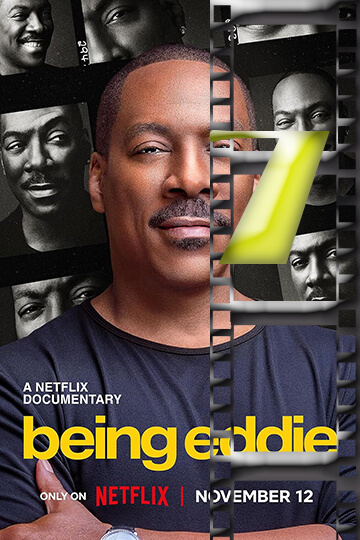

WHAT’S IT ABOUT
From stand-up prodigy and Saturday Night Live phenom to beloved Hollywood icon, Being Eddie chronicles the extraordinary life and legacy of the genre-defying star through exclusive interviews with Murphy himself and his comedy peers, offering an intimate portrait of this once-in-a-generation talent.
MOVIESinMO REVIEW
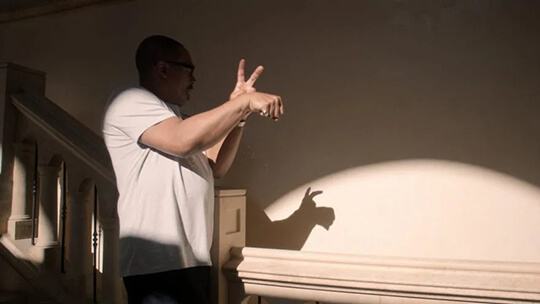
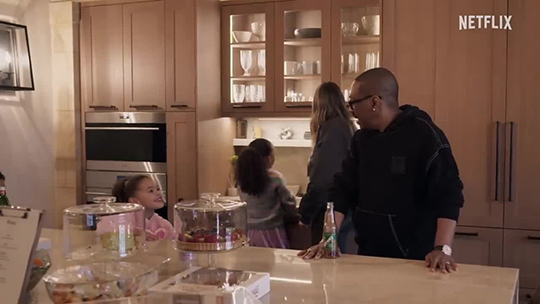
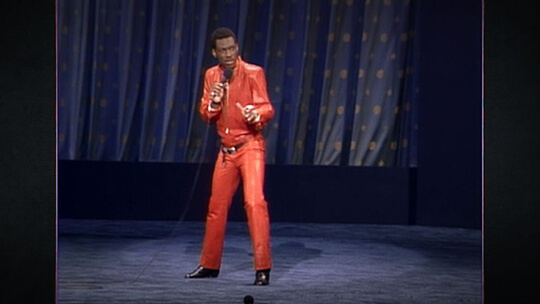
Netflix’s new documentary “Being Eddie” brings us into Eddie Murphy’s world, literally into his mansion with the fancy retractable roof, as he opens up about his journey from a kid cracking jokes in New York clubs to becoming Hollywood’s biggest Black star. Director Angus Wall crafts this portrait with plenty of archival footage and sit-down interviews, creating something that feels both personal and carefully controlled. The film works best when it lets Murphy just talk. It’s wonderful to witness him looking back on his beginning desire to become the next Richard Pryor. Add to this other videos of audiences recalling him and the world he inhabited during that period of time, like Dave Chappelle, Chris Rock, and Kevin Hart, and it reminds you what Eddie really meant to comedy and entertainment. His life story matters. He broke through doors that a lot of Black performers couldn’t even see before him, and the film captures that significance without overstating it. What makes “Being Eddie” interesting, though, is what it reveals about how famous people want to be seen. Murphy sits on one of what feels like a hundred couches throughout his California home, looking relaxed and reflective. He’ll tell you he’s a straightforward guy who doesn’t party, who never did drugs or alcohol until much later in life, and who turned down cocaine from John Belushi and Robin Williams. He’s sensitive, he says. That sensitivity made him sharp enough to see Hollywood’s blind spots and brilliant enough to turn a sharp observation into comedy gold. The documentary backs all of this up, making Murphy seem like someone who understood himself and stayed true to that understanding even when fame could have destroyed him. But here’s where things get tricky. This film is basically Murphy getting to explain Eddie Murphy to you. It’s not really interested in poking at the hard stuff. Yes, the brother Charlie who died in 2017 is referenced, and there is a reference to mentors and friends he has “buried” over time. He recognizes that the stand-up comedy from his early days regarding women and gay people didn’t hold up. But the film soon moves beyond that, and in the end, it is more interested in honoring his diverse life and impact than reckoning with any complicated legacies. We learn that his daughter once gave him grief about his old material, but that’s about as deep as it goes. The documentary does a solid job showing Murphy’s range. He hits on his “SNL” years, his classic films like “48 Hrs.” and “Trading Places,” his switch to family comedies, and his voice work in “Shrek.” Director John Landis pops up to discuss Murphy’s talent, though neither he nor Murphy addresses the famous clashes they had on the “Coming to America” set—a missed opportunity for real honesty. Murphy even brings up “Norbit” and how losing the Oscar to his own “Dreamgirls” performance annoyed him, mostly because he had to leave his house for nothing. That joke actually works because it shows you Murphy’s particular brand of humor about himself. What stuck with me most was learning how deliberately Murphy shaped his life. He had a plan at ten years old. He stayed locked in on it. He didn’t get caught up in the excess that destroyed Richard Pryor and so many others. He loves watching “Ridiculousness” on MTV. He likens it to the avant-garde films of Alejandro Jodorowsky, which tells you a lot about how he views the world, discovering significance and reason in unlikely places. He is thoughtful in his selections. The consistency is important, especially for a Black actor in an industry that has historically limited what Black people can be. Still, the film has a glossy feeling that keeps you at arm’s length. It’s clear Murphy set the boundaries here. His wife and kids barely show up, even though family is supposed to be central to who he is now. The documentary wants you to believe that Murphy’s real superpower is self-knowledge, that he knows himself better than anyone ever could, even better than critics or cultural observers. Though that may indeed be the case, it is limiting too. There is a point in the film where critic Elvis Mitchell observes and discusses what’s culturally significant about a scene in “Beverly Hills Cop.” Murphy, for his part, joins in and simply states he was just laughing at the funny face someone had made off-screen. It’s funny, but it also ends the conversation. The message comes through clear: don’t try to understand me deeper than I understand myself. That particular style of celebrity documentary has taken over Netflix lately. “Being Eddie” joins a parade of films where famous people walk around their mansions and tell their version of their own story. Sometimes these can reveal something genuine. At other times, they’re really just reputation management masquerading as confession. “Being Eddie” sits somewhere in between the two. Murphy seems like a fundamentally decent human being, which seems true. He also seems like someone who has very carefully managed his public persona, which also seems true. If you grew up loving Eddie Murphy, this movie gives you exactly what you want. You get to revisit his greatest moments. You hear from comedians he influenced, explaining what he meant to them. You come away reminded of why he mattered so much. That’s not nothing. Murphy helped change what was possible for Black entertainers in mainstream spaces. He proved that a young Black comedian could become a megastar without compromising his essence or self-destructing. Those accomplishments remain true, independent of whether or not this documentary explores deeper themes. The final moments of the film, in which Murphy breaks out his ventriloquist dummies and begins performing, captures something genuine about who he is-there is still some of that kid who wanted to make people laugh. This man remains an entertainer at heart; he is still looking for ways to create and share happiness and laughter in the world. “Being Eddie” presents someone at peace with his choices and his legacy. Whether that peace is earned or constructed is a question the documentary isn’t asking itself. But it’s a fine watch if you want to spend time with one of entertainment’s most important figures, even if it’s on his terms and his terms alone.
OUR RATING – A BASIC MURPHY 7