

What’s It About
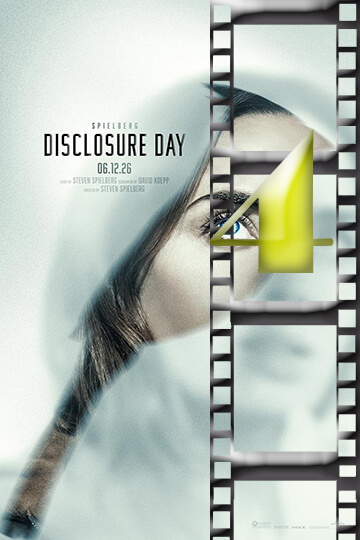
Disclosure Day is about humanity’s global realization that we are not alone in the universe, exploring themes of truth, fear, and mass hysteria as a whistleblower attempts to reveal government secrets about extraterrestrial life.
MOVIESinMO REVIEW
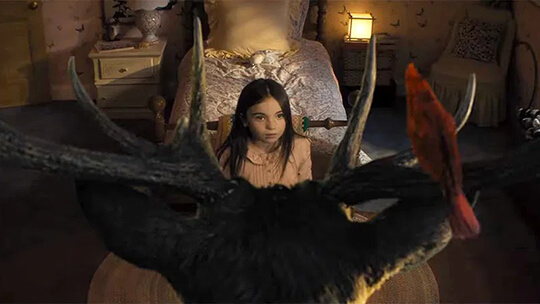
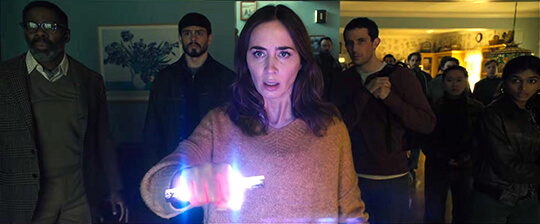
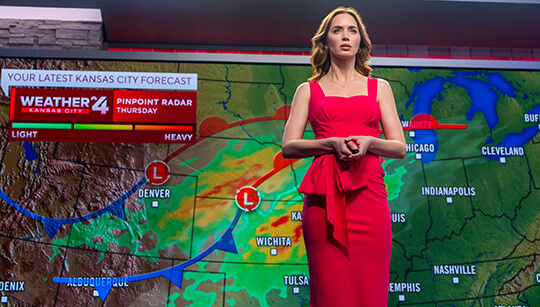
Steven Spielberg turns eighty this December, and Disclosure Day carries that weight whether it wants to or not. Four years have passed since The Fabelmans left audiences genuinely moved by its personal honesty. That kind of film takes something out of a director, and the question hanging over this new blockbuster was simple: where does a man who has already made Jaws, E.T., Schindler’s List, and Minority Report go next? Apparently, the answer is back, back to aliens, back to government cover-ups, and back to a sense of wide-eyed wonder that no longer feels earned. Let’s cut to the chase. Disclosure Day is Spielberg’s fifth alien-encounters movie, and it shows it. The film is about two strangers whose lives fall apart at the same time, but on opposite sides of the country. On one side is Daniel Kellner, who works for a secret organization known as Wardex (which stands for Waved Reporting, Development & Extraction) as a cybersecurity expert in Washington, D.C. He has left with his company “notebook,” which has all the hard drives of the classified information about aliens visiting the planet since the time of the Roswell crash. His former boss, Noah Scanlon, has taken his girlfriend Jane (played by Eve Hewson) in order to use her for leverage against him. On the other side of the country, there is a TV weather person named Margaret Fairchild (Emily Blunt), who wakes up one day and starts speaking Russian and doesn’t know why. She arrives at work, goes live on air, and starts making odd clicking noises and collapses on the set in front of a camera. The video goes viral, and Daniel sees the video, and the two come together. The first hour of this film has an amazing finish, thanks to Steven Spielberg and David Koepp writing together since the Jurassic Park days, building suspense and excitement throughout. The way they had multiple stories in the movie, cross-country, is creatively written and creates a flow between the different stories. One particular part of the film is very entertaining; it involves an automobile being pushed into the path of a moving freight train at a railroad crossing. This scene is an excellent example of how incredibly talented a filmmaker Steven Spielberg continues to be with his camera work. The way he uses the camera as an extension of his imagination and knowledge of how to create chaos in crowded areas is impressive. There are several times when he shows why he is one of the greatest entertainment filmmakers ever to work in Hollywood today. But the movie keeps undermining itself. At the center of the plot is a small device, characters refer to it generously as a “thingy”- that grants whoever holds it (only if they’re worthy) the powers of mind control and invisibility. When Margaret acquires this object, she can make armed soldiers see her as someone they love, causing them to stand down. It is the kind of plot development that would feel lazy in a student film, let alone in a major studio release. The problem is not that it is fantastical. Spielberg has earned the right to be fantastical. The problem is that it does not feel connected to anything the film has established. It arrives like a solution from a different movie. I think Emily Blunt has the best acting in this movie and plays Margaret, who is slowly realizing that she has had her entire sense of self and what she believes rearranged by things she can’t put into words. Blunt’s warmth and specific nature in various scenes are what will make the viewer feel emotionally connected to her character. Wyatt Russell plays Margaret’s musician boyfriend, Jackson, and is a perfect example of comic relief; one of the best examples is his trying to drive over Margaret’s phone with his car because he wanted to help her go off the grid, but failing every time. Daniel (O’Connor) was able to hold his own in the moral argument regarding truth/public vs. institutions. The last character I will mention was Colin Firth, and as Scanlon, he plays a truly cold, callous, evil character, unlike anything we’ve seen from him in most of his past films. Colman Domingo plays Hugo Wakefield, the maverick Wardex (an insidery type of job he has), who’s constantly helping Daniel stay one step ahead of the people after him. Domingo is a very talented actor, but you just cannot tell that through the screenplay because it has too many monologues, and one of the monologues is a long ass speech on whether being empathetic helps humanity evolve and grow, but really sounds more like a lecture than a wow, I didn’t know that! Elizabeth Marvel, who plays Sister Maura, the nun, mentions that if it’s true that aliens exist and are present in our galaxy, God is bigger than we can imagine, and I think the whole idea of God, aliens, and humans could exist together is the best thought-provoking aspect of this movie. It should have gotten way more time to get deep with this idea. What ultimately keeps Disclosure Day from reaching the shelf alongside Spielberg’s best work is a problem of tone. The film cannot decide whether it trusts its audience or not. It leans into the conspiracy mechanics of The X-Files, borrows the crop-circle imagery of M. Night Shyamalan’s Signs, and, at its most nostalgic, positions a Kansas City television broadcast as the vehicle through which humanity will receive its most important news ever. That last choice is touching in its old-fashioned faith in broadcast journalism, but it also feels like Spielberg is making a film about 2026 through the emotional grammar of 1993. In addition, something else is worth being named: in the entire cast of characters for this globally marketed film (2026), there’s only one central and prominent black character (Domingo) who really shines through when allowed an opportunity; but overall, there is no diversity in this movie’s creative imagination compared to what we were promised by their marketing campaign. This is a significant observation; it’s this decision that demonstrates which group(s) of individuals constitute their primary focus/priority, versus all others being considered to be secondary. Spielberg has clearly carried these themes for decades: the responsibility of knowledge, the government’s relationship to truth, what first contact would mean for organized religion, and the basic human desire to feel less alone in the universe. Project Hail Mary, released earlier this year, handled several of those same questions with more clarity and less self-congratulation. Disclosure Day arrives full of intelligence and ambition, and exits having connected neither with its own nervous system nor with ours. The wonder that Spielberg chases through every frame never quite lands. It remains just out of reach.
OUR RATING – AN UNDISCLOSED 4
MEDIA
- Genre – Science Fiction
Street date
- Digital – July 21, 2026
- 4K/Blu-Ray/DVD – August 25, 2026
- Video – 1080p
- Screen size 2.39:1
- Sound: English Dolby Atmos, English: Dolby TrueHD 7.1, Spanish: Dolby Digital Plus 7.1, French: Dolby Digital Plus 7.1,
- Subtitles: English SDH, French, Spanish
Extras
· Encountering the Unknown: Inside Disclosure Day: Features Steven Spielberg, Emily Blunt, and cast members discussing the real-life inspirations and filmmaking secrets behind the sci-fi thriller.
· Spielberg and Williams: A Legendary Collaboration: Explores the long-running creative partnership between director Steven Spielberg and composer John Williams.
· Theatrical Trailers