

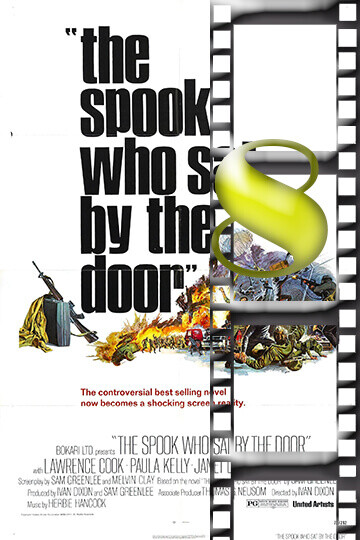
WHAT’S IT ABOUT
A former CIA agent (Lawrence Cook) organizes black teenagers into well-trained guerrilla bands bent on overthrowing the white establishment.
MOVIESinMO REVIEW
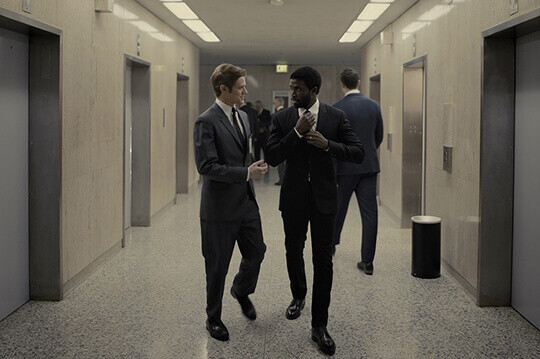
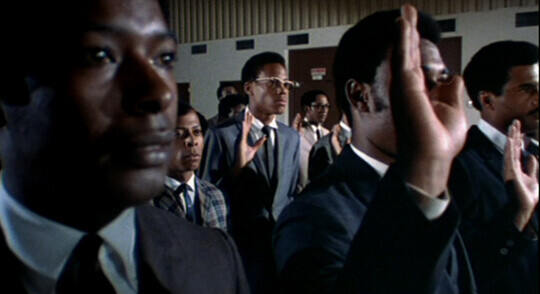
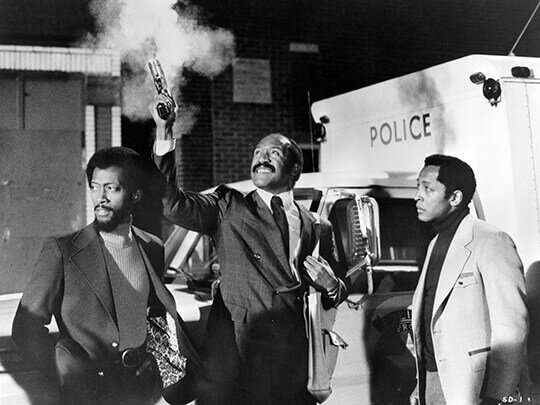
As a Black critic, more than that, as a Black man in America watching a movie like this more than fifty years after it was made, unfortunately still holds up. “The Spook Who Sat by the Door” does not just entertain. It warns. And it warns so clearly that, according to many people connected to the project, the United States government worked to make sure almost nobody saw it. That single fact tells you this is not an ordinary piece of 1970s filmmaking. It is a record of Black anger, Black strategy, and Black hope, wrapped inside a spy story that still hits hard today. Based on Sam Greenlee’s 1969 novel, the film follows Dan Freeman (Lawrence Cook). A white senator, worried about losing Black voters, pressures the CIA to integrate its ranks. As a publicity stunt, the agency agreed to it. Officials expect every Black recruit to quit or fail. Freeman refuses to fail. He survives the brutal training and earns his badge, only to get rewarded with a desk right by the front door, where visitors can see the agency’s “integration” without the agency ever handing him real power. After five years of being used as a prop, Freeman quits the CIA and goes home to Chicago. There, he takes everything the government taught him about weapons, strategy, and psychological control, and uses it to train a Black revolutionary group willing to fight back. That plot is the whole argument of the movie, and it is why the question of what an actor is actually given to do matters so much here. Lawrence Cook is not just standing in front of a camera. His character spends the first half of the film playing small on purpose, smiling and staying quiet so white officials underestimate him. Cook has to act like a man who is only pretending to be harmless, then slowly let real fire show underneath. That is a difficult thing to pull off, and Cook manages it without ever overplaying his hand. The movie’s biggest risk is trusting one actor to show rage through restraint instead of shouting, and that risk pays off. When “The Spook Who Sat by the Door” opened in theaters in September 1973, Black audiences filled seats to see it, and word spread fast. Critics at the time noticed a film unlike the wave of Blaxploitation movies filling theaters that year, though they did not ignore its flaws. It was made on a tiny, independent budget after mainstream investors backed away, and Chicago’s own mayor reportedly refused to grant a filming permit, so the crew shot in Gary, Indiana instead. Reviewers pointed out the rough production values and a few uneven supporting performances. Still, the film’s punch could not be denied. Then, within weeks, it disappeared from theaters. For years afterward, nobody gave a clear public explanation, and many people close to the production believed federal pressure was behind it, out of fear that the film’s message of armed Black resistance was too dangerous to leave in circulation. Only worn-out bootleg tapes kept the movie alive until actor Tim Reid tracked down a surviving print years later, finally giving new audiences a real chance to see it. The Library of Congress added it to the National Film Registry in 2012, officially calling it a work of lasting importance to American culture. A documentary released in 2010 and a full restoration in recent years brought the film back to festival screens, with scholars and Dixon’s own family present to explain why it still matters. Considering the government allegedly tried to bury it, only for the government now working to preserve it, says a lot about how far the conversation around Black political filmmaking has come. Modern critics read the film less as a shock and more as a serious historical document, one that predicted arguments about policing, tokenism, and Black political anger that are still happening now. For the Black community, and for me writing as a Black critic, this film is more than just entertainment. It portrayed the promise that many Black Americans quietly held during the civil rights and Black Power years: the promise of turning the tools of an unfair system back against itself. It also refused to downplay its anger to make anyone comfortable, which made it a rare major production willing to be straight about government power and Black self-defense. That honesty is part of why the film earned a permanent place in Black film history, and why families connected to its making still show up decades later to keep its story alive. It wasn’t fully embraced in 1973, but today’s audiences can be a lot smarter, considering we have every bit of information at our fingertips. Viewers who care about film history, political movies, or the history of Black liberation movements will likely find it gripping, maybe even more relevant now given ongoing arguments about policing and protest. Casual moviegoers looking for slick, fast-moving action, though, may find the pacing slow and the low budget obvious in certain scenes. The film’s harsh language and violent content still earn it a mature rating by any modern standard, but nothing in it crosses a line that should keep it out of classrooms, film programs, or streaming libraries. If anything, its themes are more teachable now than ever. “The Spook Who Sat by the Door” is about as perfect as the powers that be were going to allow it to be in that time period. Its budget shows, and a few scenes drag. You can only work with the hand you’re dealt, and its faith in Lawrence Cook’s controlled performance makes it essential viewing, especially for anyone who wants to understand how Black filmmakers used genre storytelling to say what the big studios would not.
OUR RATING – A HARSH WARNING 8