


WHAT’S IT ABOUT
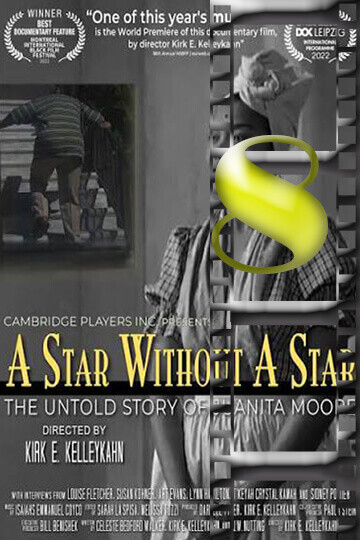
NAACP Image Award “Outstanding Documentary” An illuminating, heartfelt tribute to screen icon Juanita Moore. This biopic celebrates her career, showing why she earned that status and letting audiences see the radiance that made her a star.
MOVIESinMO REVIEW
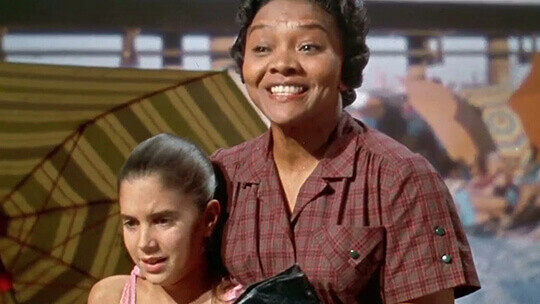
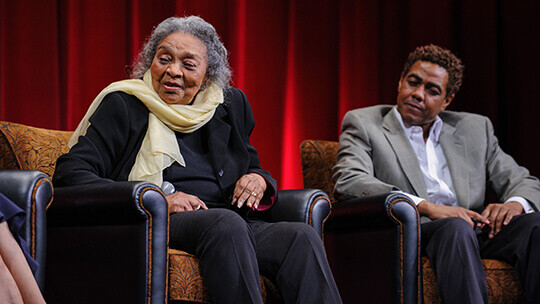
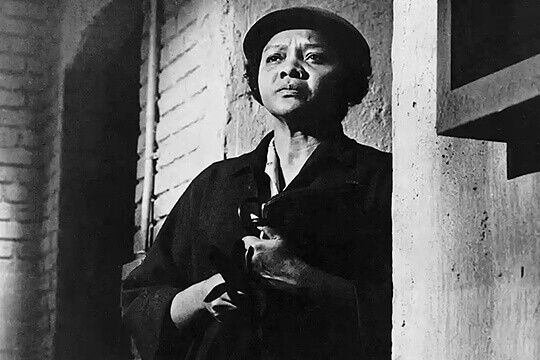
Walk down Hollywood Boulevard, and you’ll step over stars set into the sidewalk of your favorite celebrity, including cartoon characters. Juanita Moore earned an Oscar nomination for playing Annie Johnson in “Imitation of Life.” Director Kirk E. Kelleykahn’s documentary, “A Star Without a Star: The Untold Juanita Moore Story,” asks a simple question. Why was one of Hollywood’s most groundbreaking Black actresses missing from its most famous sidewalk? Kelleykahn is Moore’s grandson, and he spent nearly two decades making this film to keep her legacy alive. It follows the push by her family and supporters to pressure the Hollywood Chamber of Commerce into giving her a star after her death. That fight is the engine of the movie. It played in limited theaters in November 2022, but most of us, me included, caught it when it hit digital and streaming on July 4, 2025. The film doesn’t have the shine of a big-budget documentary, but it makes up for that with heart, and you can feel the love in every scene. Kelleykahn and writers Celeste Bedford Walker and J.W. Nutting first explain how the stars get awarded. Then they dive into Moore’s life. We watch her dance at Harlem’s Cotton Club and perform in Paris, walking the same path Josephine Baker walked before her. Old footage and interviews fill in the details, and those early years open a bigger conversation about Jim Crow and discrimination in Hollywood. The interviews are the best part. Sidney Poitier explains what it was like to come up in Hollywood during the same years as Moore. The two shared the screen in “Band of Angels” and “Something of Value.” Poitier admits he was just happy to be working, even though the business was packed with unfair rules. Moore speaks for herself, too. She says she was tired of carrying trays as a waitress, but that was the only job anyone would give her. One of her customers was a young Marlon Brando, who told her to keep sharpening her craft. In Paris, she felt like she truly belonged, free from the prejudice back home. Still, she returned and made “soundies,” early music videos, with Louis Armstrong and the Mills Brothers. This is where I question everything. What did Hollywood actually let Black actors do? Well, according to the film, not much. Black performers were cast as servants or “native girls,” and many didn’t even get a credit. Treated like furniture in the background instead of like people. In her biggest role, Moore was listed seventh in the credits, below her white co-stars, and of course, she wasn’t invited to the premiere. Yet she based Annie on her own sister and filled the role with warmth and dignity. She turned a part that could have been scenery into the heart of the movie. The filmmakers tied McCarthyism to segregation. Other documentaries stop at the hunt for communists. This one shows how that same fear was used to shut down films with a social message and to keep Hollywood divided. Moore felt it up close, because her first speaking part, in “Pinky,” was labeled Communist propaganda. After World War II, she had joined the Actors Lab, an integrated group that trained new actors. Connecting those dots gives the film some of its most thought-provoking moments. When Hollywood switched to Blaxploitation movies like “Uptight” and “The Mack” in the 70’s, Moore still found work. But the documentary suggests her most rewarding work happened on stage, where performers pushed to the margins could play fuller, more complicated characters. She toured London in “A Raisin in the Sun” and starred in adaptations of James Baldwin’s “Amen Corner.” With the Cambridge Players, led by Edmund Cambridge, she helped bring more honest pictures of Black life to theater audiences. The film also shares tender stories from the set of “Imitation of Life,” especially about Moore’s friendship with Lana Turner. Turner was going through her own struggles, and Moore stood by her. Both women were nervous about their parts. Moore’s fear was personal, since nobody had ever trusted her with a role this big. The producers first wanted bigger names, like Ethel Waters or Pearl Bailey, but producer Ross Hunter fought for Moore. The scenes between Moore and her on-screen daughter, played by Susan Kohner, still hit hard today. The film does stumble at the finish line. It has several good places to stop, yet it never seems sure when to end. That’s a small flaw. The film still shows Hollywood’s Golden Age from a different angle and gives us a less dreamy picture of Old Hollywood. Moore died on January 1, 2014, at age 99, and by then Hollywood had mostly overlooked her contributions. The campaign this film follows, and helped spark, had finally worked. On October 18, 2024, she received the 2,793rd star in the Motion Pictures category. And even if Black people make up about 5% of that famous sidewalk, this is proof that It’s never too late for recognition, and now anyone walking past her star can stop and learn about one of Hollywood’s most resilient trailblazers. Juanita Moore was a true star, and now more people will see it. “A Star Without a Star” isn’t perfect, but its heart and its powerful subject confirm the racist side Hollywood continues to try and silence. True film history cannot be told without the stories of Black performers in America.
OUR RATING – A LOST LEGEND 8